
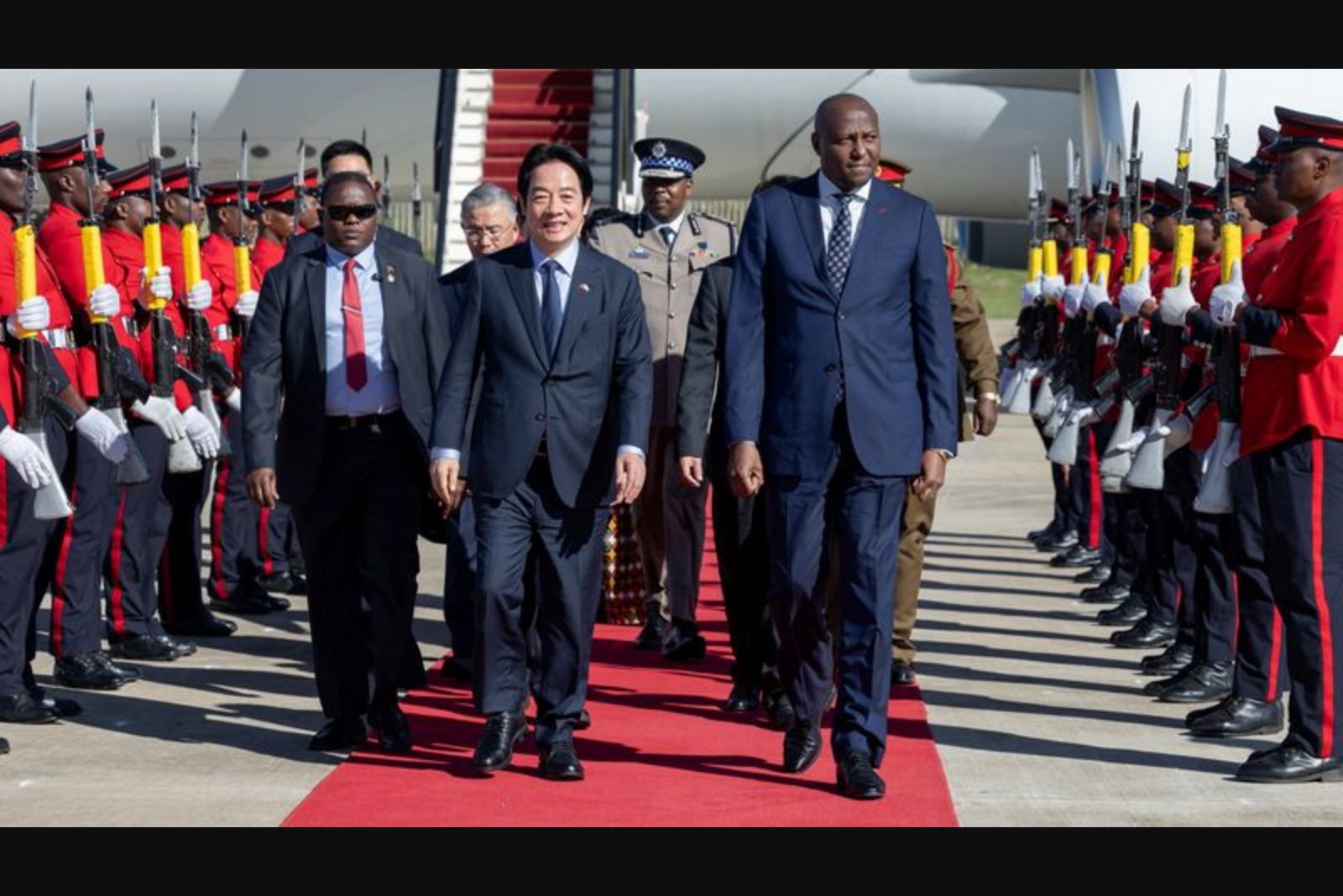
Taipei - President Lai Ching-te arrived in Eswatini for an unannounced visit on Saturday and told King Mswati III that Taiwan has the right to engage with the world, despite what Taipei says were attempts by Beijing to prevent the trip.
In remarks provided by the presidential office on Sunday, Lai used Taiwan’s official name when telling the king, "The Republic of China, Taiwan, is a sovereign nation and a Taiwan that belongs to the world." He added, "The 23 million people of Taiwan have the right to engage with the world, and no country has the right - nor should any country attempt - to prevent Taiwan from contributing to the world."
The visit marks Lai’s travel to one of the small number of countries that maintain formal diplomatic relations with Taiwan. Eswatini, formerly known as Swaziland, is home to around 1.3 million people and is one of only 12 countries with formal ties to Taipei. Lai’s trip coincides with the 40th anniversary of King Mswati III’s accession.
Taiwan said last month that China had pressured three Indian Ocean countries to rescind overflight permission for Lai’s aircraft, complicating his planned journey. Taipei officials have characterized the decision to make the trip without prior public announcement as an operational choice, noting that Lai used an Eswatini government aircraft to complete the journey.
A senior Taiwan security official, speaking on condition of anonymity because of the sensitivity of the matter, said the "arrive then announce" approach is commonly used in high-level diplomacy to reduce the uncertain risks of potential interference from external forces.
China’s Taiwan Affairs Office said Lai had "skulked" his way to Eswatini and assailed his conduct. A spokesperson stated, "Lai Ching-te’s despicable conduct - like a rat scurrying across the street - will inevitably be met with ridicule by the international community."
Taiwan’s Mainland Affairs Council responded by saying Lai did not need Beijing’s permission to travel and dismissed the Taiwan Affairs Office’s remarks as "fishwife’s gutter talk" and "boring in the extreme."
The cancellation of Lai’s earlier plans last month, driven by the overflight permission issue, prompted public criticism of China from the United States and drew expressions of concern from the European Union, Britain, France and Germany, according to Taipei.
The trip underscores ongoing tensions over Taiwan’s international space and the measures Beijing has been said to take to limit Taiwan’s formal and informal engagements. Taiwanese officials framed the visit as an assertion of sovereign prerogatives and a demonstration of Taipei’s ties with the handful of countries that recognise it diplomatically.
Key factual elements from Taipei’s account include the refusal by third countries to grant overflight permission last month, the use of an Eswatini government aircraft for the journey, the deliberate lack of prior public announcement of the trip, and the strong language used by China’s Taiwan Affairs Office in condemning the visit.