
Northern Territory police announced on Sunday that they have charged a man with the murder of a 5-year-old Indigenous girl, a case that set off violent clashes in and around the outback town of Alice Springs.
Authorities identified the accused as 47-year-old Jefferson Lewis. In addition to the murder charge, police said Lewis was charged with two further offences that cannot be made public for legal reasons. The child is referred to as Kumanjayi Little Baby, a name used in line with Indigenous custom.
Northern Territory Police Commissioner Martin Dole, speaking in televised remarks from Alice Springs, described the episode as "an horrific event and an horrific set of circumstances, and our thoughts remain strongly with the family." The commissioner made the comments as investigators worked to process the case and as community leaders sought to calm tensions.
Police said Lewis presented himself at one of the camps on the outskirts of Alice Springs and was charged on Saturday evening. He is scheduled to appear in court in the territory's capital, Darwin, on Tuesday.
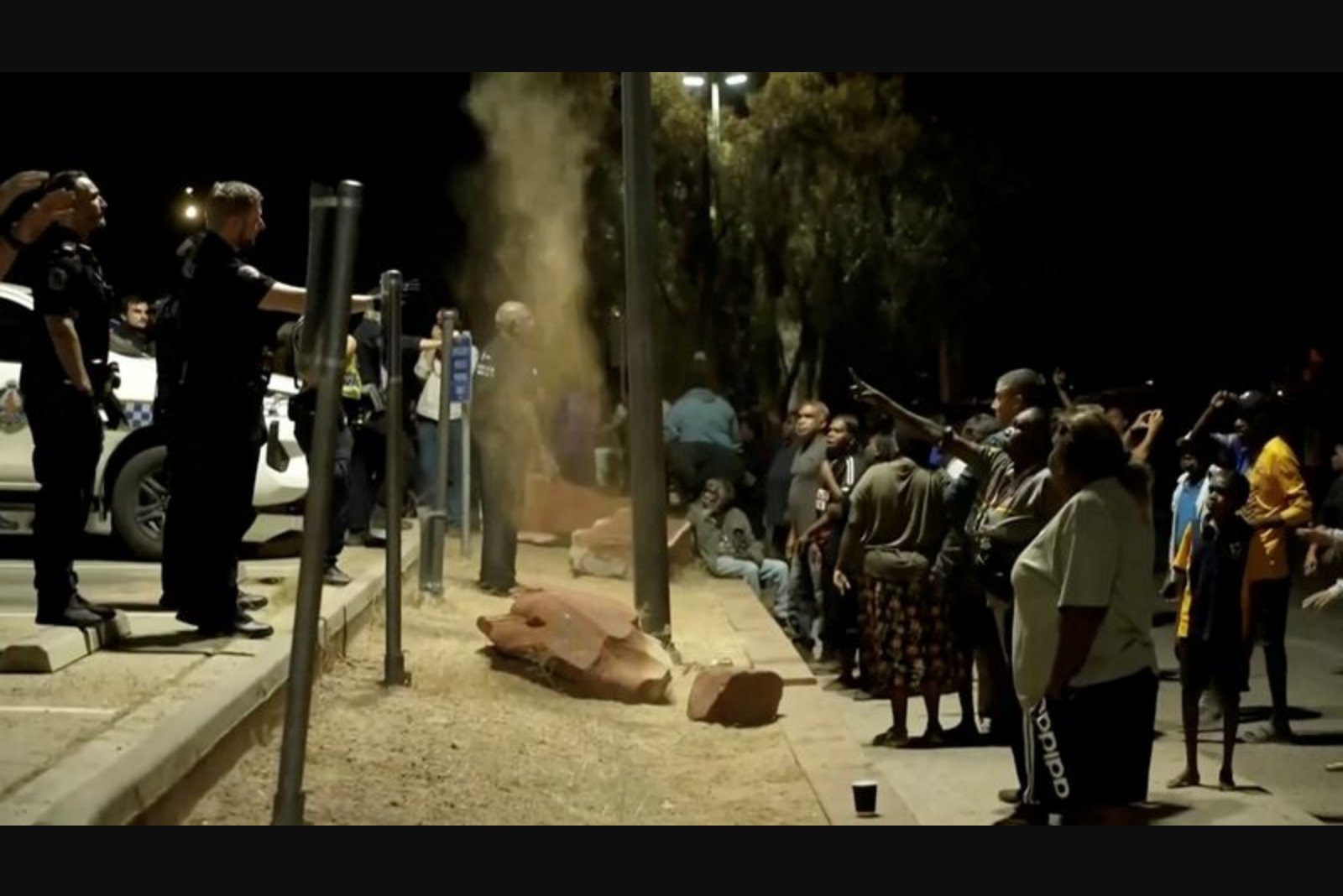
The girl's death and the subsequent capture of the suspect, who was discovered and beaten unconscious by local residents, precipitated protests involving roughly 400 Indigenous people near Alice Springs late on Thursday. Footage broadcast on television showed some members of the crowd calling for payback - a form of traditional, mostly physical, punishment in some Aboriginal societies.
Demonstrators were reported to have thrown projectiles and set fires. Police and medical personnel sustained injuries, and authorities said police vehicles, ambulances and fire trucks were damaged during the unrest. In response to the disturbances, police deployed tear gas to disperse the crowd.
Officials at the national and local levels, including Prime Minister Anthony Albanese, as well as a spokesperson for the victim's family, publicly appealed for calm in the wake of the violence.
Police noted that Lewis has prior convictions for physical assault and had recently been released from prison. Investigators located the girl's body on Thursday amid a search of dense bushland surrounding the town; authorities said one of hundreds of people searching the area found her.
Alice Springs, a popular tourist destination, has in the past contended with alcohol-fuelled violence, authorities said. The broader national context cited by officials highlights long-standing challenges in Australia around reconciliation with Indigenous peoples, who have lived on the continent for some 50,000 years but were marginalised under British colonial rule.
Indigenous Australians make up 3.8% of the national population and face disparities in areas such as health, education and incarceration rates, according to authorities. Thousands of Indigenous people, including the victim and her family, live in camp communities where housing and services are often reported as inadequate. Around one in five residents of Alice Springs is Indigenous.