
Economy May 3, 2026 12:06 AM

Outgoing ECB Vice President Says Spain Must Keep Executive Board Seat, Presidency Remains a Possibility

Luis de Guindos urges retention of Spanish representation as multiple ECB board vacancies loom next year

By Maya Rios
Outgoing ECB Vice President Says Spain Must Keep Executive Board Seat, Presidency Remains a Possibility

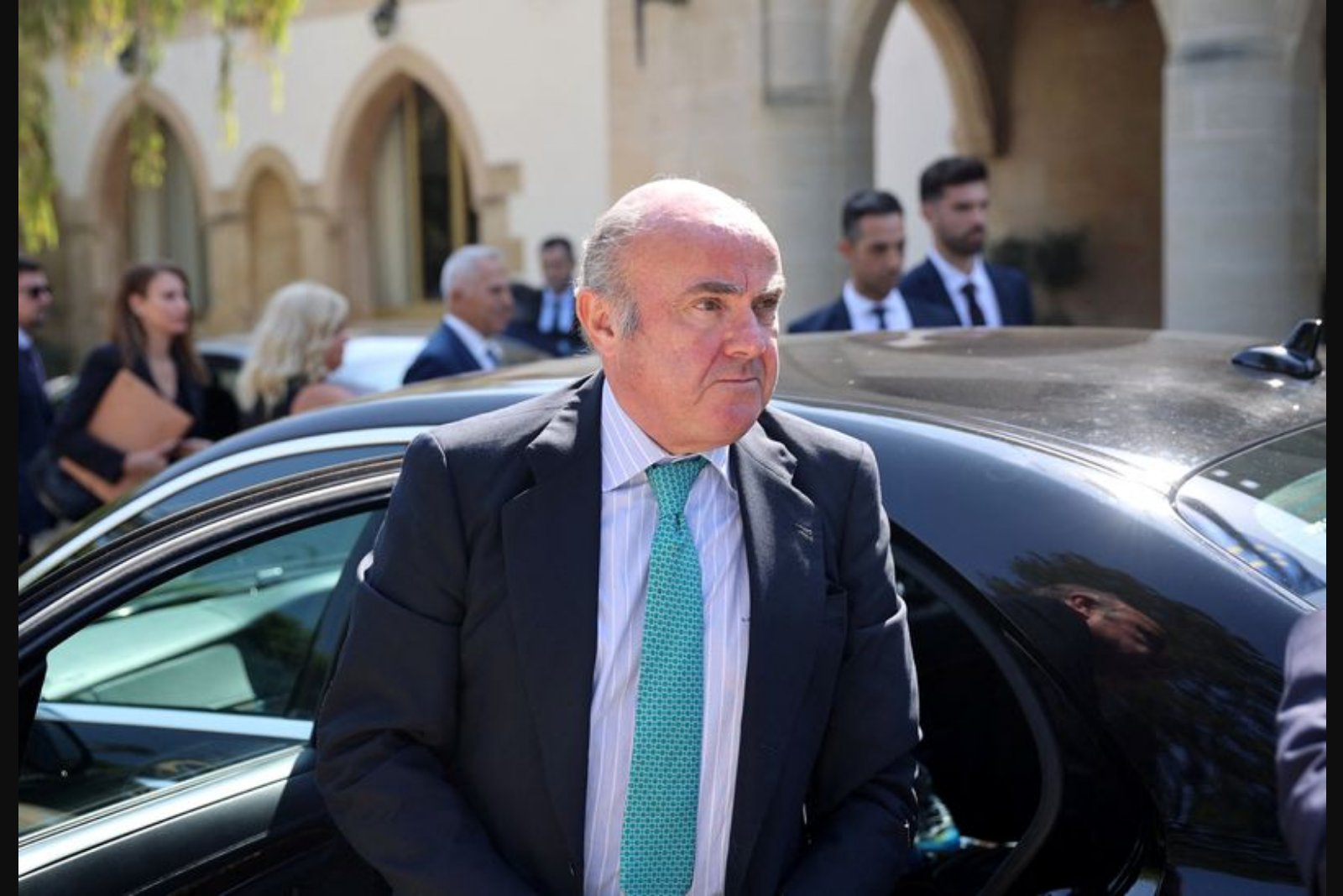
Luis de Guindos, the departing vice president of the European Central Bank, urged that Spain retain a seat on the ECB Executive Board and said the presidency could be possible. De Guindos, who leaves at the end of the month and will be replaced by Croatia’s Boris Vujcic, noted that three vacancies will arise on the six-member board next year and said Spain, as the euro area's fourth-largest economy, should secure one of those positions. He stopped short of backing any single candidate and referenced several Spanish figures who could be considered.

Key Points

  • Spain should retain a seat on the ECB Executive Board, according to outgoing Vice President Luis de Guindos; the presidency is described as a possible outcome.
  • De Guindos leaves at the end of the month and will be replaced by Croatia’s Boris Vujcic, temporarily leaving Spain without representation on the six-person board.
  • Three board positions, including the presidency held by Christine Lagarde, will become available next year, prompting potential contests involving Spanish candidates.

FRANKFURT, May 3 - Spain should continue to have representation on the European Central Bank’s Executive Board, and even the presidency is not out of the question, outgoing ECB Vice President Luis de Guindos said in remarks published on Sunday.

De Guindos, a former Spanish economy minister, will leave his vice president post at the end of the month. He will be succeeded by Boris Vujcic of Croatia, a change that will temporarily leave Spain - one of the euro zone’s four largest economies - without a seat on the ECB’s six-person Executive Board.

Looking ahead, three positions on the board are due to open up next year, including the role currently held by ECB President Christine Lagarde. De Guindos indicated Spain will seek to regain representation among those vacancies.

"The presidency would undoubtedly be the best outcome, but the most important thing is to have a seat on the Executive Board," de Guindos told Spanish newspaper El País. "Spain is the fourth-largest economy in the euro area, and I am convinced it will secure a seat on the Board," he said. "It’s important to have one."

Although all 21 euro zone member states are eligible to put forward candidates for Executive Board posts, the four largest economies in the bloc - Germany, France, Italy and Spain - have historically dominated appointments, limiting opportunities for the remaining nations.

Observers following ECB succession dynamics have identified Pablo Hernandez de Cos, the former governor of the Bank of Spain who later served as General Manager of the Bank for International Settlements, as a possible contender for the presidency. De Guindos, however, did not explicitly endorse him.

"Pablo was a good governor, even though it’s true that it was Luis Linde and Fernando Restoy who oversaw the entire bank restructuring process," de Guindos said.

Other Spanish figures mentioned as potential candidates for either a board seat or higher roles include José Luis Escrivá, the current governor of the Bank of Spain; Nadia Calviño, president of the European Investment Bank; and Economy Minister Carlos Cuerpo. De Guindos’ comments signal Madrid’s intention to pursue representation when the next round of appointments is decided.

For now, Spain faces a short interval without a direct voice on the ECB Executive Board following the scheduled handover later this month, even as attention shifts to next year’s slate of vacancies.

Risks

  • Temporary lack of Spanish representation on the ECB Executive Board after de Guindos' departure may limit Spain's direct influence on monetary-policy discussions - this could affect banking and sovereign bond policy communication.
  • Competition for a limited number of board seats among euro zone members creates uncertainty over who will fill vacancies next year, with implications for euro-area governance and financial-market expectations.
  • The dominance of the bloc’s four largest economies in Executive Board appointments may continue to restrict representation for smaller member states, raising governance and political-friction risks within the euro area.

More from Economy

Airlines Face Margin Squeeze as Jet Fuel Surges; Passing Costs Directly to Passengers Is Not Simple May 3, 2026 Emerging Markets Reach New Peaks as AI Demand and Oil Exports Counterbalance Geopolitical Strains May 3, 2026 Spain mobilizes to preserve influence at ECB as de Guindos prepares to leave May 3, 2026 A$1.8 Billion Committed to Medicare Urgent Care Clinics as Budget Pressures Grow May 3, 2026 Taiwan President’s Unannounced Africa Trip Escalates Diplomatic Tensions with Beijing May 3, 2026