
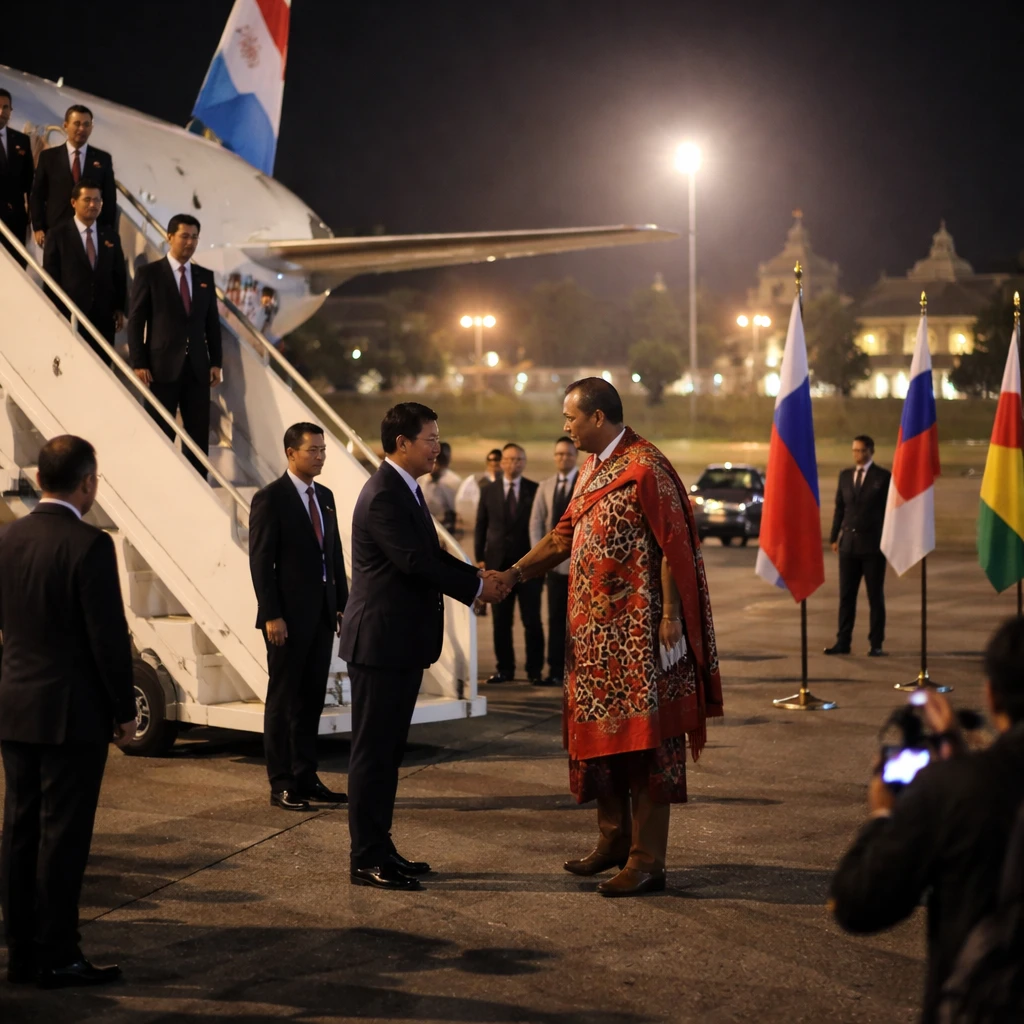
Geopolitical tensions remained high in East Asian markets this weekend after Taiwan President Lai Ching-te carried out a surprise diplomatic trip to Eswatini, a small African kingdom that is one of just 12 countries maintaining formal ties with Taipei. The visit was presented by Taiwanese officials as a deliberately discreet operation to reduce the chance of external disruption.
According to reporting, the visit followed an approach described internally as "arrive then announce." Taiwanese security planners adopted this method after alleging that China had recently pressured several Indian Ocean nations to withdraw overflight clearances for the president's aircraft, an episode that forced earlier travel plans to be abandoned.
The journey touched off a sharp exchange in rhetoric. China’s Taiwan Affairs Office issued a formal rebuke, denouncing President Lai’s travel tactics as "skulking" and calling his conduct "despicable." A spokesperson for the office went further, likening the outreach to "a rat scurrying across the street" and asserting that the move would provoke international ridicule.
Taiwan’s Mainland Affairs Council pushed back against Beijing’s comments, saying the president does not require China’s permission to carry out foreign engagements. The council dismissed the Taiwan Affairs Office statement as "fishwife’s gutter talk" and described the criticism as "boring in the extreme."
During his time in Eswatini, President Lai met with King Mswati III. In that meeting he reiterated Taiwan’s position that the Republic of China, Taiwan, is a sovereign entity that belongs to the world, and he stressed that the island’s 23 million people have a right to participate in international affairs without prevention by other states.
The delegation relied on an Eswatini government aircraft for the travel, a measure officials said was intended to limit outside risks. A senior Taiwan security official explained that the unconventional "arrive then announce" strategy has become necessary to reduce the "uncertain risks of potential interference from external forces."
This episode comes after a tense April incident in which Taiwan said China had compelled three Indian Ocean countries to deny overflight permissions, effectively grounding President Lai’s original travel itinerary. That earlier maneuver prompted formal criticism of China from the United States and generated expressions of concern from the European Union, Britain, France, and Germany.
The Eswatini mission took place as the kingdom celebrated the 40th anniversary of King Mswati III’s accession, adding a high-profile ceremonial dimension to the trip. Taiwanese officials framed the visit as both a diplomatic outreach and a statement of the island’s intent to engage with the international community despite diplomatic pressures.
For now, the encounter has produced intensified public sparring between Taipei and Beijing, highlighted ongoing vulnerabilities in international aviation clearances for high-level travel, and underscored the sensitivity of formal ties between Taiwan and the small set of states that continue official diplomatic relations.