
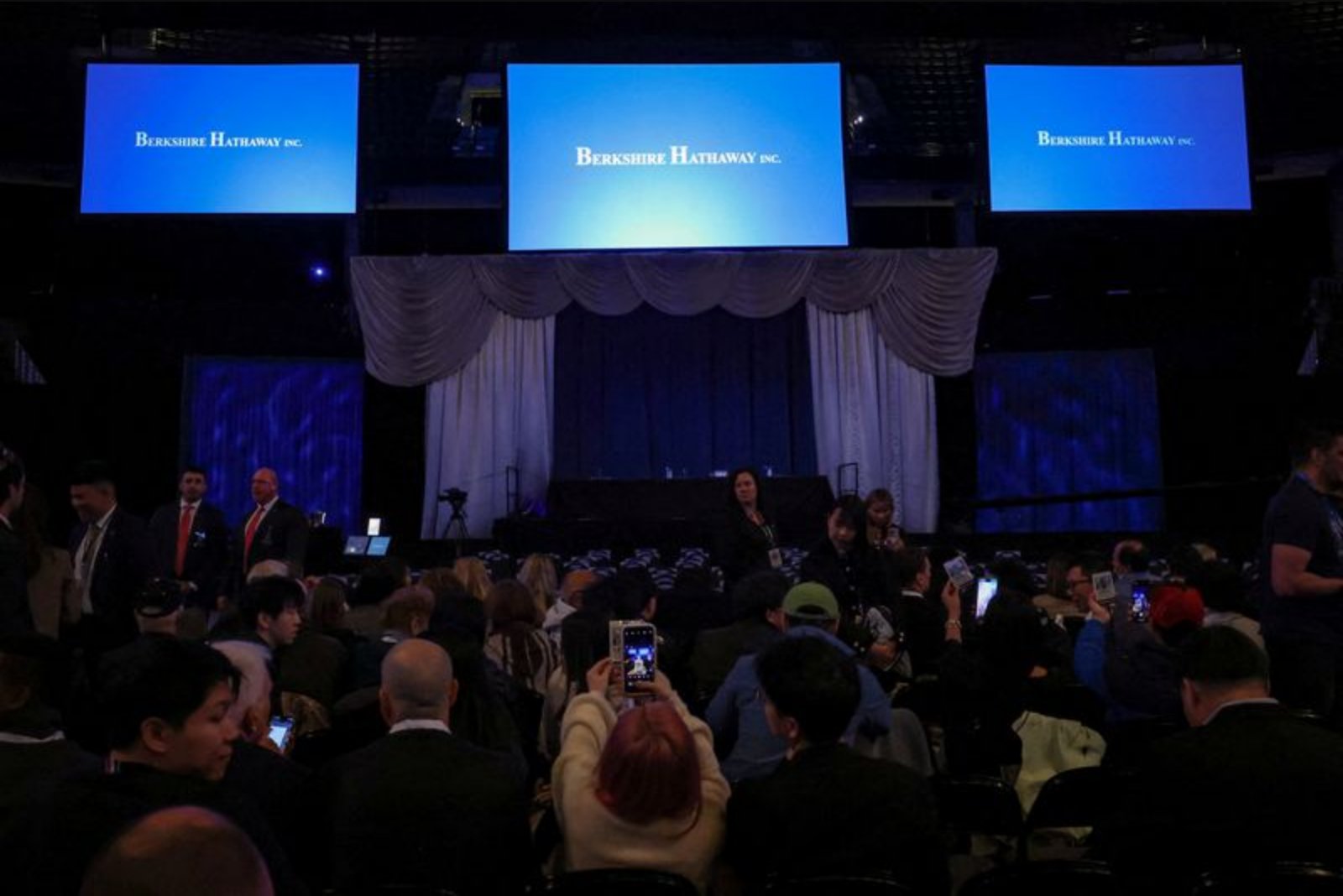
Berkshire Hathaway’s insurance operations posted stronger first-quarter revenue, but the company’s chief executive warned shareholders that an inflow of new capital and softer market pricing are creating headwinds for the business.
Speaking at Berkshire’s annual meeting in Omaha, Nebraska, on Saturday, Greg Abel said the company benefitted in the first quarter from what he described as a "pretty benign period" for insurance losses that passed without major catastrophes such as wildfires or hurricanes. That environment helped push first-quarter revenue up to $81.1 billion from $77.6 billion a year earlier.
At the same time, Abel cautioned that "The reality is that ... as our insurance business softens, we cannot realize the value we should for the related risk," and he said fresh capital entering the market has made pricing more competitive.
As a result, Berkshire’s insurance businesses "will be much more cautious, specifically across the primary and reinsurance businesses," Abel said, noting the company is recalibrating its approach to balance the premiums it can charge against the underwriting risk it accepts.
Abel highlighted the challenges facing Geico, Berkshire’s property-casualty auto insurer. The CEO said the company has seen "unprecedented shopping activity across the auto space" as drivers seek bargain-priced policies. To respond, Geico has "worked hard to segment" its customer base in an effort to retain as many customers as possible while premiums moved higher.
Abel added, "It’s not going to be easy to just restart the growth engine," acknowledging the difficulty of returning to rapid expansion in the current competitive landscape.
The article noted Geico’s position in the market has shifted over time. Geico once ranked second in market share after State Farm, but Progressive overtook it after earlier investments in technology to identify lower-risk drivers and set more precise prices, analysts say. In recent years, under former Chief Executive Todd Combs, Geico tightened underwriting standards and reduced overhead, a program that included a nearly one-third reduction in its workforce to 29,541 people at the end of 2025.
Berkshire’s vice chairman of insurance operations, Ajit Jain, said in 2025 that Geico had closed the gap with competitors in telematics - the use of devices installed in vehicles to monitor behavior such as speed, braking, mileage and distracted driving. Telematics programs reward safer drivers with discounts while charging higher prices to others.
Operational results at Geico in the first quarter reflected those pressures. Pre-tax underwriting gains at the insurer declined 35% as advertising expenses rose and accident claims increased. In leadership changes, Combs departed Geico in December to join JPMorgan Chase and was succeeded by Nancy Pierce, who had been the insurer’s chief operating officer and who joined Geico in 1986.
This reporting lays out Berkshire’s immediate insurance outlook: stronger short-term revenue tied to a quiet loss period, but a tougher pricing environment driven by new market capital that is prompting a more conservative underwriting posture across primary and reinsurance lines.