
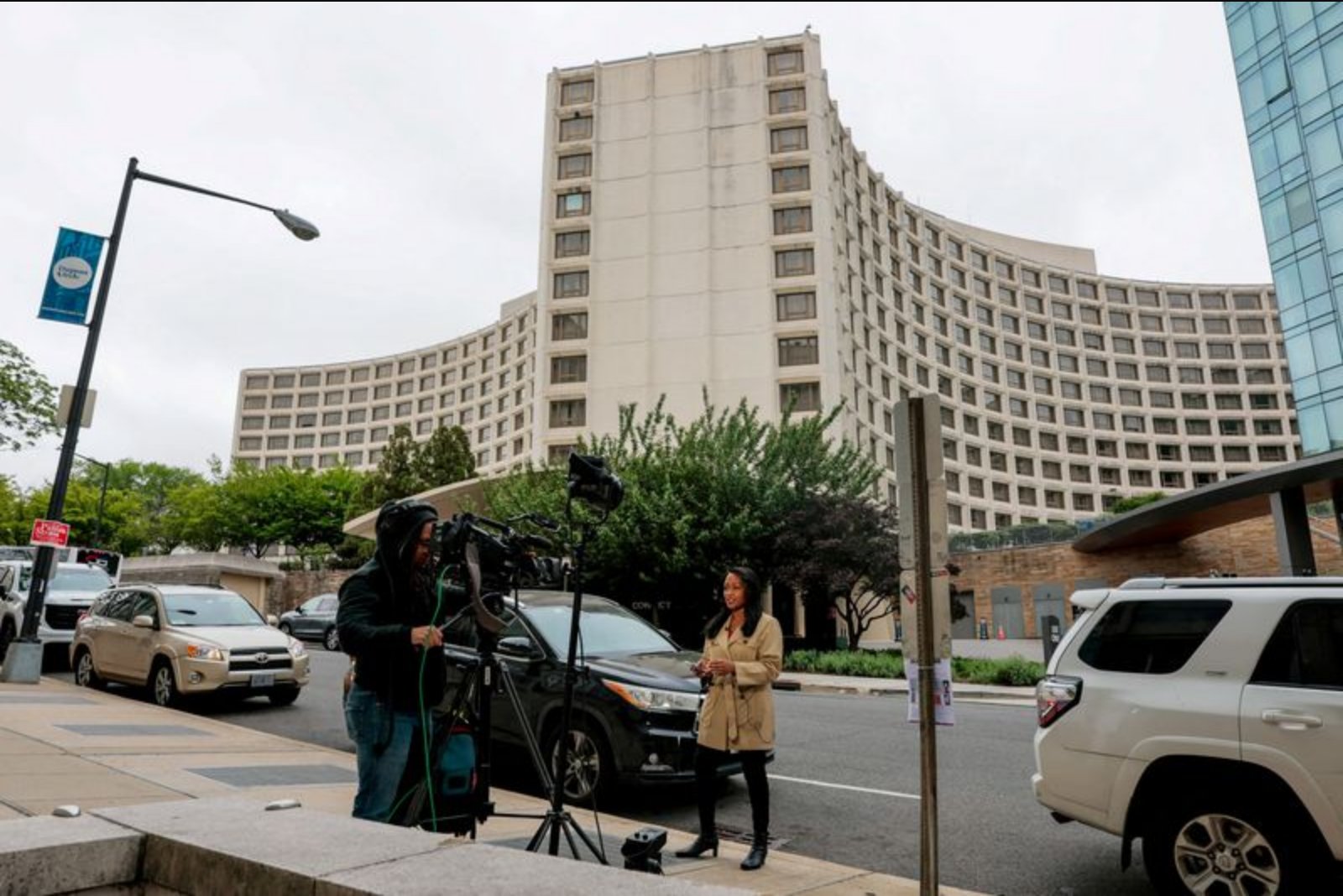
The man charged with forcing his way through a checkpoint and discharging a shotgun close to the White House Correspondents' Association dinner on Saturday said he was surprised by the lack of intrusive security at the Washington Hilton. In a manifesto written before the attack, the hotel guest identified by law enforcement as Cole Allen, 31, wrote: "I expected security cameras at every bend, bugged hotel rooms, armed agents every 10 feet, metal detectors out the wazoo," and then added, "What I got, is nothing."
The episode brought renewed attention to a long-standing dilemma in the hotel business: how to tighten protective measures for high-profile events without eroding the atmosphere of hospitality that guests expect. While some security vendors are pitching AI-driven monitoring and weapons-detection tools, many hotel operators have been cautious about adopting systems that could raise costs significantly or prompt guest privacy concerns.
"Security is going to continue to improve with technology in identifying strange behavior. But at the end of the day, it’s a hospitality business where customers have to feel welcome," said Nicolas Graf, a professor of hospitality management at New York University.
Allen navigated through the property before charging a checkpoint on a floor above the ballroom where President Donald Trump was dining with about 2,600 journalists, government officials and others. Trump was evacuated without harm and other guests were unharmed, but investigators and security professionals said the breach made clear how dangerous internal vulnerabilities can be during major hotel events.
Security experts pointed to recurring weaknesses that attackers exploit in hotels: numerous access points, constant guest arrivals at all hours, inconsistent screening practices, and porous boundaries between public and controlled spaces. "Not every guest in the building is screened the same way, which is why zoning and access control become critical," said Morgan Stevens, senior vice president for global security operations at Crisis24.
Hotel operators must weigh the need to protect lives against the pressure to control operating costs. The largest hotel, casino and resort companies - the top nine by revenue - generated roughly $102 billion in 2025, but many have experienced margin pressure in recent years, making expensive security overhauls harder to justify.
Following the incident, the Washington Hilton said it had been operating under "stringent" Secret Service protocols. Hilton Worldwide Holdings declined to comment for this story. The sequence of actions that followed the attack matched a familiar pattern: law enforcement cordoned off the property, investigators retraced the suspect’s route, and security specialists debated what preventive measures might have been appropriate.
Allen was charged with attempted assassination, discharging a firearm during a crime of violence, and illegally transporting guns and ammunition across state lines after taking a train from his hometown in California. He has not entered a plea.
Standard security practices and their limits
Hotels rarely close entirely for large events, relying instead on a variety of access-control tactics such as dedicated elevators or restricted floors. Security teams commonly spend several days to a week preparing a property before a major gathering: conducting site surveys, setting up credentialing systems, and segmenting the building into controlled zones. Despite these steps, guests who are not event attendees can still move through shared spaces like lobbies, restaurants and guest corridors, creating unavoidable gaps.
"Hotels employ a layered approach to safety and security," said a spokesperson for the American Hotel and Lodging Association, describing training programs, surveillance equipment, access controls and collaboration with law enforcement as typical precautions. Robert McDonald, an assistant professor at the University of New Haven and a retired supervisory Secret Service agent, said the Secret Service typically coordinates with hotel security, local police and the White House administration to create security plans rather than requiring outright closures.
Yet the Washington incident has shaken confidence in models that keep venues open while policing select areas. President Trump said afterward that the hotel was "not a particularly secure building." Reuters reported that U.S. law enforcement officials were reassessing security at the Washington Hilton - a property that has been associated with a presidential assassination attempt in the past. Outside the hotel in 1981, President Ronald Reagan was shot by John Hinckley, a development that prompted post-incident upgrades, including a secure garage for motorcade access, greater use of magnetometers and tightened press controls, McDonald said.
Globally, other major hotel attacks have catalyzed security changes. NYU’s Graf said the industry advanced significantly after the 2008 assault on the Taj Mahal Palace Hotel in Mumbai, which killed 31 people inside the property. In the United States, the 2017 mass shooting in Las Vegas - where a gunman fired from the 32nd-floor suite of the Mandalay Bay hotel into a crowd at a nearby concert, killing 58 people and injuring hundreds more - is another key example of the threat posed from within a hotel.
Technology, cost and the challenge of implementation
Some hotel operators are exploring AI-powered weapons-detection and behavior-monitoring systems, but experts said meaningful installations would be expensive and technically complicated. Before the December 2024 killing of UnitedHealthcare CEO Brian Thompson outside a Hilton in Midtown Manhattan, AI security firm Xtract One said it had received an inquiry from the chief security officer of a major hotel chain about its weapons-detection system. As yet, no widespread deployment has followed those early discussions.
"This is a complex problem to solve, not simply addressed by putting in a single screening device," said Peter Evans, CEO of Xtract One. He noted the sheer volume of people passing through large hotels, the existence of multiple entrances and the variety of luggage types as complicating factors. Interest in advanced detection has been stronger in some international markets, Evans added, including Mexico where cartel-related violence has scared travelers and dented revenues.
Anthony Varchetto, co-founder of Blue Star Security, said hotels often focus security resources on external threats while underestimating the risk presented by registered guests. "That’s a common oversight," he said. "People get complacent, they understaff, and a lot of it comes down to budget."
Looking ahead
The Washington Hilton breach has re-ignited discussion across the hospitality industry about where to draw the line between welcoming guests and instituting more stringent screening. Operators, security vendors and law enforcement appear to agree that layered measures and better zoning help, but the costs and privacy trade-offs associated with more intrusive technology and tighter controls create difficult decisions for hotels already facing margin pressures.
As conversations about AI detection, credentialing and access control continue, hotels will have to balance the immediate imperative to protect patrons with the operational and financial realities of running large properties that remain open to the public.