
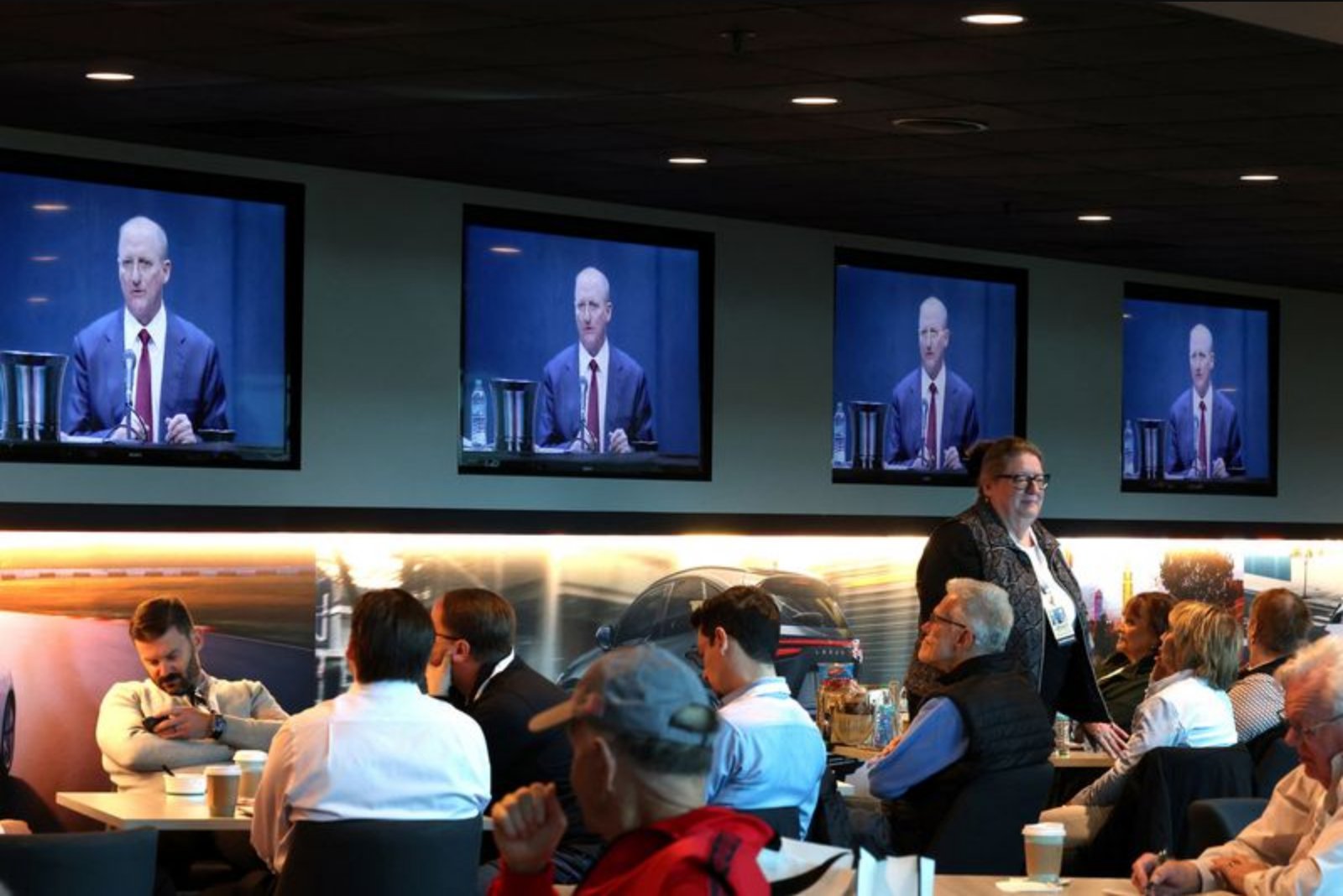
Berkshire Hathaway’s chief executive, Greg Abel, told shareholders at the company’s annual meeting that a recent appellate court decision in Oregon relieved PacifiCorp of a central legal threat tied to wildfire litigation, effectively returning the matter to an earlier stage of proceedings.
Speaking in Omaha, Nebraska, Abel pointed to an April 8 opinion by an Oregon state appeals court which held that a major wildfire case could not proceed as a class action. He described the outcome as a material easing of the legal pressure facing the Portland-based utility, which has been defending claims arising from wildfires in Oregon and northern California.
"We’re back to first base," Abel said, using the phrase to indicate the company’s view that the class-action avenue had been closed off and that earlier legal assumptions could no longer be relied upon. He added later, quoting how the decision was described internally: "They said, back to ground zero, start over again."
Court findings and earlier trials
The litigation stems from a series of wildfires that victims allege were caused by PacifiCorp’s failure to shut down power lines during a windstorm over the Labor Day weekend in 2020. In the most prominent matter, an Oregon jury in 2023 found the utility grossly negligent, a verdict that had opened the company to potentially vast liabilities in follow-on damages trials.
PacifiCorp has publicly said its exposure at one point reached as much as $55 billion in potential claims. Prior to the appeals court ruling, 171 plaintiffs in a sequence of so-called "mini-trials" beginning in January 2024 had been awarded about $1.1 billion. Those mini-trials had been expected to continue through 2028 before the appeals court curtailed the class-action route.
The appeals court concluded the trial judge erred by instructing the original jury that it could assume PacifiCorp’s alleged wrongful conduct applied to all fire victims. That ruling narrowed the scope of the earlier verdict and, in the view of Abel and Berkshire management, removed a key multiplier of potential liability.
Regulatory strategy and the push for wildfire funds
Abel described the legal development as an important step as PacifiCorp presses western states to adopt liability-limiting measures and state-administered wildfire funds. Under the model PacifiCorp advocates, utilities would be allowed to participate in state funds that compensate victims, provided the utilities file and adhere to safety plans aimed at limiting fire risk.
Utilities that support such arrangements argue the framework creates a safety net that permits continued investment in maintenance and grid upgrades without the specter of indeterminate litigation that could strain liquidity or risk bankruptcy. Abel framed PacifiCorp’s preference as seeking a "regulatory compact" - an arrangement where the utility can charge customers enough to justify increased infrastructure spending while not taking on excessive risk.
He noted, however, that regulators and elected officials often resist rate increases, creating friction between the company’s infrastructure goals and political appetite for higher customer bills. Abel singled out Utah’s approach - which allows large utilities to surcharge customers and cap certain liabilities - as the "gold standard." Oregon, he said, has not implemented similar protections.
California has taken action to address wildfire exposure: the state increased its wildfire fund by $18 billion after fires that affected areas near Los Angeles in January 2025.
Corporate ownership and context
PacifiCorp is owned by Berkshire Hathaway Energy, which is itself a subsidiary of Berkshire Hathaway. Berkshire purchased the utility in 2006 for $5.1 billion. The company continues to defend against multiple cases related to the 2020 windstorm and to advocate for state-level solutions to wildfire liability.
The appeals court decision does not end litigation but, according to Abel, it reduces the immediate pressure on PacifiCorp’s legal exposure and resets the framework for how damages claims may proceed.