
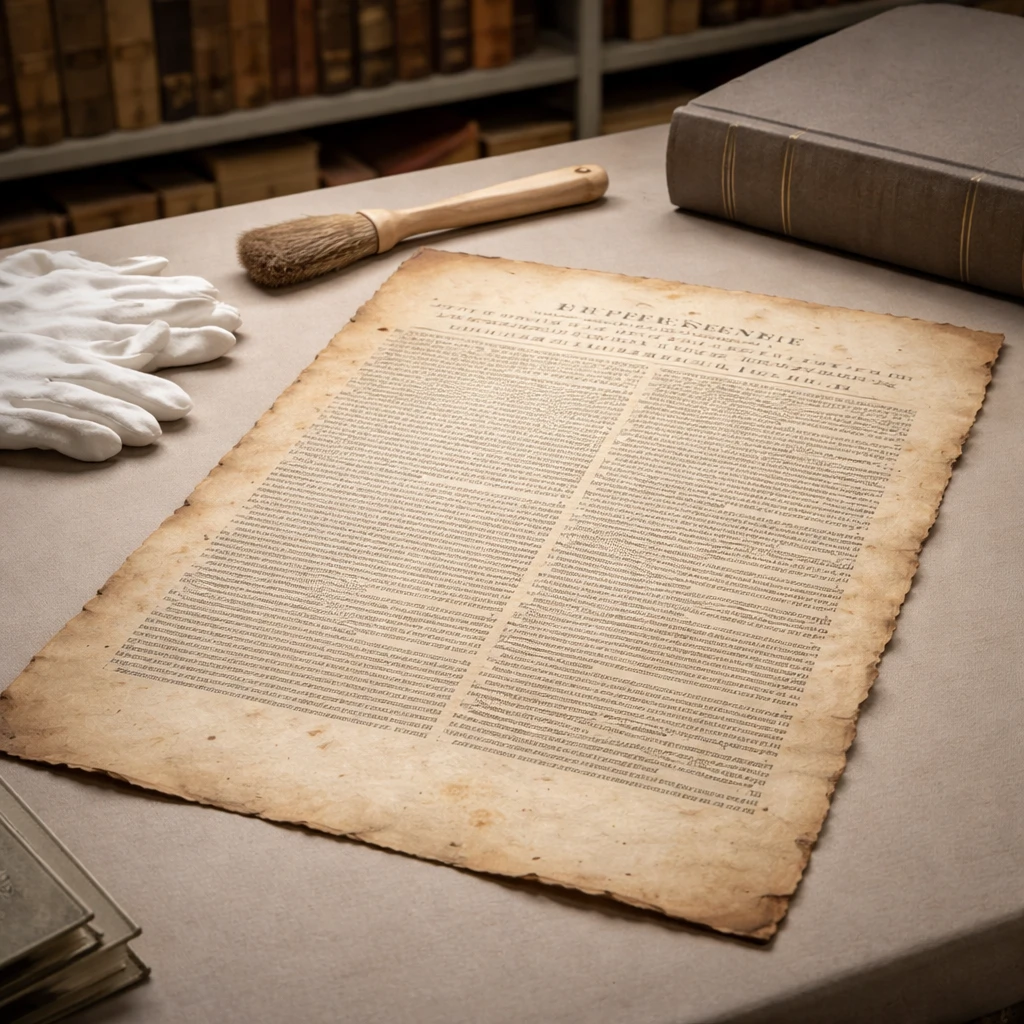
A "vanishingly rare" printed copy of the Declaration of Independence has been identified in London in records associated with the British capture of an American privateer in 1776, the National Archives in Britain announced. The discovery coincides with the United States marking its 250th anniversary.
The sheet, which carries the declaration's famous line calling for "life, liberty and the pursuit of happiness", had been catalogued in 18th century lists merely as "another document." In May, while working on a cataloguing project, a volunteer at the National Archives took a closer look and recognised its significance.
"Unearthing and handling such a significant historical document has been thrilling, particularly in this important anniversary year," said Michael Scurr, the volunteer who identified the text.
The find was announced on a Friday ahead of the U.S. semiquincentennial celebrations. July 4, 1776, the day Congress adopted the Declaration, had already prompted rapid reproduction by sympathetic printers in the American colonies; they sought to circulate the new nation's founding document widely while revolutionary sentiment spread.
The copy uncovered in London was printed in Exeter, New Hampshire, in mid-July 1776. It is recognised as the 11th surviving example of the so-called "Exeter Declarations" and marks the first time a copy of this printing has been located outside the United States.
According to the archival record, Eleazer Johnson, captain of the privateer Dalton, acquired a copy some months after its printing, shortly before setting sail across the Atlantic on a mission aimed at capturing British vessels. He may have intended the declaration to serve as inspiration for his crew.
On December 24, 1776, however, the Royal Navy captured the Dalton off the coast of Portugal and brought the ship and its possessions to Plymouth in southwest England. The National Archives said this copy is unique among known surviving declarations because it was taken as a result of military action.
Under procedures in late 18th century Britain, captains were required to present the documents seized with captured ships to the authorities before they could claim a share of the prize. The archives noted that Britain seized some 3,600 ships during the American Revolutionary War, making their collections a potentially rich resource for historians.
"Thanks to the bureaucratic processes of war ... we can present an unusually rich backstory that most surviving declarations do not have," said Graham Moore, a curator at the National Archives.
The National Archives framed the find as both timely and exceptional: timely because it emerges as the United States observes its semiquincentennial, and exceptional because of the document's direct link to naval capture and the official prize procedures that carried the paper into British custody. The discovery underscores the potential for further historically significant material to remain hidden within long-established archival collections.
Researchers and curators will be able to examine the sheet within the institutional context and provenance provided by the capture records, in contrast with many surviving copies that lack such a documented wartime trajectory. The archive's announcement did not indicate any immediate plans for public display or further publication beyond the identification and initial commentary.
Context and next steps
- Archivists and specialists are likely to incorporate the find into their catalogues and make the copy available for further scholarly study.
- The documented chain of custody provided by the capture records gives this copy a distinct provenance compared with many other surviving prints.
- The broader archive holdings from the Revolutionary War era may hold additional documents that are misidentified or under-catalogued, offering further research opportunities.