
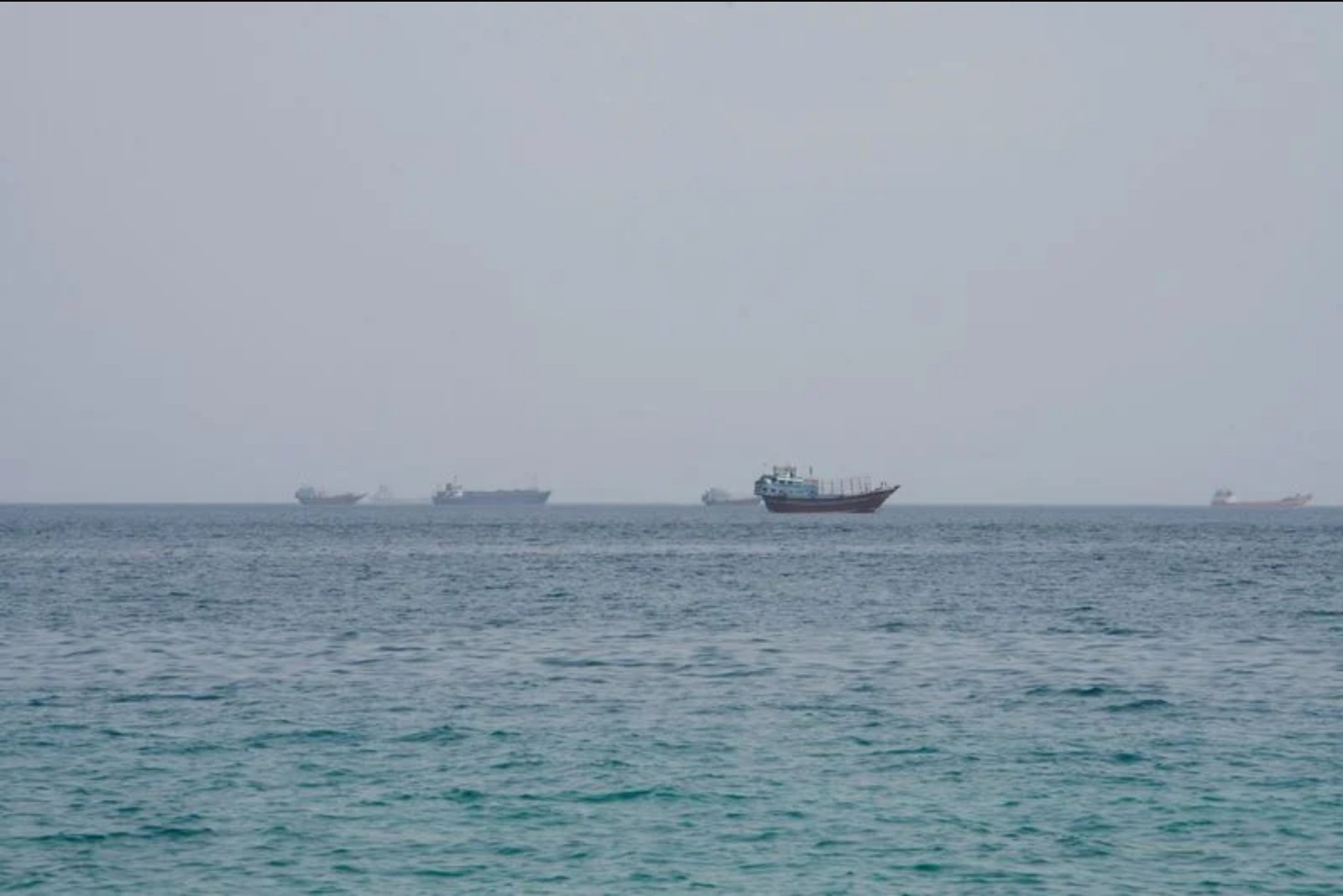
A senior Iranian official said on Monday that Tehran will raise pressure across the Strait of Hormuz and in the wider region and could carry out a targeted military strike if the United States fails to fully implement an interim peace agreement within a matter of weeks.
According to the official, Iran has given the United States a short timeline - described as a few weeks - for meeting all provisions of the accord, and has made implementation by Washington a precondition for continuing negotiations. "Within the short period of a few weeks set by Iran, all the agreement's provisions must be implemented by the U.S. This is a precondition for further negotiations with the U.S.," the official said.
The official added that if the deadline passes without U.S. compliance and diplomatic channels do not produce results, Tehran would conduct a "timely and precise" military action aimed at breaking what Iran characterises as a U.S. naval blockade on the Islamic Republic.
Mediators, the official said, will communicate the details of Iran's timeline to both Washington and regional states. The statement urged Iranian entities to be ready to escalate tensions in the Strait of Hormuz and across the region, noting that Iran would be prepared to take hard decisions and act on them: "Iranian entities must be prepared to escalate tensions in the Strait of Hormuz and wider region, as Iran will be ready to make decisions and take action on difficult decisions."
The official described a deliberate shift in Tehran's posture from defensive measures to offensive readiness, attributing that change to a waning confidence in diplomacy with the United States. "It is a proven fact that the U.S. is not serious about a ceasefire and won't commit to any, so putting pressure on the enemy or relying on mediators in the hope of reaching a permanent ceasefire is not realistic," the official said.
Diplomatic efforts to resume direct talks between Tehran and Washington under the terms of a June agreement have stalled in recent weeks, according to the official. Iran's foreign minister has stated that the Strait of Hormuz will remain closed until the United States first returns to the agreement, while the U.S. Treasury Secretary has warned of unprecedented economic isolation for Iran.
The announcement signals a potential escalation in both rhetoric and military posture if the stated conditions are not met within the timeline set by Tehran. Mediators are expected to relay Iran's deadline to the United States and regional actors, but the official emphasised that Tehran is preparing for a shift to more forceful options should diplomacy fail.
Key points
- Iran has given the United States a matter-of-weeks deadline to implement all provisions of an interim deal; failure to do so could end negotiations.
- Tehran says it will prepare to escalate in the Strait of Hormuz and the wider region, including a potential "timely and precise" military strike to break a U.S. naval blockade.
- Diplomatic efforts to revive a June agreement have stalled; Iranian and U.S. officials have issued contrasting public warnings regarding the next steps.
Risks and uncertainties
- Timeline uncertainty - Iran's short deadline of a few weeks creates a compressed window for diplomacy, raising the risk of rapid escalation if terms are not met; this affects regional security and maritime activity.
- Potential military action - Tehran's stated willingness to carry out a "timely and precise" strike to break a naval blockade introduces a risk to naval operations and regional trade routes.
- Diplomatic stalemate - Stalled negotiations under the June agreement and divergent public positions increase uncertainty for political and economic actors in the region.