
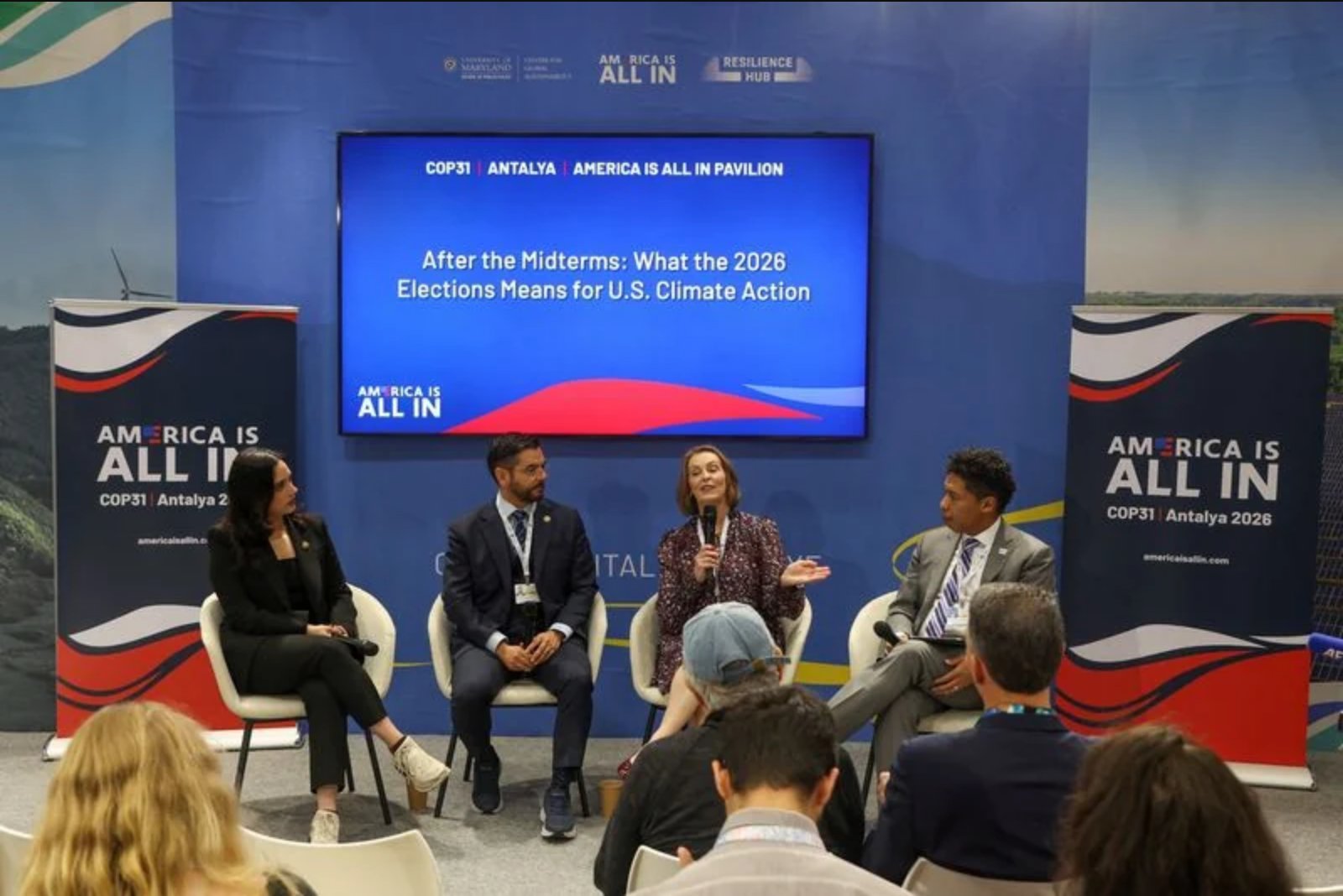
The United States is formally absent from COP31, but the practical footprint of American actors is hard to overlook at the Mediterranean conference in Antalya. Delegations of state leaders, members of Congress, former federal officials and municipal representatives have filled pavilions and plenary rooms, presenting themselves as evidence that U.S. climate action persists despite the administration in Washington.
COP31, which began on November 9 and runs through November 20, has been characterized by familiar tensions between delegates who resist language seen as restricting fossil fuel use and those who press for faster transitions to low carbon energy. In that environment, visible U.S. participation - even if unofficial - carries symbolic weight for nearly 200 nations attempting to coordinate responses to rising global temperatures.
Official absence, practical presence
Under the current administration, the United States has not sent an official delegation to UN climate conferences for two years running. The White House has advocated for continued reliance on fossil fuels, framing that stance in terms of energy security. A White House spokeswoman, Taylor Rogers, summarized that position by saying: "The United States is focused on common sense, not climate nonsense," and that the administration is concentrating on expanding "affordable, reliable, secure energy sources."
Despite that federal posture, U.S. influence at COP31 is being projected through non-federal channels. The America Is All In coalition - a grouping composed largely of Democratic governors, mayors, local officials and members of Congress - has brought roughly 120 delegates to Antalya, a presence that surpasses the size of many official national delegations. Their pavilion has become a major draw at the summit.
Voices from the coalition and US policymakers
High-profile appearances at the America Is All In pavilion have included California Governor Gavin Newsom and Minnesota Governor Tim Walz, along with several newly re-elected Democratic lawmakers. Participants have emphasized two themes: a pledge to reengage internationally with humility and an assertion that state and local policies can materially advance emissions reductions in the absence of federal alignment.
Marshall Islands Environment Minister Jess Gasper Jr. underscored the point when he told a press conference: "We look to the US for leadership." At the same time he added that "State and local decisions can make a major difference," reflecting the sentiment that subnational action has tangible effects on emissions trajectories.
Representative Yassamin Ansari of Arizona addressed a conference audience by acknowledging the trust deficit the United States faces abroad. She said: "We know the United States lost a great deal of trust during the first Trump administration. We told our partners that period was an aberration, that it would not happen again. Then Donald Trump was elected a second time." Ansari said the delegation had come to COP31 "with humility" and was focused on listening to international partners. She added that Democrats would soon prepare legislation to address climate change, at minimum to signal to voters and international partners what could follow under a future Democratic president.
Former Secretary of State and U.S. climate envoy John Kerry expressed a similar view on rebuilding trust, saying the United States can regain international confidence if it stays humble and respectful to partners. He noted, in general terms, that other countries have been allowed to return to the COP framework despite earlier conduct he did not specify.
Federal constraints and uncertainty
Despite the visible subnational mobilization and the public statements of former and current officials, prospects for substantive federal action in the near term remain constrained. The White House continues to support fossil fuel use and has dismissed COP31 as "nonsense." The president retains veto authority, and the current political configuration in Washington creates significant uncertainty over what legislation or federal initiatives might be achievable.
Former Vice President Al Gore framed the situation succinctly as a period of "significant uncertainty," saying: "President Trump will be adjusting to a new balance of power in Washington, just as congressional Democrats will be. The coming years will likely be defined by negotiations over what can realistically be accomplished under a divided government."
State and local momentum
While federal leadership is in question, state and municipal policy activity has continued. Many state and local governments provide tax incentives for renewable energy and electric vehicles and maintain other measures aimed at lowering emissions. A joint report by America Is All In and the University of Maryland's Center for Global Sustainability estimated that existing state policies, combined with market trends and falling technology costs, could cut U.S. emissions by as much as 46% below 2005 levels by 2035. The report also notes that the United States has already reduced emissions by close to 20% relative to 2005.
Representative Raul Ruiz of California highlighted this domestic momentum, saying: "Despite the setbacks of the Trump administration, climate action in the United States is alive and continuing to move forward." The remarks reflect the calculus that local and state programs can produce meaningful emissions declines even when federal policy is not aligned.
Competitiveness concerns
Governors and coalition members also framed U.S. disengagement as a potential competitive liability. Governor Newsom warned that U.S. absence on climate issues undermines national competitiveness as China expands in clean energy technologies such as solar power and electric vehicles. He told reporters: "We need to reengage in these international agreements, and we need to recognize that China is outpacing us in many critical areas. There is no substitute for national leadership."
The governor's remarks connected the diplomatic and industrial dimensions of climate policy, arguing that international engagement ties directly into economic competition in emerging clean tech markets.
What delegates are signaling
The U.S. presence at COP31, though unofficial, is sending several signals: subnational and non-federal actors can marshal resources and policy tools to lower emissions; political change at the federal level could alter the trajectory of U.S. engagement; and questions about trust and durability of U.S. commitments remain salient among international partners. For now, America Is All In is serving as the most visible conduit for U.S. climate diplomacy at the summit.
As the conference proceeds toward its November 20 close, delegates will continue to grapple with the same divides that have shaped recent COPs. In that negotiation space, the interactions between state-level advances, market trends and federal politics will be closely watched by other nations and by sectors tied to energy, transportation and clean technology.