
Canada's annual inflation rate picked up to 3.0% in July, marginally exceeding expectations, as a rebound in gasoline prices and more expensive travel tours pushed the consumer price index higher, Statistics Canada reported on Monday.
On a month-over-month basis the CPI rose 0.5% in July, with gasoline identified by the agency as the principal contributor to the advance. That reading places headline inflation at the upper boundary of the Bank of Canada's 1% to 3% control range.
Analysts surveyed by Reuters had expected a 2.9% year-over-year increase in consumer prices and a 0.4% monthly rise in July. The upward movement in headline inflation was widely anticipated because of higher energy costs, leaving the path of underlying or core inflation as the more important signal for policymakers at the central bank.
Core inflation and policy implications
Measures of core inflation held near the central bank's midpoint. Statistics Canada reported CPI-trim at 1.9% and CPI-median at 2.0% in July; both measures had been at 1.9% in June. Economists have said that with core inflation largely hovering around 2%, the midpoint of the BoC's 1% to 3% control range, the Bank of Canada is likely to keep its key policy rate on hold for the remainder of the year.
What pushed the headline higher
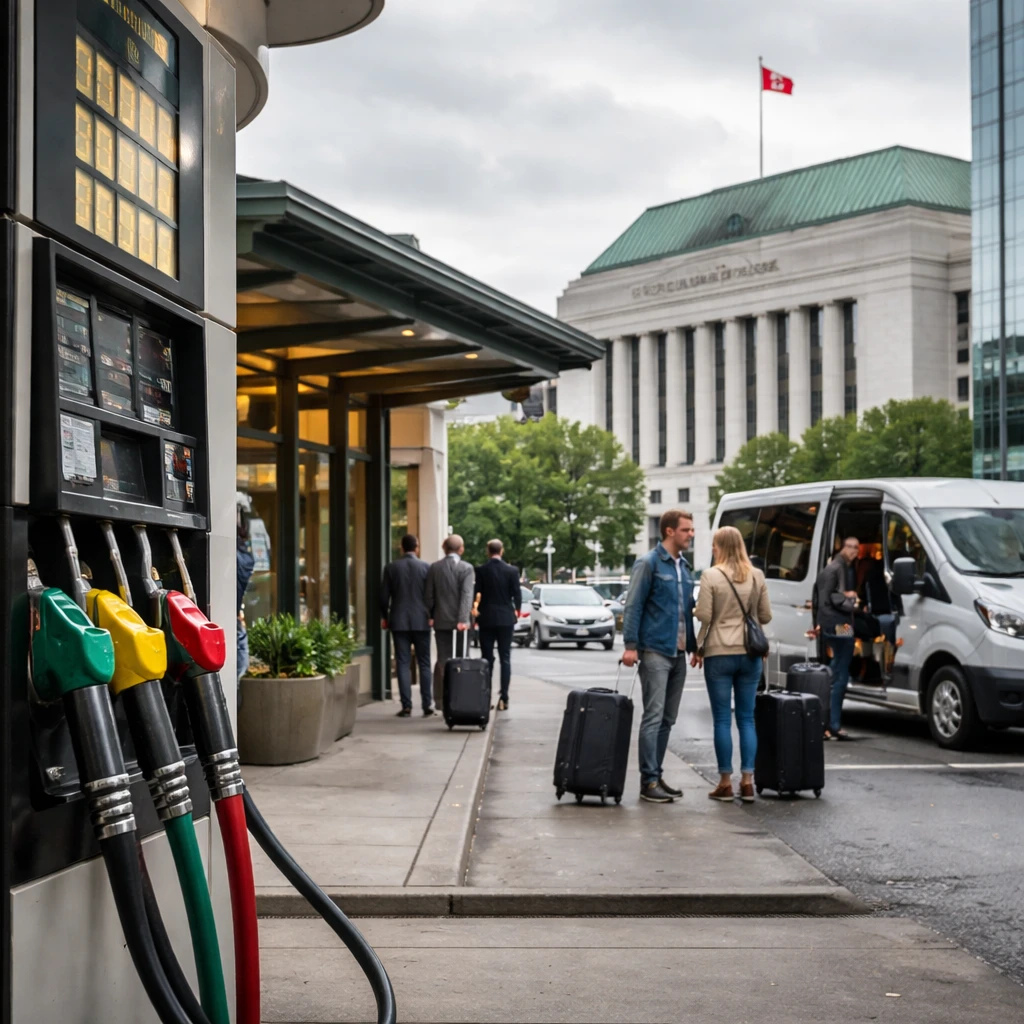
Gasoline was the major engine of the annual increase in CPI, accelerating 25.7% in July after a 20.5% rise in June, the statistics agency noted. Prices for travel tours also added to the yearly gain, with consumers paying more for hotels and flights to the United States, particularly to cities that hosted the football World Cup.
At the same time, a slower pace of grocery inflation moderated the overall CPI. Food purchased from stores rose 3.1% in July, down from a 3.9% increase in June. Nonetheless, July marked the 18th straight month in which grocery price inflation outpaced the all-items CPI.
Shelter costs, a category that encompasses rents and mortgage interest costs, remained subdued relative to other components, rising 1.3% in July.
Market response
The Canadian dollar firmed modestly after the CPI release, trading up 0.17% at C$1.3851 against the U.S. dollar, equivalent to 72.20 U.S. cents.
Taken together, the data show headline inflation pushed to the top of the Bank of Canada's target band because of energy and travel-related influences, while core measures remain near the central bank's preferred midpoint - a dynamic that market participants and policymakers are likely to interpret as supportive of a pause in policy tightening for now.
Summary
Canada's annual CPI rose to 3.0% in July, with a monthly increase of 0.5%. Gasoline prices and higher travel-tour costs were the main drivers of the headline uptick, while core inflation measures (CPI-trim and CPI-median) held near 2.0%. Grocery inflation slowed but remained above the all-items CPI for the 18th consecutive month. Shelter costs rose modestly.