
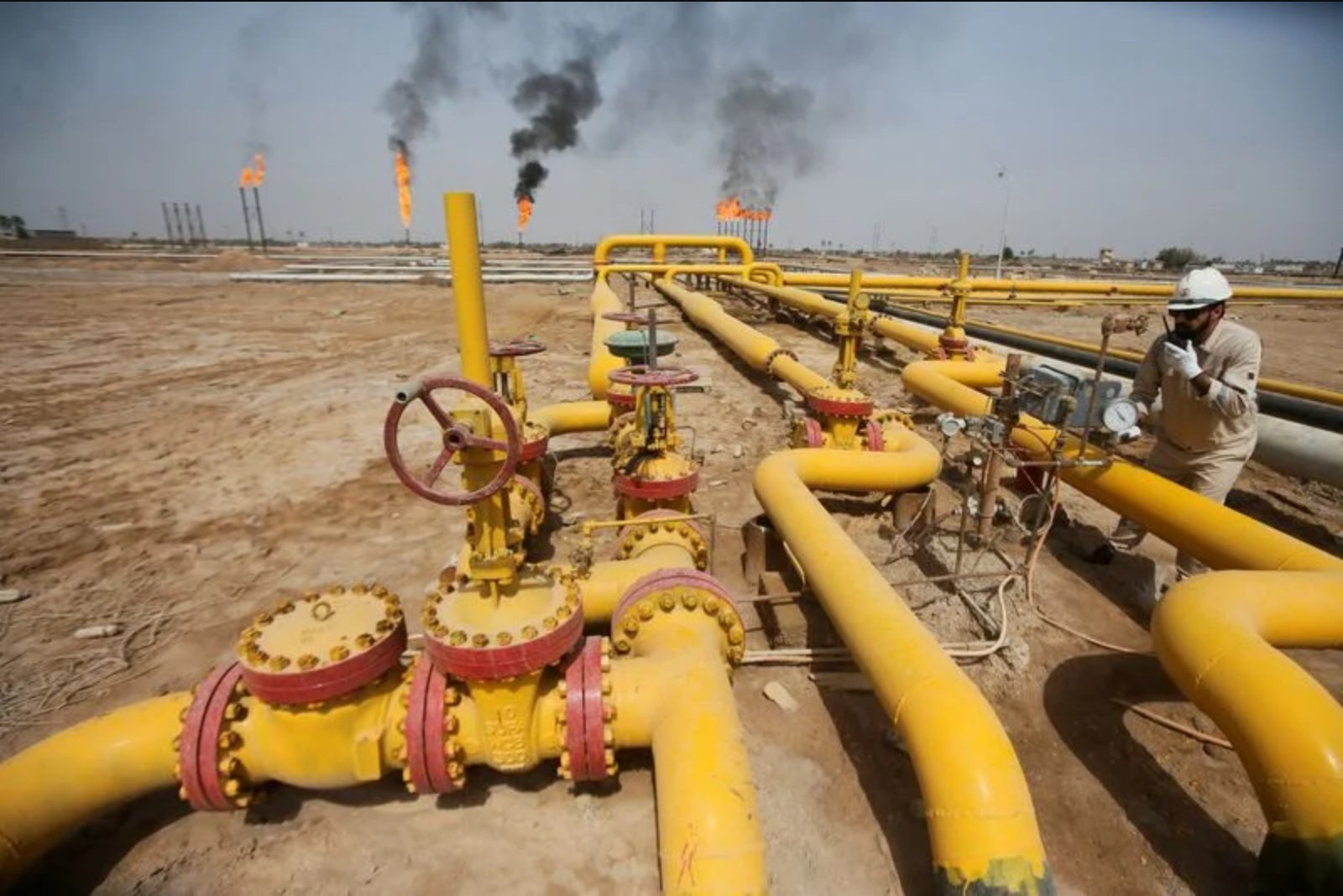
Plans to establish a new crude export corridor stretching from Iraq into Syria and onwards to the Mediterranean port of Banias are being positioned by officials and some energy executives as a means to reduce the global oil industry's reliance on the Strait of Hormuz. Sources directly involved with the initiative, however, say the effort will be both time-consuming and costly, requiring roughly four years to construct and carrying a price tag of at least $15 billion.
U.S. officials have publicly discussed the broader strategy of moving oil transport off Hormuz. "Over the next two years, the strait is going to become irrelevant. It is going to become just another body of water," one U.S. official was quoted saying. While that view frames pipelines as a key element of resilience, two project insiders who spoke on condition of anonymity told Reuters that the Iraq-Syria pipeline will not be a rapid fix and will face practical hurdles.
Existing line unusable; new build required
Iraq and Syria were once linked by a pipeline that carried crude from Kirkuk to Banias. That line, however, was extensively damaged by conflicts in both countries and has not seen regular use since the 1980s. The two insiders said rehabilitating the old pipeline is not a viable option in many segments because intact sections do not meet newly developed specifications and would be incompatible with planned modern systems.
Instead of refurbishment, the sources said the planned project would require laying largely new infrastructure. One of the sources described the proposal as an entirely new integrated crude oil pipeline system that would connect Iraq’s southern and northern fields to a central hub in Haditha in western Iraq and then carry oil onward to Banias. Another source noted that while parts of the route would broadly follow the Kirkuk-Banias corridor, much of the old line cannot be reused.
Scale and capacity questions
The U.S. has publicly welcomed the "rehabilitation and reconstruction" initiative and stated that initial transport capacity would be 2 million barrels per day of crude oil. That figure would represent a substantial increase over the old pipeline’s capacity, which is estimated at roughly 300,000 barrels per day - less than a tenth of the oil volume Iraq exported through the Strait of Hormuz before the Iran war.
For context, Iraq exported around 3.6 million barrels per day before the conflict-related disruptions. In July, state-run SOMO reported that Iraq shipped just 35.5 million barrels in total via Hormuz for that month. Iraq has also restarted exports from Kirkuk via a pipeline to Turkey’s Ceyhan port, with a targeted capacity of about 250,000 barrels per day.
Timeline and practical hurdles
Both sources directly involved in the project estimated work on the Iraq-Syria pipeline would take around four years. One source cautioned, however, that the timeline could extend to accommodate tasks such as clearing remnants of older infrastructure and securing fresh land use rights from Syria’s new administration.
Beyond construction time, the sources noted other practical requirements: designing and installing new pipeline sections to modern specifications, linking southern fields such as West Qurna 2 and Nassiriya to the broader system, and establishing a central collection and transport hub at Haditha. Those elements contribute to the overall cost estimate of at least $15 billion, the insiders said.
Consortium-backed studies underway
Syria and Iraq have signed separate memorandums of understanding with a consortium that includes U.S. major Chevron, TI Capital and Qatar’s UCC Holding to undertake technical and financial studies as preparation for the pipeline. The studies are intended to assess feasibility and guide decisions about whether to refit, expand or rebuild sections of the existing route.
Chevron confirmed an earlier statement about the preliminary agreement but declined to comment on commercial details. At a recent briefing, a Chevron executive described the project as potentially providing "another access route to market" through the Mediterranean, while noting that technical studies are still required to determine the status of the existing Iraq-Syria pipeline.
The executive also said any new pipeline would need to connect to Iraq’s southern fields, specifically West Qurna 2 and Nassiriya, where Chevron is in negotiations to enter. Chevron has not provided estimates of the project’s future export capacity and cautioned that pipelines rarely operate at full capacity from day one.
Strategic framing versus operational reality
U.S. officials and some energy executives have presented the pipeline concept as one component of a broader shift away from seaborne transit through Hormuz. Before the conflict, about a fifth of the world’s oil and liquefied natural gas transited the strait. The U.S. has suggested that more than 50% or 70% of those exports might move to underground pipelines over time, but the sources involved in the Iraq-Syria project emphasize that delivering a working, high-capacity pipeline between Iraq and Banias will be a multi-year endeavor with significant upfront investment.
Key takeaways
- The pipeline will likely require about four years to construct and cost at least $15 billion, according to project insiders.
- Existing Kirkuk-Banias infrastructure is largely incompatible with current specifications, necessitating mostly new construction rather than simple rehabilitation.
- Initial transport capacity cited by U.S. officials is 2 million barrels per day, a major expansion relative to the old line’s roughly 300,000 barrels per day, but still part of a long-term transition away from Hormuz-based exports.