
World August 16, 2026 03:18 AM

Indonesia’s Deadliest Quakes of the Last Decade, After New 7.7-Magnitude Shock

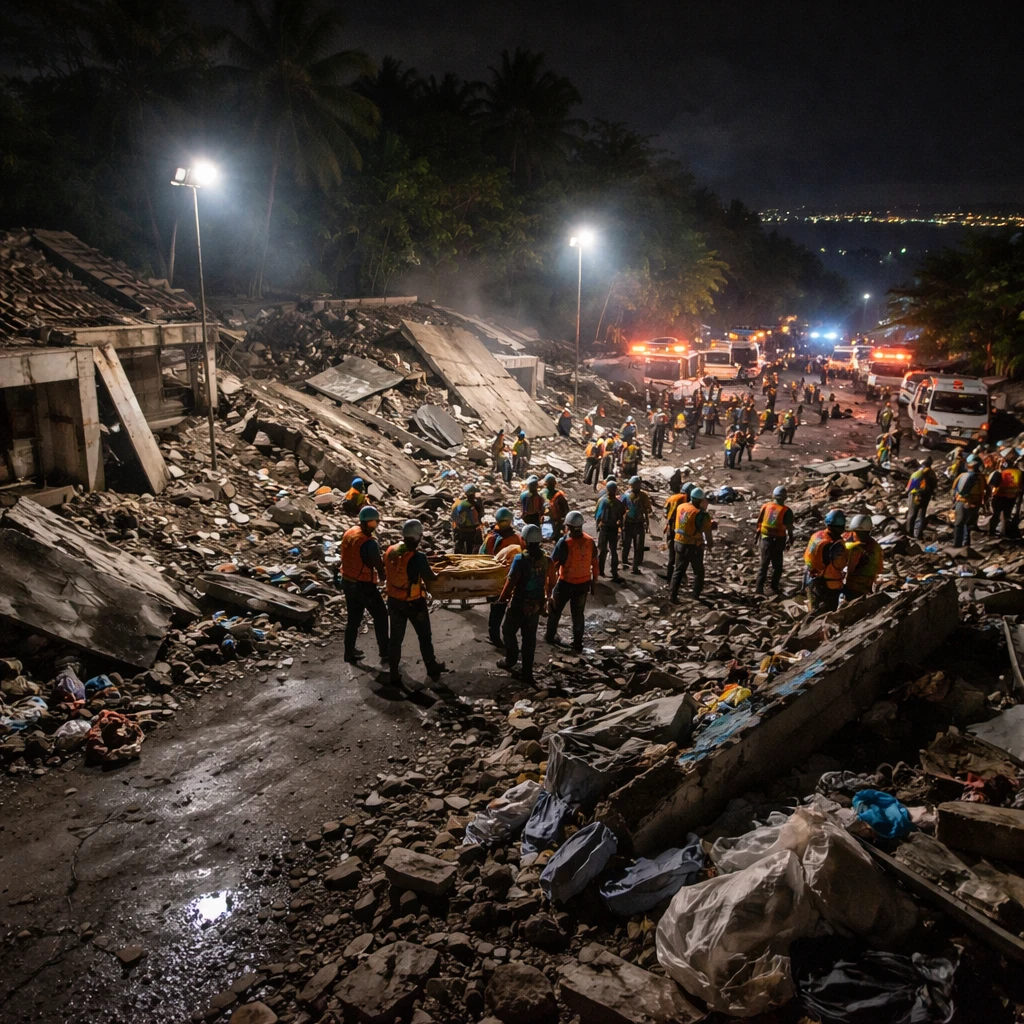
A magnitude-7.7 earthquake in eastern Indonesia has killed at least 51 people as rescue efforts continue; a review of the most lethal tremors since 2016

By Marcus Reed
Share
Twitter Reddit Facebook LinkedIn

A magnitude-7.7 earthquake that struck eastern Indonesia on Saturday has claimed at least 51 lives, with search and rescue operations underway. Below is a rundown of the deadliest earthquakes in the country over the past ten years, based on records from the national disaster mitigation agency BNPB. The list details locations, death tolls, dates, magnitudes and the scale of damage reported.

Indonesia’s Deadliest Quakes of the Last Decade, After New 7.7-Magnitude Shock
Summarize with
ChatGPT Perplexity Claude Grok Gemini

Key Points

  • Human toll and rescue operations: The recent magnitude-7.7 quake has caused at least 51 deaths with search and rescue continuing - this directly involves emergency response agencies and humanitarian services.
  • Housing and infrastructure damage: Historical events listed by BNPB record large numbers of damaged or destroyed homes and collapsed public buildings, indicating significant impacts on the housing and construction sectors as well as public infrastructure.
  • Healthcare and government services affected: Several quakes, notably the Jan. 15, 2021 event in West Sulawesi, caused collapses of health facilities and government offices, affecting public service delivery and disaster management capabilities.

JAKARTA, Aug 16 - A magnitude-7.7 earthquake that struck eastern Indonesia on Saturday has killed at least 51 people, with rescue operations ongoing.


Deadliest earthquakes of the past decade, according to BNPB

  • PALU, SIGI - 4,141 DEATHS
    Sept. 28, 2018: A magnitude-7.5 quake set off a tsunami and widespread liquefaction that devastated Palu city and neighbouring districts in Donggala regency on Sulawesi island. The event resulted in 4,141 deaths, left 4,438 injured and 705 listed as missing. More than 110,000 homes were damaged or destroyed.

  • CIANJUR - 602
    Nov. 21, 2022: A relatively shallow magnitude-5.6 earthquake struck inland in West Java province. Despite its moderate magnitude, it became the deadliest non-tsunami earthquake in Indonesia over the past decade, killing 602 people, injuring 7,810 and damaging more than 56,000 homes.

  • LOMBOK - 518
    Aug. 5, 2018: A magnitude-7.0 earthquake, followed by a series of powerful aftershocks, severely impacted large areas of Lombok in West Nusa Tenggara province, resulting in at least 518 fatalities.

  • MAMUJU-MAJENE - 107
    Jan. 15, 2021: A magnitude-6.2 earthquake caused extensive collapses of buildings, including government offices, homes and health facilities across West Sulawesi province. The official death toll was 107, with widespread damage reported in Mamuju and Majene regencies.

  • PIDIE JAYA - 96
    Dec. 7, 2016: A shallow magnitude-6.5 quake struck before dawn, toppling structures and trapping residents beneath rubble. Records list 96 deaths and hundreds injured, marking one of Aceh province's deadliest events since the 2004 tsunami.


Context and ongoing situation

The recent magnitude-7.7 event in eastern Indonesia has added to a decade marked by several high-fatality earthquakes in different regions of the archipelago. Rescue operations following the latest quake remain in progress.


Summary of findings

The BNPB data show that the most lethal events combined high magnitudes with secondary hazards such as tsunamis and liquefaction, as well as shallow inland quakes that caused severe building collapse. Across the listed events, casualties range from dozens to several thousand, and reported damage includes tens of thousands of homes and critical public facilities.

Risks

  • Ongoing rescue and recovery uncertainty: The continuing search and rescue operations after the most recent magnitude-7.7 quake carry uncertainty about the final casualty count and the scale of remaining damage, which affects emergency services and humanitarian planning.
  • Widespread housing damage: Past events have shown that tens of thousands of homes can be damaged or destroyed, posing risks to shelter availability and the construction sector’s capacity to respond in affected regions.
  • Public facility disruption: Collapse of government offices and health facilities, as recorded in past quakes, creates risks for continuity of public services and healthcare delivery in impacted provinces.

More from World

Iran Demands Access to Qatar After Dispute Over Alleged Captured Pilots Aug 16, 2026 Romania Downs Drone That Violated Its Airspace, NATO Jet Involved Aug 15, 2026 Quake in Eastern Indonesia Forces Thousands to Flee, Leaves Dozens Dead and Roads Blocked Aug 15, 2026 Kim and Putin Reaffirm Cross-Border Ties as North Korea Marks Liberation Day Aug 15, 2026 New South Wales to Launch Nationwide Gun Buyback on November 2, Albanese Confirms Aug 15, 2026