
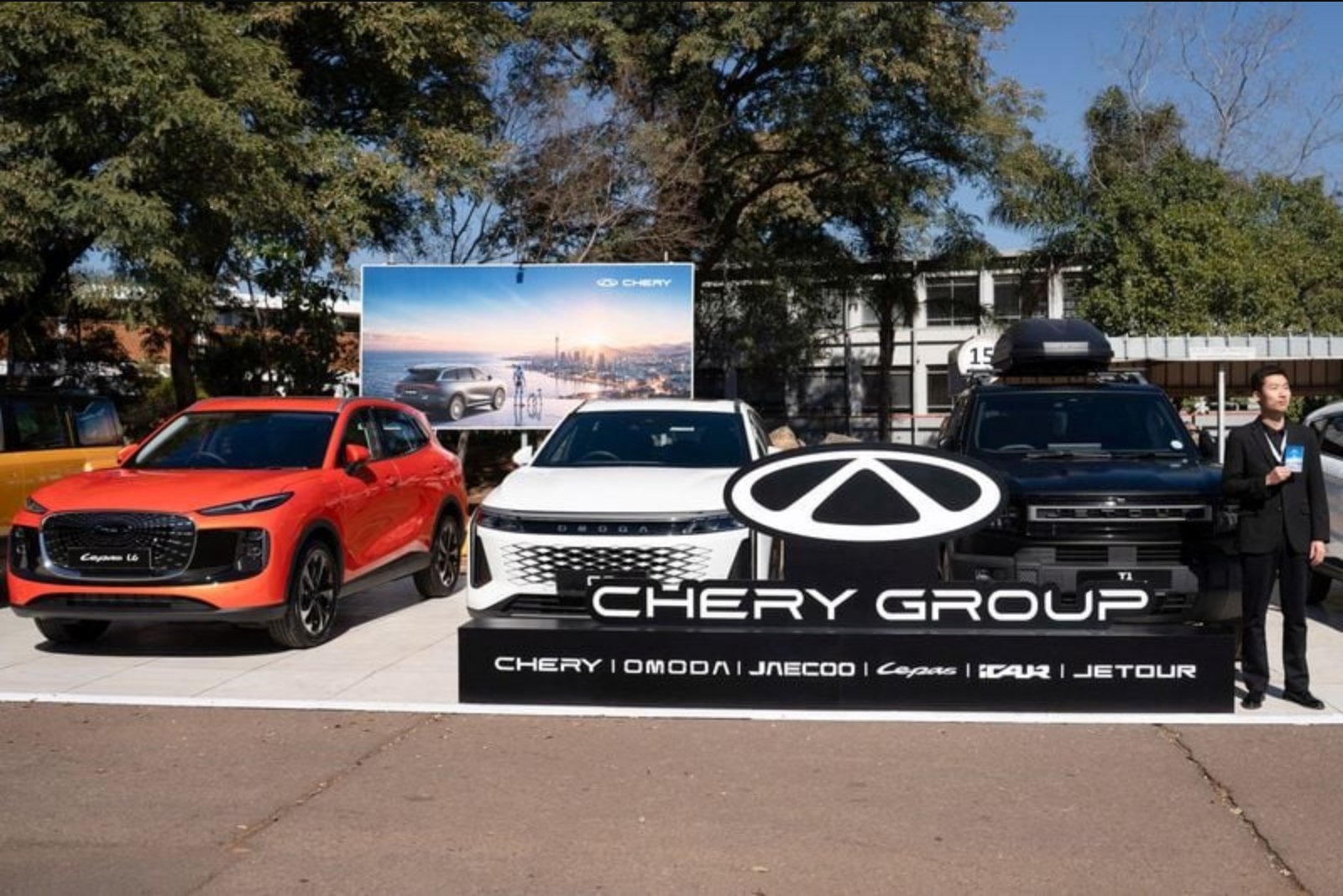
China's Chery Auto completed the handover of the former Nissan vehicle manufacturing plant in Rosslyn on Friday, implementing a transaction disclosed earlier this year. Executives present at the takeover said Chery will inject millions of dollars into upgrades and new machinery as it prepares to begin manufacturing vehicles in South Africa in mid-2027.
The company described South Africa as the intended hub for its African operations, covering manufacturing, exports, research and development, and regional management. Chery, which is identified as China's largest car exporter in company comments, confirmed it will retain the plant's entire workforce of 692 employees.
Company leadership also projected a broader employment impact. Vice President Charlie Zhang said the Rosslyn project is expected to generate nearly 3,000 direct and indirect jobs spanning production, supplier networks and associated services. Zhang outlined an ambition to develop the site into an integrated auto centre that includes R&D, supply chain functions and workforce training - part of a longer-term objective to support Chery's growth and to exceed 100,000 annual vehicle sales in South Africa.
The takeover ceremony drew executives, government officials and industry stakeholders. Executives emphasized the company is responding to the need to expand beyond a domestic market showing intense competition and overcapacity by accelerating overseas investment and production footprints.
Chery plans to use the Rosslyn factory to initially assemble models from the Jetour T series, listing the T1, Jaecoo J5 and Chery Tiggo 4 sport utility vehicles. The Jaecoo J5 is slated to be produced in both internal combustion engine and new energy vehicle spec variants.
On the timing and scale of investment, executives said Chery will spend millions of dollars to upgrade the facility and utilities, but did not provide a precise capital figure. The company expects a production ramp-up in the third and fourth quarters of 2027, with a target output of about 15,000 vehicles during that phase.
To build local content and supplier networks, Chery has launched a programme aimed at achieving roughly 40% local content in the initial stage and is conducting surveys of tier-1 suppliers. The automaker also plans to import certain suppliers from China, particularly those providing components for electric and intelligent vehicle systems, according to comments from Executive Vice President Zhang Guibing.
Context and implications
The move represents a concrete step in Chery's strategy to expand manufacturing and market presence internationally by converting an existing facility and leveraging both local labour and imported supplier relationships. The focus on local content, supplier surveys and the staged ramp-up reflect a structured approach to re-establish production capability while integrating new technologies for ICE and NEV models.