
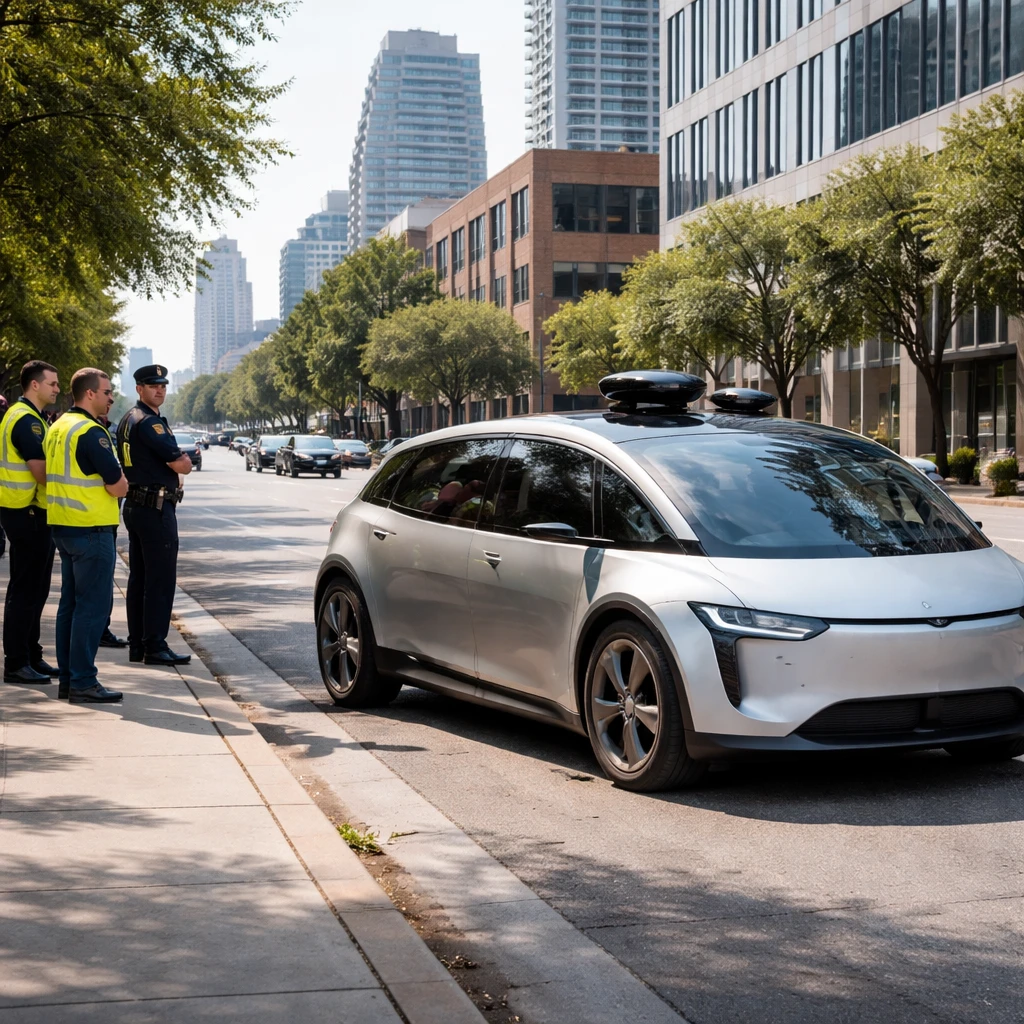
Aug 17 - Tesla has communicated to employees that it is preparing for a public rollout of its Cybercab in Austin, Texas, potentially beginning as soon as this month, according to people with knowledge of the plans. The Cybercab is a purpose-built autonomous vehicle designed without pedals or a steering wheel and is central to Tesla's wider robotaxi ambitions.
The company plans an initial phase that will offer rides to employees on public roads. After that initial employee rollout, Tesla intends to integrate Cybercabs into a robotaxi service in Austin a few days later, the people said.
Preparatory actions for the launch have included multiple steps carried out in recent weeks. These steps encompassed test driving, providing employee rides on private roads and conducting training sessions with local first responders. Separately, Tesla began running tests of the production version of the Cybercab on public roads in June. The company expects production of the vehicle to ramp up later this year.
Tesla did not immediately respond to a request for comment.
Operational context
From a logistics and operations perspective, moving from private-road testing and controlled employee rides to public-road deployments and an operational robotaxi service will require coordination across testing, safety training and production scaling. The sequence outlined - employee rides on public roads followed by rapid incorporation into a paid or pilot robotaxi offering - suggests a staged approach intended to manage risk while advancing toward service availability.
Sectors potentially affected
- Automotive manufacturing and production planning - due to the upcoming production ramp for the Cybercab later this year.
- Transportation and ride-hailing services - as Cybercab integration into a robotaxi service would alter local ride supply dynamics.
- Emergency services and local safety agencies - given recent training sessions with first responders tied to launch preparation.
Conclusion
Tesla's outlined plan moves the Cybercab from testing toward operational use in Austin, beginning with employee rides on public roads and followed within days by deployment in a robotaxi service. The company has already tested production vehicles on public roads in June and is preparing to increase production later this year. The timeline and staged rollout reflect an operational progression that emphasizes testing, local responder training and measured service introduction.