
Chicago Board of Trade corn futures rose on Monday as traders positioned themselves ahead of two key informational events due this week: the Pro Farmer field tour and the U.S. Department of Agriculture's weekly crop ratings report. Market participants are seeking fresh, on-the-ground yield information to complement recent government forecasts.
The Pro Farmer field tour, scheduled for this week, is expected to deliver additional observations on corn and soybean yields following the USDA's lower yield forecasts released last week. Those forecasts have left traders sensitive to any new field-level data that could confirm or challenge the USDA's numbers.
The USDA is also due to publish its weekly crop ratings report Monday afternoon, which will provide a snapshot of current field conditions across key growing areas. Traders view that report as another near-term input into supply expectations and price direction for corn.
International developments are also in play. Agribusiness consultancy AgRural reported that farmers in Brazil's center-south region had completed 85% of their 2026 second corn crop harvest as of Thursday. That figure marks a rise from 79% the previous week but remains short of the 94% completion rate recorded in the same period a year earlier.
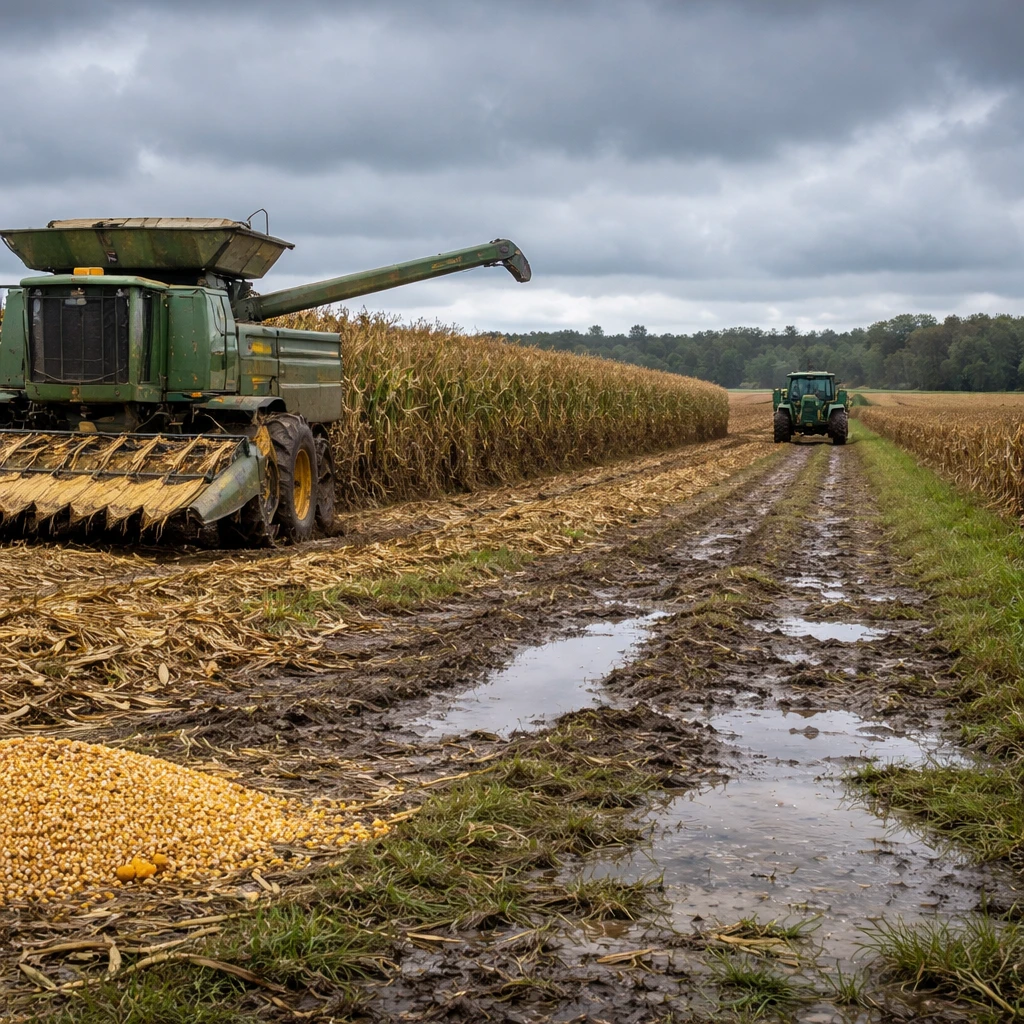
Domestically, parts of the U.S. Midwest have experienced flooding after heavy rainfall. Those conditions have raised concerns about potential crop disease and other damage that could affect harvest quality and yields. Market participants cited those weather risks as a factor contributing to cautious positioning ahead of fresh crop data.
On the trading floor, the most-active corn contract advanced 6-1/4 cents, settling at $4.89-1/2 a bushel. The move reflected a mix of anticipation for new information and near-term weather and harvest developments in both hemispheres.
Market context: Traders are monitoring the Pro Farmer tour and the USDA weekly ratings for corroborating evidence on yields, while harvest progression in Brazil and U.S. flooding create additional variables for supply expectations.