
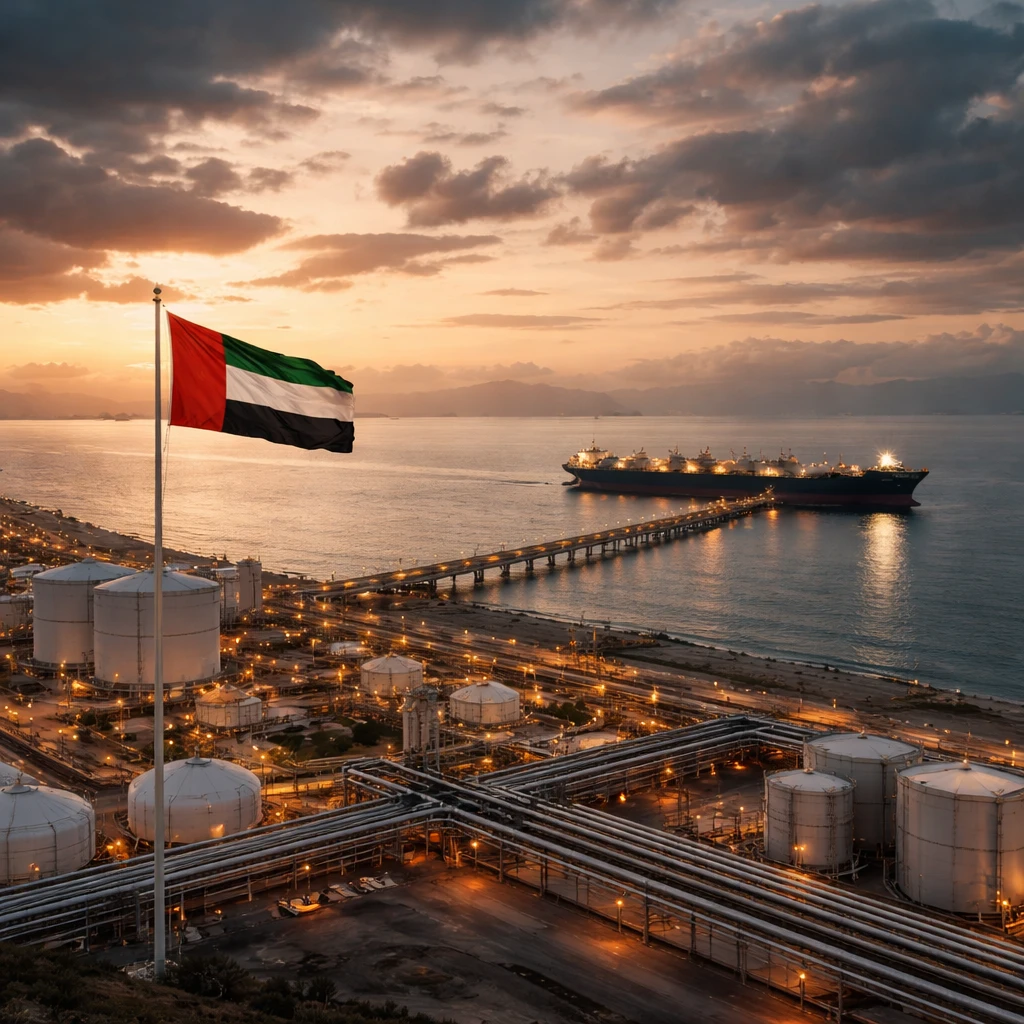
The United Arab Emirates has officially withdrawn from the Organization of Arab Petroleum Exporting Countries (OAPEC), the intergovernmental body said in a statement on Sunday. The announcement follows the UAE's earlier April 28 decision to leave both OPEC and OPEC+, a move the country has tied to its intention to concentrate on raising national oil production.
OAPEC, created in 1968 to strengthen cooperation among Arab oil-exporting states, differs from OPEC in that it does not set production policies for its members. The UAE's exit from OAPEC represents another step in its departure from multilateral oil production arrangements.
In a related development, Abu Dhabi National Oil Company (ADNOC) confirmed plans to award 200 billion dirhams, equivalent to $55 billion, in projects covering 2026-2028. ADNOC said these awards are intended to accelerate growth, execute its strategy, and underpin its five-year capital expenditure plan. The company characterized the planned awards as ushering in a new phase of large-scale project delivery across its value chain to meet growing global energy demand.
Regional security dynamics also featured in the organization statement. The conflict in Iran has, according to the report, deepened divisions among key Arab states and resulted in the closure of the Strait of Hormuz, which had served as the primary export route for the group's leading oil producers. The statement says that, as a consequence, major Gulf oil producers have lost the ability to exert market influence during a major supply shock.
For markets and logistics networks, the combination of the UAE's policy shift, ADNOC's heavy planned project awards, and disruptions to a principal shipping lane frames a period of change for oil flows and project execution across the region. While OAPEC's role was not one of production-setting, the UAE's successive exits from OPEC, OPEC+ and now OAPEC signal a sustained move away from collective frameworks toward national-level production and investment strategies.
Contextual note: The details above were reported in the intergovernmental organization's statement and in ADNOC's company announcement about its planned project awards. The report also referenced regional security developments affecting the Strait of Hormuz and the market influence of Gulf producers during supply shocks.