
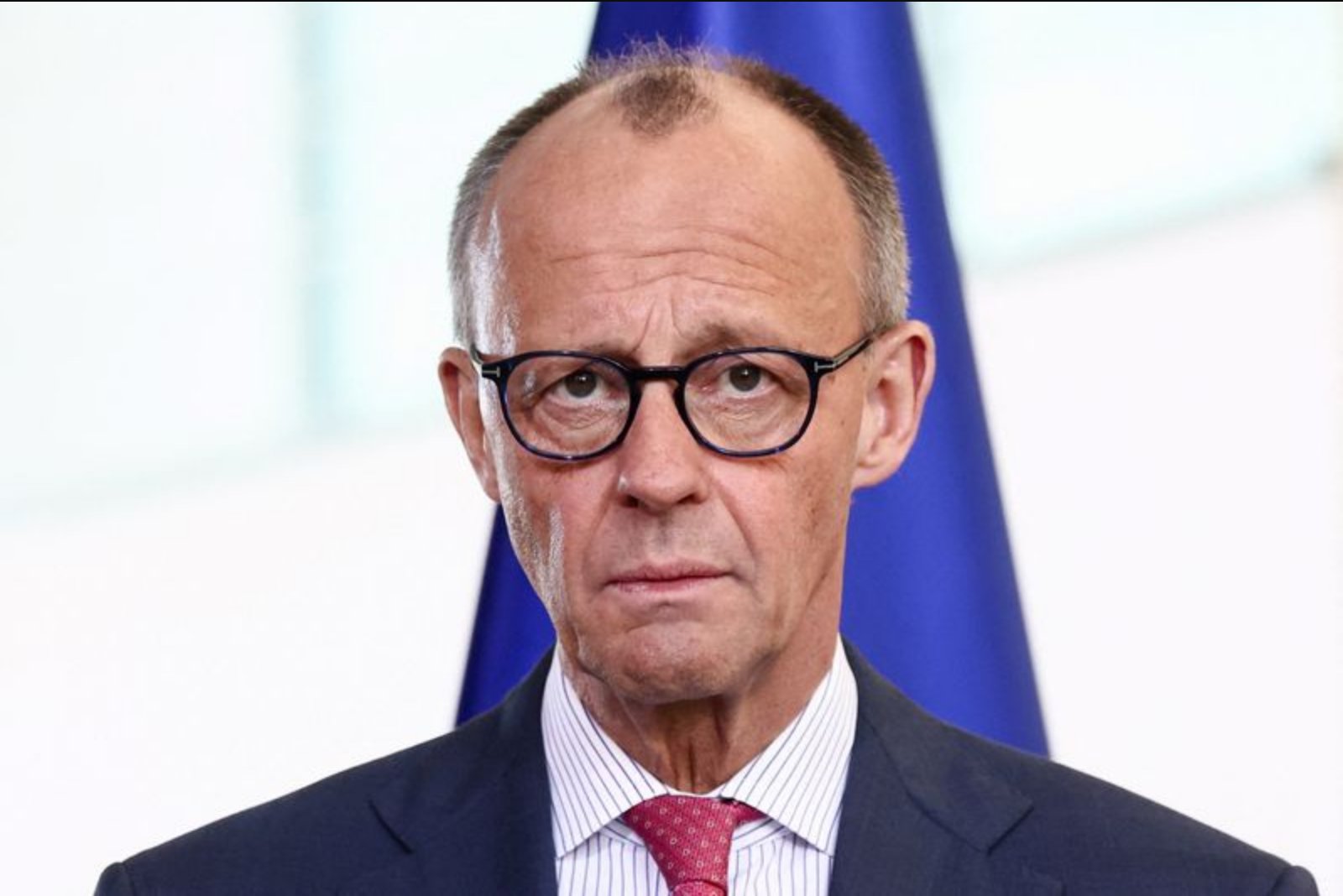
BERLIN, May 3 - German Chancellor Friedrich Merz said he must accept that U.S. President Donald Trump holds different views from his own but insisted those differences do not explain the United States’ recent announcement to reduce its troop presence in Germany by 5,000 soldiers.
Speaking in an interview with public broadcaster ARD that was scheduled to be broadcast later on Sunday, Merz pushed back against suggestions that his critical comments about U.S. war planning in Iran had triggered Washington’s decision. He said his remarks - in which he questioned whether Trump had an exit plan for the Middle East and said the U.S. was being "embarrassed" in talks with Iran - were not linked to the troop drawdown.
"I have to accept that the American president has a different view on these issues than we do. But that does not change the fact that I remain convinced that the Americans are important partners for us," Merz told ARD.
When asked directly whether the reduction in U.S. forces had anything to do with the spat between the two leaders, Merz replied, "There is no connection." He also reiterated his commitment to the transatlantic alliance.
The U.S. announcement to cut its military presence in Germany - its largest European base - by around 5,000 troops came on a Friday and followed repeated calls from Trump for a reduced American footprint in Germany. The president has long urged European allies to take greater responsibility for their own security, a position he voiced during his first term as well.
Friday’s move is also widely viewed as nullifying a prior plan under President Joe Biden’s administration to station a U.S. battalion in Germany equipped with long-range Tomahawk cruise missiles. Berlin had advocated for that deployment as a significant deterrent against Russia while European countries worked to field comparable capabilities of their own.
Merz said that Trump had never committed to the Tomahawk deployment and expressed doubts that the United States would relinquish such weapons systems, adding, "If I’m not mistaken, the Americans don’t have enough themselves at the moment." The announcement and the apparent shelving of the missile deployment represent a setback for German defense planners who had supported the move.
Relations between the two leaders have been sharp at times: after Merz’s public criticism, Trump later described Merz as an "ineffectual" leader.
Key points
- Chancellor Merz accepts policy differences with President Trump but denies any link between their dispute and the U.S. decision to reduce forces in Germany - sectors affected include defense and diplomatic relations.
- The U.S. plan to cut about 5,000 troops effectively cancels a Biden-era proposal to deploy a Tomahawk-equipped battalion to Germany, a development with consequences for European deterrence planning.
- Political tensions between national leaders remain visible, with public criticism followed by a sharp retort from the U.S. president - this affects government relations and defense procurement discussions.
Risks and uncertainties
- Reduced U.S. troop levels may weaken immediate deterrence posture in Europe, particularly regarding concerns about Russia - relevant to defense planners and military contractors.
- The cancellation of the Tomahawk battalion deployment introduces uncertainty in European defense capability development and coordination - affecting defense procurement and strategic planning.
- Ongoing public disagreements between leaders could complicate coordination within NATO on security policy - relevant to diplomatic relations and international security cooperation.