
Economy May 3, 2026 10:12 AM

ASEAN+3 Finance Officials Pledge Vigilance on Market Volatility at Samarkand Meeting

Delegates from China, Japan, South Korea and 10 Southeast Asian nations commit to monitor sudden market swings and uphold open trade and supply-chain resilience

By Leila Farooq
ASEAN+3 Finance Officials Pledge Vigilance on Market Volatility at Samarkand Meeting

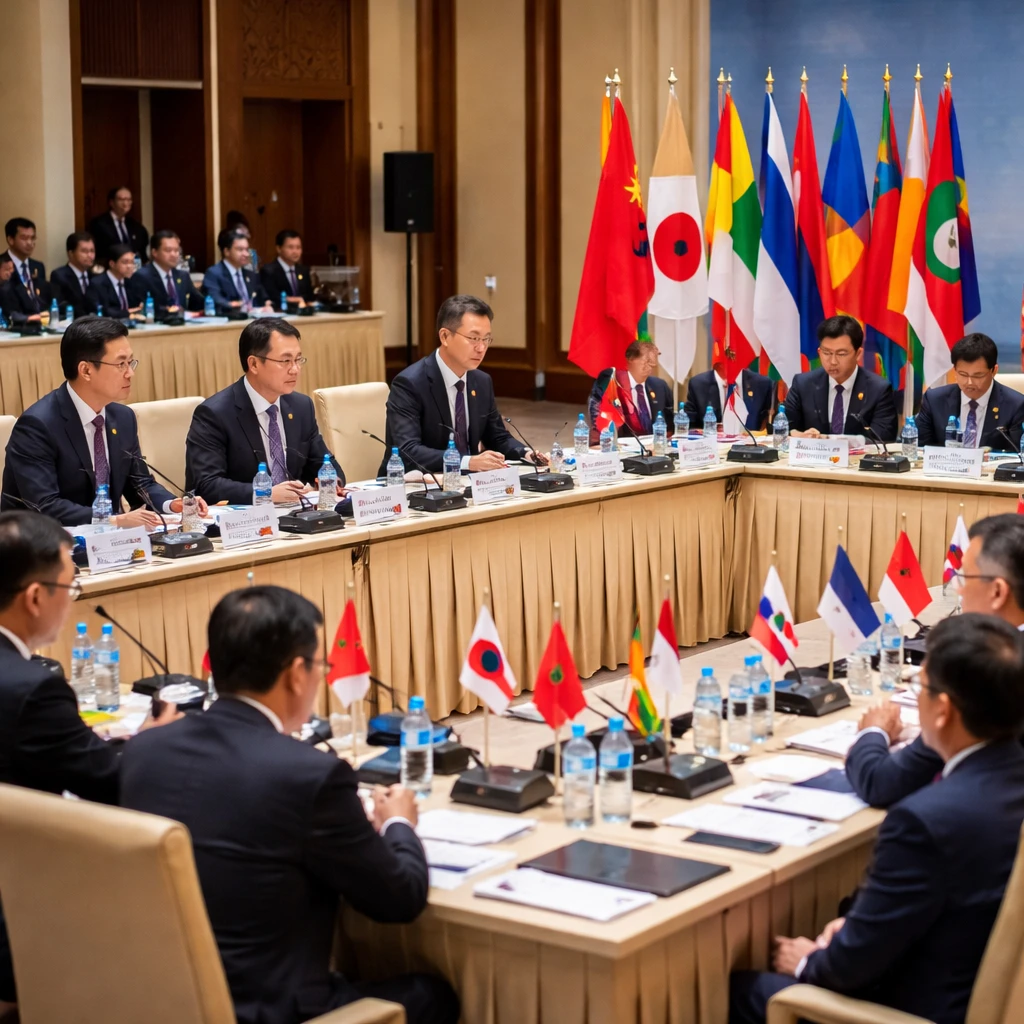
Finance ministers and central bank officials representing China, Japan, South Korea and the 10 members of ASEAN issued a joint statement after meeting in Samarkand, Uzbekistan, saying they will watch for excessive volatility and disorderly market moves and stand ready to respond as domestic conditions warrant. The group also affirmed support for open trade, resilient supply chains and a rules-based multilateral trading system centered on the World Trade Organization.

Key Points

  • ASEAN+3 officials - representing China, Japan, South Korea and 10 Southeast Asian countries - pledged close monitoring of excessive market volatility; sectors affected include financial markets and banking.
  • The group emphasized readiness to respond to disorderly market movements and changes in global liquidity, with decisions to be made based on domestic conditions; this stance principally impacts central banking and financial stability policy.
  • Delegates reaffirmed support for open trade and resilient supply chains and backed a rules-based multilateral trading system with the World Trade Organization at its core; trade, logistics and export-oriented sectors are implicated.

Finance ministers and central bank governors from China, Japan, South Korea and the 10 member states of the Association of Southeast Asian Nations (ASEAN) signaled collective vigilance on market turbulence following a gathering in Samarkand, Uzbekistan.

The officials convened on the sidelines of the Asian Development Bank's annual meeting and issued a joint communique underscoring their ongoing policy dialogue aimed at preserving macroeconomic and financial stability.

"We strongly reaffirm our commitment to sustained policy dialogue to safeguard macroeconomic and financial stability," the statement said.

In addition to reaffirming that commitment, the group said it would be attentive to the risks posed by excessive volatility and disorderly movements in financial markets as well as to shifts in global liquidity conditions. The statement said members stand ready to respond to such risks in accordance with domestic circumstances.

The communiqué also addressed trade and supply-chain considerations. Delegates pledged to keep trade and investment channels open and to support resilient supply chains. They restated backing for a rules-based, non-discriminatory, free, fair, open, inclusive, equitable and transparent multilateral trading system, explicitly naming the World Trade Organization as central to that framework.

The ASEAN bloc referenced in the statement comprises Brunei, Cambodia, Indonesia, Laos, Malaysia, Myanmar, the Philippines, Singapore, Thailand and Vietnam. The joint remarks reflect the collective stance of the ASEAN+3 grouping - the ten ASEAN members plus China, Japan and South Korea - at this meeting in Samarkand.

The officials' pledge to monitor market volatility and to remain prepared to act was presented as contingent on domestic conditions, with no specific policy actions or timelines announced in the statement. The communiqué focused on reaffirming principles of cooperation on macroeconomic and financial stability and on trade openness rather than detailing operational steps.


Contextual note - The statement followed discussions held alongside the Asian Development Bank's annual meeting in Samarkand, where finance and central bank officials of the ASEAN+3 grouping met to exchange views on prevailing economic and financial conditions.

Risks

  • Excessive volatility and disorderly movements in financial markets pose a risk to stability - primary implications for banking, capital markets and investor sentiment.
  • Shifts in global liquidity conditions could create challenges for financial systems and funding conditions - affecting corporate borrowing, sovereign financing and short-term market functioning.
  • Responses will be shaped by domestic conditions, introducing uncertainty about the timing and nature of policy measures across different jurisdictions - this may affect cross-border investment and regional market coordination.

More from Economy

Fed Governor Barr Flags Private Credit Strain as Potential Catalyst for Broader Credit Tightening May 3, 2026 Bessent Predicts Energy Costs Will Ease Later This Year Despite Recent Spike May 3, 2026 Asia's Finance Leaders Say They Will Act If Markets Turn Disorderly May 3, 2026 ADB unveils finance facility to build critical mineral supply chains across Asia-Pacific May 3, 2026 ECB Governing Council Member Warns Middle East Conflict Heightens Euro Zone Recession Risk May 3, 2026