
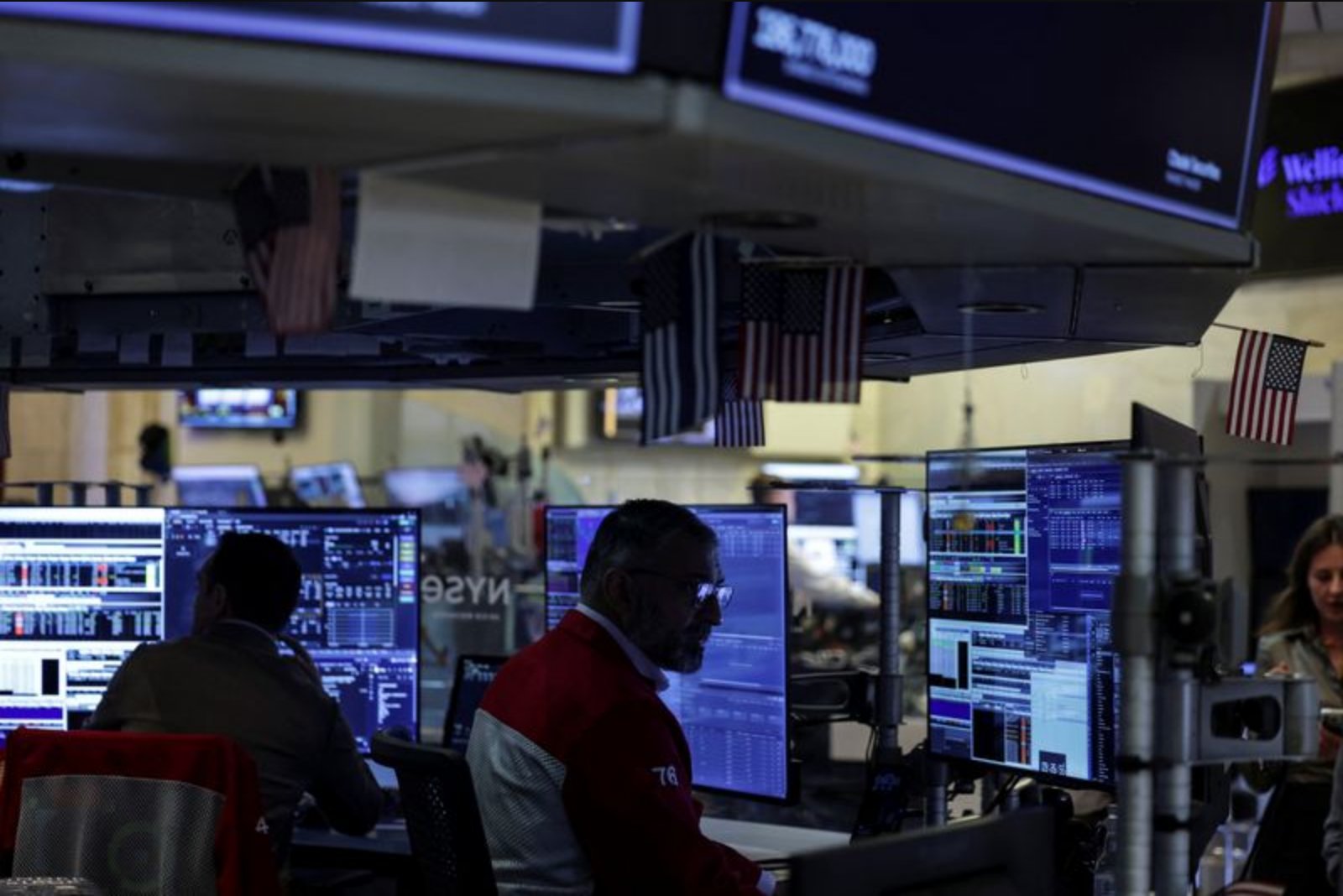
Summary: Major U.S. indexes ended the week at record highs after a broad monthly rebound, underpinned by an unusually strong corporate profit picture. That bullish backdrop is contending with sharply higher oil prices, a more hawkish tone from the U.S. central bank and rising Treasury yields. Market participants are looking to another busy earnings week and the April payrolls report for clues about how durable the rally will be.
Market backdrop
Equities closed April with sizable gains, with the S&P 500 and the Nasdaq Composite posting their biggest monthly increases since 2020. The S&P 500 rose more than 10% over the month, while the Nasdaq climbed over 15%. Major U.S. stock indexes finished the prior week at record highs, continuing a sharp recovery that began amid concerns about the economic consequences of the conflict in the Middle East.
Investors are entering the coming week focused on a fresh wave of corporate results and a key labor-market release that could determine whether the market's recent strength holds. The rally has been supported by an exceptionally strong earnings season that has so far countered other market pressures.
"We have these fast-rising profits on one side, and then on the other, we have upward pressures on oil prices and bond yields," said Angelo Kourkafas, senior global investment strategist at Edward Jones. "We’ve rallied a lot in April, so potentially we may enter some period of consolidation as this pull and push is playing out."
Energy prices and geopolitical sensitivity
Energy markets have become an acute source of market risk. Brent crude topped $120 a barrel this week, reaching a four-year high before retreating, as the U.S.-Israeli conflict with Iran constrained a significant supply source. While a ceasefire agreement earlier helped trigger the market's bounce, ongoing tensions in the region mean that oil markets could remain volatile and keep investor nerves frayed.
Analysts warned that prolonged elevated crude would materially change the economic calculus. "With each passing day, the economic risk grows," said Jeff Buchbinder, chief equity strategist for LPL Financial. "If we’re sitting here in a month or two, and Brent crude is still over $120, and we’ve still got a blockade and maybe bombs are still falling, that is a very different scenario than what we’re looking at right now."
Earnings season: another heavy week
More than 100 S&P 500 companies are scheduled to report next week, which will keep attention squarely on corporate results as markets digest the core of reporting season. As of the most recent update, overall S&P 500 earnings were on track to have climbed 27.8% in the first quarter from a year earlier, a pace that would mark the strongest profit growth since the fourth quarter of 2021, according to Tajinder Dhillon, head of earnings and equity research at LSEG Data & Analytics.
Big technology names that are investing in artificial-intelligence infrastructure delivered mixed reactions this week. Alphabet's shares rose after it reported robust cloud-computing growth, while Microsoft and Meta Platforms saw their shares retreat after less impressive results. The coming week will feature results from several high-profile companies including Palantir, Walt Disney, McDonald’s and Advanced Micro Devices.
Semiconductor companies remain closely watched after especially strong gains. Advanced Micro Devices has seen its stock soar by more than 80% since the end of March, and the Philadelphia SE Semiconductor index has jumped about 48% over the same period. "This is the group that is dominating the tape and dominating the market," said Michael O’Rourke, chief market strategist at JonesTrading. "Any datapoints you get are going to be really important."
Jobs data and the outlook for rate cuts
Attention will also turn to the U.S. payrolls report for April, due on May 8. Economists polled by Reuters as of the most recent Friday expected growth of 60,000 jobs for April, down from the 178,000 added in March but an improvement from the sizable decline in February. Those figures will be watched closely for signs of continued cooling in the labor market.
Recent data showed U.S. economic growth picked up in the first quarter, supported in part by firms' increased spending on equipment tied to AI projects. At the same time, the prospect of interest-rate cuts this year appears to be waning. The latest Federal Reserve meeting exposed divisions within the central bank, with three board members objecting to language in the policy statement that they felt understated inflation risks that could necessitate a rate hike.
That firmer, more hawkish posture from the Fed, together with jumpy oil markets, has pushed U.S. Treasury yields higher. The yield on the 10-year Treasury was trading around 4.38% late on Friday. Rising yields can present headwinds for equities by increasing borrowing costs for both consumers and companies.
"The 10-year above 4.5% will certainly catch more investors’ attention," Kourkafas said. "At that point, investors might start rethinking valuations and get a little more worried."
What to watch next
Investors will be parsing next week's earnings outcomes for confirmation that the profit momentum is sustainable, especially among megacap technology companies and semiconductor names that have driven recent market gains. At the same time, the April jobs report will be a key macroeconomic input that could either bolster or cool expectations for rate cuts later in the year.
Energy developments remain a wildcard. Continued supply disruptions or persistent geopolitical flare-ups could keep crude elevated and sustain upward pressure on yields and inflation expectations, complicating the outlook for stocks despite healthy corporate profits.
Bottom line
Robust corporate earnings are providing a strong counterweight to the headwinds of rising oil prices and a more hawkish Fed, helping push U.S. indexes to fresh highs. But the interplay between profits, energy prices, Treasury yields and incoming labor-market data will determine whether this rally continues or gives way to a period of consolidation.