
Overview
In the heart of Ashgabat, a brightly lit open-plan office houses an e-commerce firm that its founder describes as pioneering for Turkmenistan. Azat Seyitmuhammedov runs Wabrum, an online retail business he launched almost a decade ago. Seyitmuhammedov, a 38-year-old father of six, said the scene might look ordinary in Berlin or San Francisco but remains novel at home: "This may sound normal in Europe or the United States, but for Turkmenistan this is new," he said. "E-commerce here is still in its very early stages, and we consider ourselves pioneers." From an on-site warehouse, couriers working for his company deliver mainly Turkish-made clothes and shoes to customers across the country.
Access and reporting
Recently, a visiting news team was granted rare access to Turkmenistan and was able to travel unescorted and report freely on aspects of daily life. This access provided direct observation of technological adoption and business activity in a nation often regarded as isolated.
Political continuity and guarded diplomacy
Politically, Turkmenistan remains tightly governed. After gaining independence from Moscow in 1991, President Saparmurat Niyazov - known as "Turkmenbashi" or head of the Turkmen - declared the country permanently neutral and imposed one of the world’s strictest visa regimes. That framework has largely persisted more than two decades after Niyazov’s death. Under his rule a strong cult of personality developed and Ashgabat was rebuilt as a marble showcase, financed by the country’s substantial natural gas reserves - the world’s fourth-largest.
Since 2022, however, when Serdar Berdymukhamedov succeeded his father Gurbanguly Berdymukhamedov as president, there have been signs of a modest thaw. State statistics put the population of Turkmenistan at about 7.7 million. Officials have signalled ambitions to simplify the visa regime, pursue membership in the World Trade Organization and diversify an economy that remains largely state-run. The current president has also increased diplomatic travel compared with his predecessors, and some foreign diplomats in Ashgabat report a sense of slow change driven by generational shifts within the ruling elite.
One Western diplomat based in the capital said parts of the elite are interested in reform and that personal freedoms have modestly increased in recent years. Even so, Turkmenistan remains a difficult environment for foreign investors, maintaining both official and unofficial exchange rates for the dollar while political decision-making stays opaque. Among the international firms that do operate in the country, many are Turkish. Linguistic ties and a significant diaspora in Turkey mean Turkish is widely spoken among younger Turkmens.
Shifts in society and digital life
Outside formal politics, social change is most visible online, even though internet penetration in Turkmenistan remains relatively low. The national internet is slow and heavily censored; officials justify restrictions by citing the need to guard against the spread of militant Islamist ideas and drug smuggling from neighbouring Afghanistan. Despite blocks on major social platforms such as Instagram and TikTok, those sites have grown in popularity via virtual private networks.
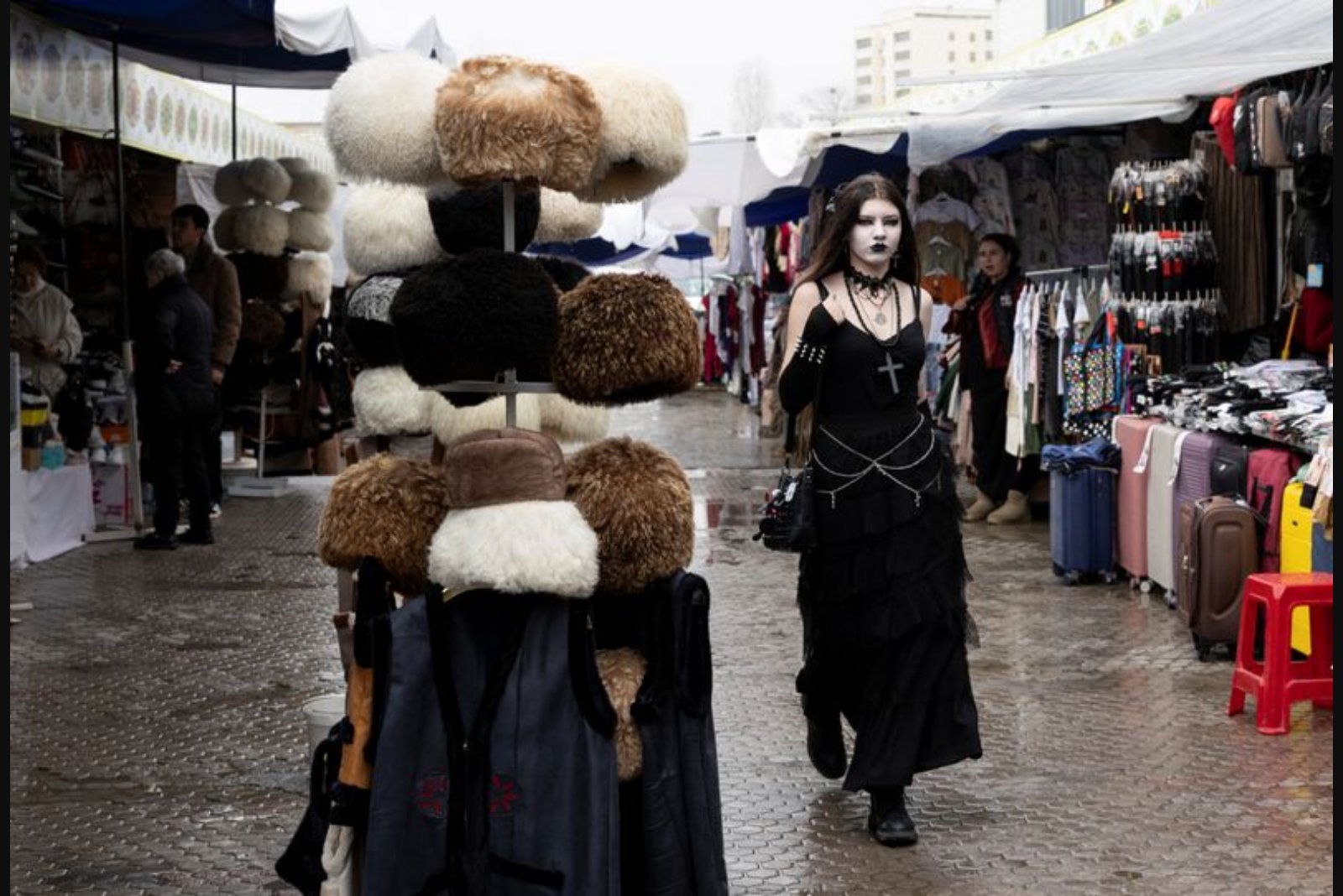
In Ashgabat’s upscale shopping centres, teenagers film dance routines on their smartphones for TikTok, often cheered on by friends. Female university students wear mandated red folk-inspired uniforms, a visible sign of the state’s cultural imprint. Social media influencer Enejan Velmuradova began using Instagram in 2020 to promote her travel agency, arranging holidays for wealthier Turkmens to destinations in Europe and Southeast Asia. In a spacious city-centre office decorated with social media certificates and international fridge magnets, Velmuradova said she welcomed the changes: "As a resident of Turkmenistan, I am also very happy that stereotypes are finally being broken, (the idea) that Turkmenistan is closed," she said.
Culture and sport: breakdancing as an example
Sports and street culture illustrate another dimension of change. Muhammet Bayramgulyyev, who teaches at an Ashgabat sports school, gives breakdancing lessons to teenagers in his spare time. He describes the dance style - which originated in New York - as once largely underground in Turkmenistan. "It was around the year 2000. Back then, we didn’t have breakdancers. We only watched it on cassette tapes, on television - we saw how it was done and wanted to do it ourselves," he said. Today his classes in a new studio are oversubscribed and breakdancing has moved into the mainstream. "We want our guys, our Turkmen athletes, to compete - for example, at Asian championships, world championships. And in the future, God willing, at the Olympics too," Bayramgulyyev added.
Implications for business and society
The combination of private entrepreneurship, increasing use of social media and expanding cultural activities points to incremental social and economic shifts, particularly in urban centres like Ashgabat. E-commerce ventures such as Wabrum illustrate early-stage private-sector activity that relies on existing logistical networks and regional suppliers, notably from Turkey. Meanwhile, the gradual easing of some restrictions and diplomatic engagement by the current president suggest a calibrated approach to opening ties while preserving political stability.
Limitations and ongoing control
Despite these developments, state control remains strong across political and economic spheres. Exchange-rate management, a largely state-driven economy and restrictions on internet access and travel continue to constrain the pace and scope of change. Observers and diplomats describe shifts as cautious and incremental rather than rapid liberalization.
Conclusion
What is visible from recent on-the-ground reporting is a Turkmenistan where elements of modern consumer life and youth culture are gaining ground within tightly managed political structures. Entrepreneurs and influencers are testing boundaries of commerce and expression, while the state retains clear levers of control over the economy, movement and information. The result is a country showing signs of cautious opening in everyday life even as it maintains longstanding practices of centralised governance.