
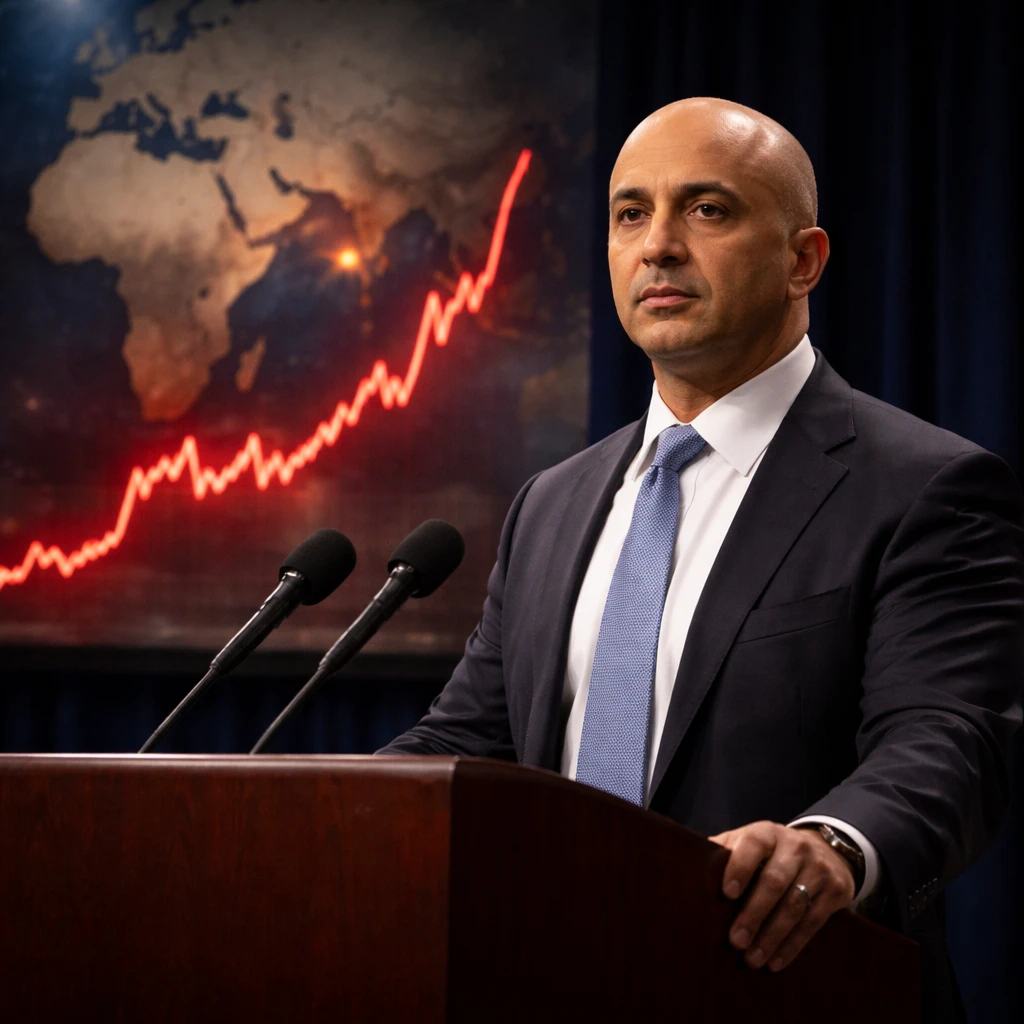
Federal Reserve Bank of Minneapolis President Neel Kashkari said on Sunday that a prolonged military confrontation involving Iran increases the risk of persistent inflation and broader economic harm, limiting the central bank's ability to offer definitive guidance on the future path of interest rates.
In an interview on CBS's Face the Nation, Kashkari emphasized his attention to how the Iran war could affect both inflation and demand as the Strait of Hormuz remains closed. That strategic waterway handles 20% of global oil and gas supplies, a fact he cited while discussing the potential for elevated energy costs to sustain inflationary pressure.
Kashkari linked the current spike in energy prices to the conflict, noting that the situation escalated after U.S. President Donald Trump and Israel carried out airstrikes on Iran on February 28. Those strikes prompted a sharp increase in global energy prices and intensified inflation pressures in the United States, he said.
Given the uncertainty generated by the war, Kashkari said the Fed may need to consider raising interest rates. He was explicit about his reluctance to signal an imminent easing cycle: "I don't feel comfortable signaling that a rate cut is in the cards. You know, we might be in worse scenarios, we might have to go the other direction," he said.
The Minneapolis Fed chief was one of an unusually large group of dissenters at the most recent Federal Open Market Committee meeting, opposing the language used in the committee's monetary policy statement. On Wednesday, the Fed held its target interest rate range at 3.5% to 3.75% and retained wording that suggested officials still see the central bank's next move as a rate cut.
Kashkari dissented alongside the presidents of the Cleveland and Dallas regional Federal Reserve banks. Fed Governor Stephen Miran also registered a dissent, but favored a rate cut. The three regional dissenters supported keeping rates steady and later indicated that interest rates may need to move up or down, depending on the economic effects of the war.
Fed officials typically look past transient energy shocks because they often fade, but several noted that the current situation follows years in which inflation has exceeded the Fed's target. That history, combined with the ongoing geopolitical risk, contributed to the caution voiced by Kashkari and his dissenting colleagues.
Context and implications
Kashkari's comments underline the central tension facing policymakers: energy-driven price pressures that could prove persistent enough to alter the path of monetary policy, and the resulting difficulty in offering clear guidance to markets. The combination of sustained inflation risk and uncertainty around demand complicates forecasts for both the economy and interest rate decisions.