
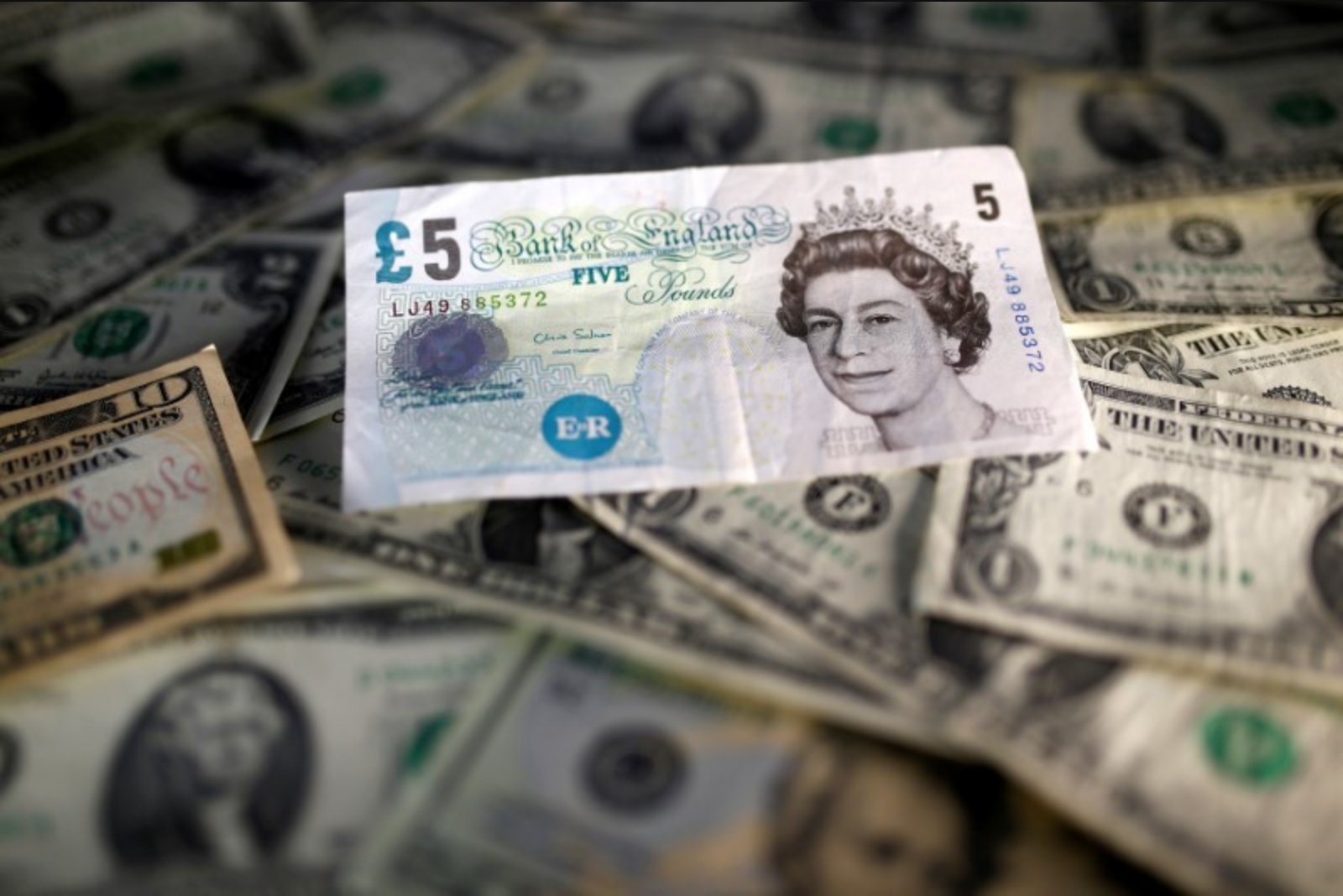
Currency markets moved toward risk-sensitive currencies on Friday after a U.S. employment report fell short of expectations, prompting broad weakness in the dollar.
GBP/USD climbed to $1.3360, up about 0.10% on the day and positioned to post a weekly gain. EUR/USD advanced to approximately $1.1455, up roughly 0.18% as of 07:30 ET (11:30 GMT). The moves reflected a general re-pricing of Federal Reserve policy expectations following the payrolls data.
What the jobs report showed
Francesco Pesole, FX strategist at ING, summed up the payrolls release by saying "there aren’t many silver linings." ING highlighted that a headline payroll increase of 57,000 was offset by downward revisions totaling 74,000 to the preceding two months. The unemployment rate dipped to 4.2%, but ING noted that the decline was driven mainly by a lower participation rate, which it described as an "unencouraging sign of worker disengagement."
Pesole added that the report made it harder for markets to rebuild expectations of two Fed rate cuts, but it was not weak enough on its own to force a significant dovish repricing. ING still saw more than 25 basis points of easing priced into the December futures contract.
Dollar outlook
ING expects the dollar index to find footing in a range between 100 and 101.5 in the coming weeks rather than beginning a sustained decline. For a more pronounced and lasting dollar slide, ING said confirmation from the July 14 U.S. CPI print or a shift in Federal Reserve rate-hike pricing would likely be required.
Near-term data and speeches to watch
Markets were set to digest further inputs later on Friday, including remarks from Federal Reserve Bank of San Francisco President Mary Daly, plus initial jobless claims, factory orders and durable goods data. Traders are treating the July 14 U.S. CPI report as the next key test for how rate-hike expectations will evolve.
UK and euro-area context
Sterling’s move higher was not the result of fresh UK-positive economic news. Bank of England Governor Andrew Bailey, speaking at the ECB’s Sintra forum earlier in the week, described the UK economy as being in a "soft patch" and said that higher mortgage rates had already tightened policy without the need for an additional rate increase. He also indicated that rate cuts remain off the table for the moment.
Broader risk appetite received a modest lift from easing tensions in the Middle East after Qatar signaled a fresh round of indirect U.S.-Iran talks. That development offered some additional support to risk-sensitive currencies, including sterling.
The euro’s gains were more circumscribed as markets showed little conviction in a sustained ECB hiking narrative. ING noted that EUR/USD price action "highlights the lack of a convincing bullish narrative for the euro," pointing out that market pricing implied only around 11 basis points of tightening in September and about 17 basis points by year-end following softer-than-expected June inflation and persistently low oil prices.
ING expects rallies in EUR/USD to become fatigued beyond the 1.150-1.153 area, and it projects a move back above $1.16 only later in the summer under current conditions.
Bottom line
Friday’s weaker U.S. payrolls report pressured the dollar and gave risk-linked currencies like sterling and the euro modest gains. However, analysts caution that the moves do not yet constitute a decisive shift in central bank expectations. Upcoming U.S. economic releases and Fed commentary, and particularly the July 14 CPI reading, are likely to determine whether the current currency moves extend into a more sustained trend.
Key points
- GBP/USD rose to $1.3360 and EUR/USD to $1.1455 after a softer-than-expected U.S. jobs report weighed on the dollar.
- ING highlighted the payrolls report's weak elements - small headline payroll gains plus substantial downward revisions - and warned it was not enough on its own to force major dovish repricing, though it reduced the likelihood of two Fed cuts being rebuilt by markets.
- Market attention is focused on upcoming Fed commentary and U.S. data, with the July 14 CPI report viewed as the next pivotal event for rate expectations.
Risks and uncertainties
- U.S. inflation data due July 14 could confirm or contradict the market's current repricing of Fed policy, affecting currencies and interest-rate-sensitive sectors such as banking and mortgage markets.
- Further downward revisions or unexpectedly weak U.S. labor-market readings could alter forward Fed rate expectations and generate increased volatility across FX and fixed-income markets.
- Geopolitical developments, such as the pace and outcome of indirect U.S.-Iran talks, may influence risk sentiment and therefore impact risk-linked currencies and energy-related markets.