
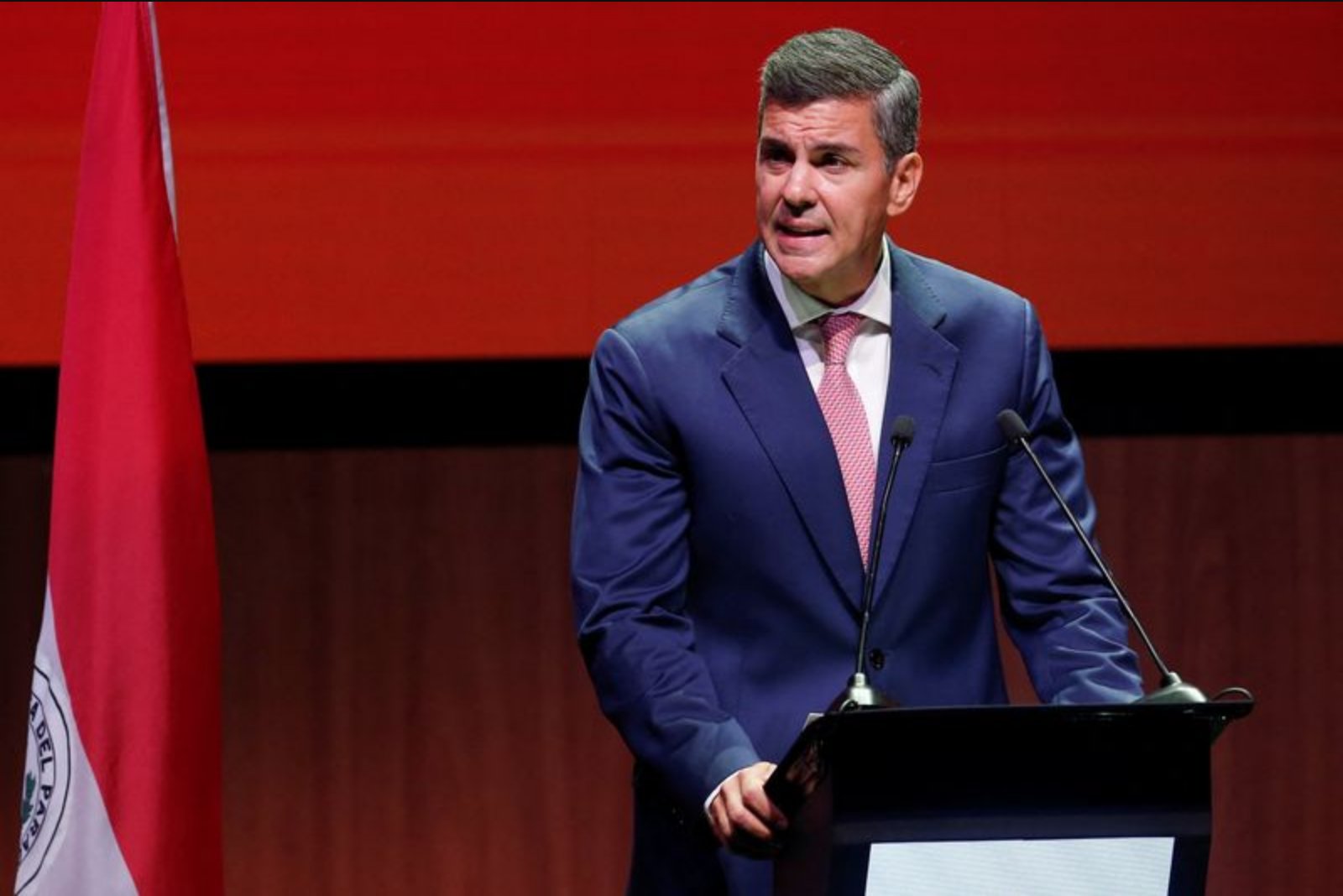
Taipei, May 7 - Paraguayan President Santiago Pena used remarks at a university event in Taipei to describe his country’s relationship with Taiwan as a substantive partnership rooted in democratic values and practical results, while Beijing publicly called on Paraguay to end formal relations with the island.
After receiving an honorary doctorate, Pena addressed students in English and framed bilateral ties in terms of shared principles. He said: "Paraguay and Taiwan share a friendship built on a solid foundation, democracy, freedom, confidence in institutions, the dignity of hard work." He added: "Our bilateral relationship extends far beyond diplomatic formality. It is manifested in concrete actions, tangible achievements, and real opportunities for both of our nations."
At the same event, Taiwan’s Vice President Hsiao Bi-khim recalled first meeting Pena in Washington before his election and praised his commitment to public service. "And I am still extremely impressed by President Pena’s passion for serving the people of Paraguay," she said. "President Pena, passion, people, Paraguay, five P’s. And plus, a principled partnership with Taiwan makes it ’perfecto.’" Neither Pena nor Hsiao mentioned China in their public remarks.
In Beijing earlier on the same day, Chinese Foreign Ministry spokesperson Lin Jian urged Paraguay to change course. Lin said Paraguay should "stand on the right side of history" and "sever so-called diplomatic relations with the Taiwan authorities." He reiterated Beijing’s position on the issue, saying: "The ’One China’ principle is a fundamental norm of international relations and the universal consensus of the international community." The statement echoed China’s view that both sides of the Taiwan Strait are part of a single country.
Paraguay is the last country in South America that maintains formal diplomatic relations with Taiwan. The two established diplomatic ties in 1957, during the early years of the rule of Paraguay’s then-dictator Alfredo Stroessner, who was noted for his strong anti-communist stance.
Pena has cultivated relations with the United States as well. In February he visited Washington to participate in a new advisory body associated with U.S. President Donald Trump, and Trump described him at that time as a "young, handsome guy."
The dispute over diplomatic recognition reflects a broader disagreement: China says Taiwan is one of its provinces, a position explicitly rejected by Taiwan’s President Lai Ching-te and his government. The competing claims and international appeals underline the diplomatic pressures that shape the relationships between Beijing, Taipei and the small group of countries that still maintain formal ties with Taiwan.
Context and implications
The visit and the ensuing statements highlight a diplomatic tug-of-war in which Paraguay occupies a prominent role as the last formal South American ally of Taiwan. Pena’s public emphasis on shared values and concrete cooperation reinforces the narrative of a relationship based on more than ceremony, while Beijing’s public urging underscores the continuing pressure it applies on countries to align with its One China stance.