
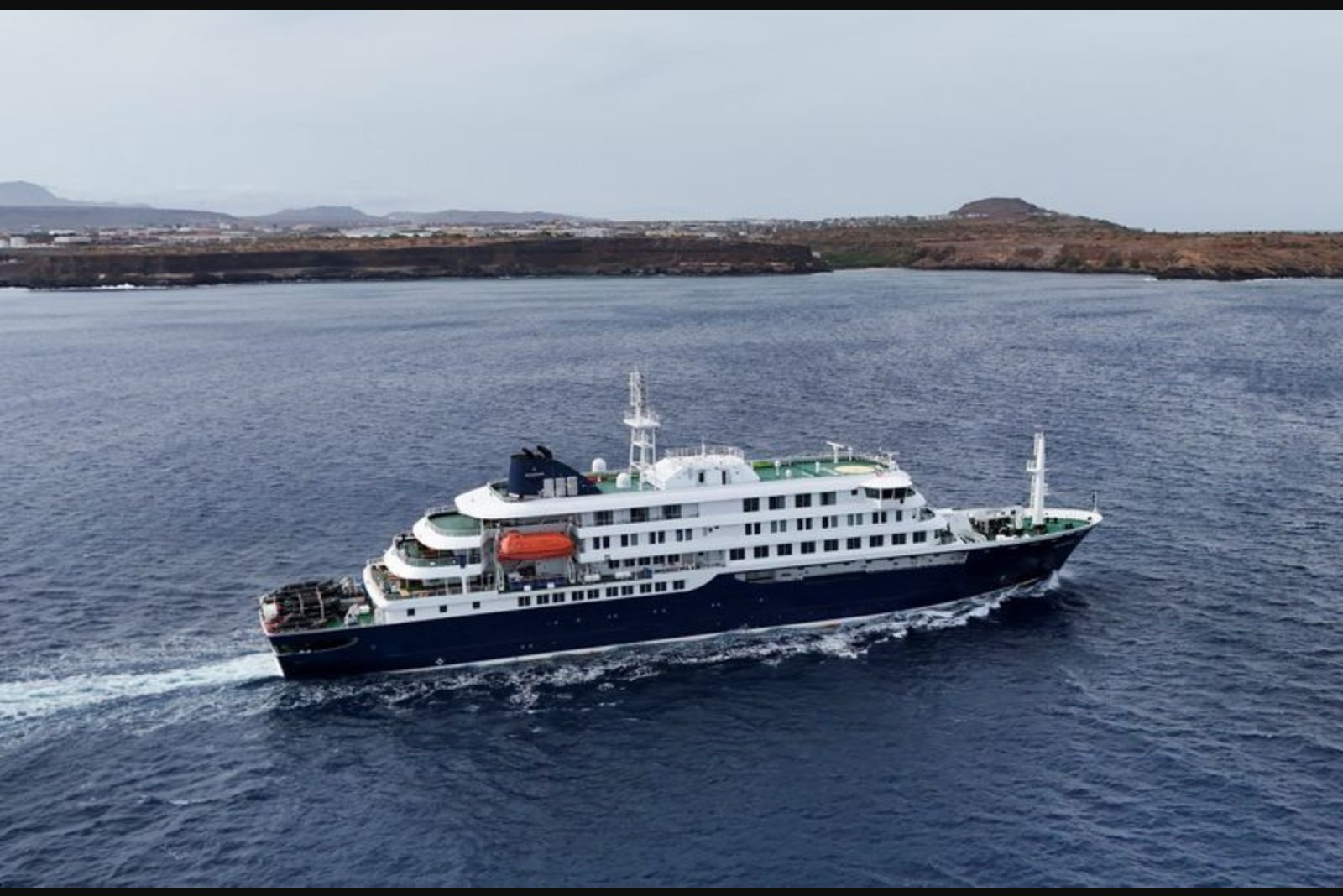
Countries around the world intensified efforts on Thursday to find people who disembarked from the cruise ship that became the center of a hantavirus outbreak before it was held off the coast of Cape Verde. The vessel, the MV Hondius, has been linked to multiple fatalities and suspected infections, prompting international public health responses and repatriation planning.
Health authorities say three people - identified as a Dutch couple and a German national - died in relation to the outbreak on board the MV Hondius. The World Health Organization reported that eight people are suspected of having contracted the virus, and that among them is a Swiss citizen.
Officials noted that around 40 passengers left the ship during a call at Saint Helena on the cruise's route to Cape Verde before the outbreak was made known. The Dutch government reported this figure on Wednesday and said the current locations of many of those who disembarked remain unknown. One of the passengers who got off in Saint Helena was the wife of the Dutch man who had already died on the ship on April 11. She later fell ill and died prior to reaching the Netherlands.
Airline records indicate that Dutch carrier KLM removed the woman from a flight in Johannesburg on April 25 after her medical condition worsened, according to government statements. That passenger did not reach the Netherlands alive.
Laboratory analysis confirmed the virus detected in the victims as the Andean strain. Experts have emphasized that transmission among humans requires very close contact and that such contagion is rare. Nonetheless, the outbreak has prompted heightened vigilance among public health authorities worldwide.
The United States Centers for Disease Control and Prevention said on Wednesday that it was closely monitoring the situation with U.S. travelers who were on board the ship and described the risk to the American public as extremely low at that time.
French authorities reported that one French citizen had been in contact with a person who became ill, but that the individual was not showing symptoms when the information was provided. Meanwhile, Argentina's health ministry said it will conduct rodent trapping and analysis in Ushuaia, the southern Argentine city that served as the cruise's point of departure.
The MV Hondius is carrying nearly 150 people and is expected to berth in Tenerife in the Canary Islands by Saturday. Officials say that, once the ship arrives in Tenerife, all passengers who are not Spanish citizens and who remain healthy will be returned to their home countries. Fourteen Spanish passengers are scheduled to be quarantined in a military hospital in Madrid.
Medical evacuations have already taken place. Three patients were taken off the ship on Wednesday. One was admitted to a hospital in the Netherlands, another was transferred to Germany to receive care, and a third patient was transported by air with plans to land in the Netherlands early on Thursday after a delay caused by a problem with the patient's life support equipment.
What authorities are doing
- Tracing and attempting to locate passengers who disembarked at Saint Helena before the outbreak was reported.
- Coordinating international medical evacuations and transfers for patients requiring inpatient care.
- Preparing repatriation and quarantine arrangements for passengers upon the ship's expected arrival in Tenerife.
Current public health assessments
- The virus identified in victims has been confirmed as the Andean strain, which can spread between humans through very close contact, though experts say human-to-human transmission is very rare.
- Global health agencies and national centers for disease control are monitoring travellers from the MV Hondius, while some national health ministries are taking local measures such as rodent trapping at the ship's origin port.