
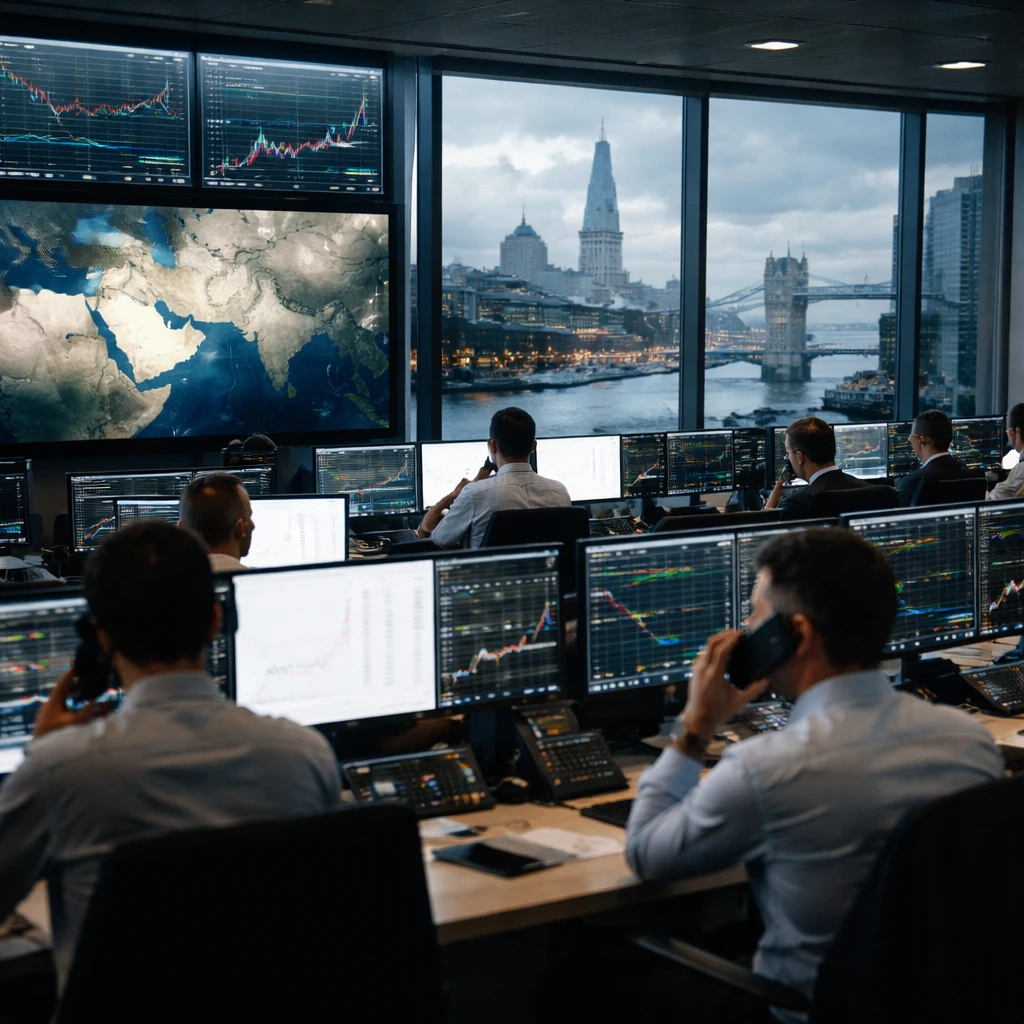
London's benchmark fell at the opening on Thursday as markets weighed tentative diplomatic developments between the United States and Iran alongside a stream of corporate updates from across the U.K. economy.
At 03:14 ET (07:14 GMT), the FTSE 100 was down 0.28%. Elsewhere in Europe, Germany's DAX rose 0.20% and France's CAC 40 gained 0.41%. The pound held its ground, with GBP/USD up 0.18% at 1.3621.
Investor caution followed comments from U.S. President Donald Trump, who told reporters at the White House that talks with Tehran over the prior 24 hours had been "very good" and that "it was very possible that we’ll make a deal." Speaking later on PBS, he reiterated his optimism that an agreement might be reached before his upcoming trip to China, while warning that bombardment would resume if negotiations collapsed.
Tehran’s official response remained pending. Iran’s Foreign Ministry said it had not issued a formal reply to Washington’s latest proposal, with communications continuing through Pakistani intermediaries. Reporting cited a Pakistani source and an individual briefed on the mediation indicating the two sides were close to agreeing a one-page memorandum intended to formally end the conflict.
Additional reporting suggested the document could contain more detailed points: Axios said the draft ran to 14 points, including Iran agreeing not to develop a nuclear weapon and suspending uranium enrichment for a minimum of 12 years. At the same time, military and parliamentary voices in Iran signalled resistance to any renewed U.S. military action, with the IRGC Navy’s deputy for political affairs warning that fresh aggression would be met with a response "beyond the enemy’s calculations," and the parliament speaker ridiculing Washington’s Strait of Hormuz approach.
Within the U.K. corporate landscape, results and guidance painted a mixed picture across retail, defence, financials, insurance and energy.
- JD Sports warned that profits will fall further in 2026/27, citing muted market growth and uncertainty over how the Middle East situation could affect its younger, less affluent customer base. The retailer reported like-for-like sales fell 2.3% in the first quarter.
- BAE Systems said it remained on course for earnings growth of 9% to 11% this year, benefiting from sustained orders driven by the Iran war. The company noted its order backlog has nearly doubled since Russia’s invasion of Ukraine in 2022.
- M&G swung to net inflows of £600 million in the first quarter, reversing outflows of £100 million a year earlier, which management attributed to demand from Japanese partner Daiichi Life and other external clients.
- Hiscox reported a 10.2% rise in first-quarter insurance contract written premiums, underpinned by strong growth in its retail insurance operations across the U.K., U.S. and Europe.
- IHG exceeded first-quarter room revenue estimates, posting global RevPAR growth of 4.4% versus expectations of 3.3%, helped by strong bookings from affluent U.S. travellers, although the Middle East conflict was highlighted as a potential drag on travel spending.
- Shell delivered first-quarter adjusted earnings of $6.92 billion, ahead of analyst forecasts of $6.36 billion. The company trimmed its quarterly share buyback to $3 billion from $3.5 billion and cautioned that its debt ratio had risen after war-related damage to the Qatari Pearl gas plant.
- BP was reported to have received an extended U.S. licence enabling a payment work-around involving sanctioned Iranian and Russian partners in a major Azerbaijani gas project.
- Intertek is expected to reject a sweetened takeover approach from Swedish private equity firm EQT of £58 per share, according to reporting.
On the macro data front, construction activity in Britain contracted at its fastest pace in nearly six years over the three months to March, according to a survey published on Thursday. In labour market terms, a separate survey showed private sector pay settlements were unchanged in March, with median annual offers from British employers steady versus the prior month.
Together, these datapoints and corporate updates framed a market environment where geopolitical negotiation progress and sector-specific results each played a role in price discovery. Traders showed sensitivity to headlines on the U.S.-Iran talks, while company disclosures highlighted varying cash flow and demand dynamics across retail, defence, energy, insurance and travel-related services.