
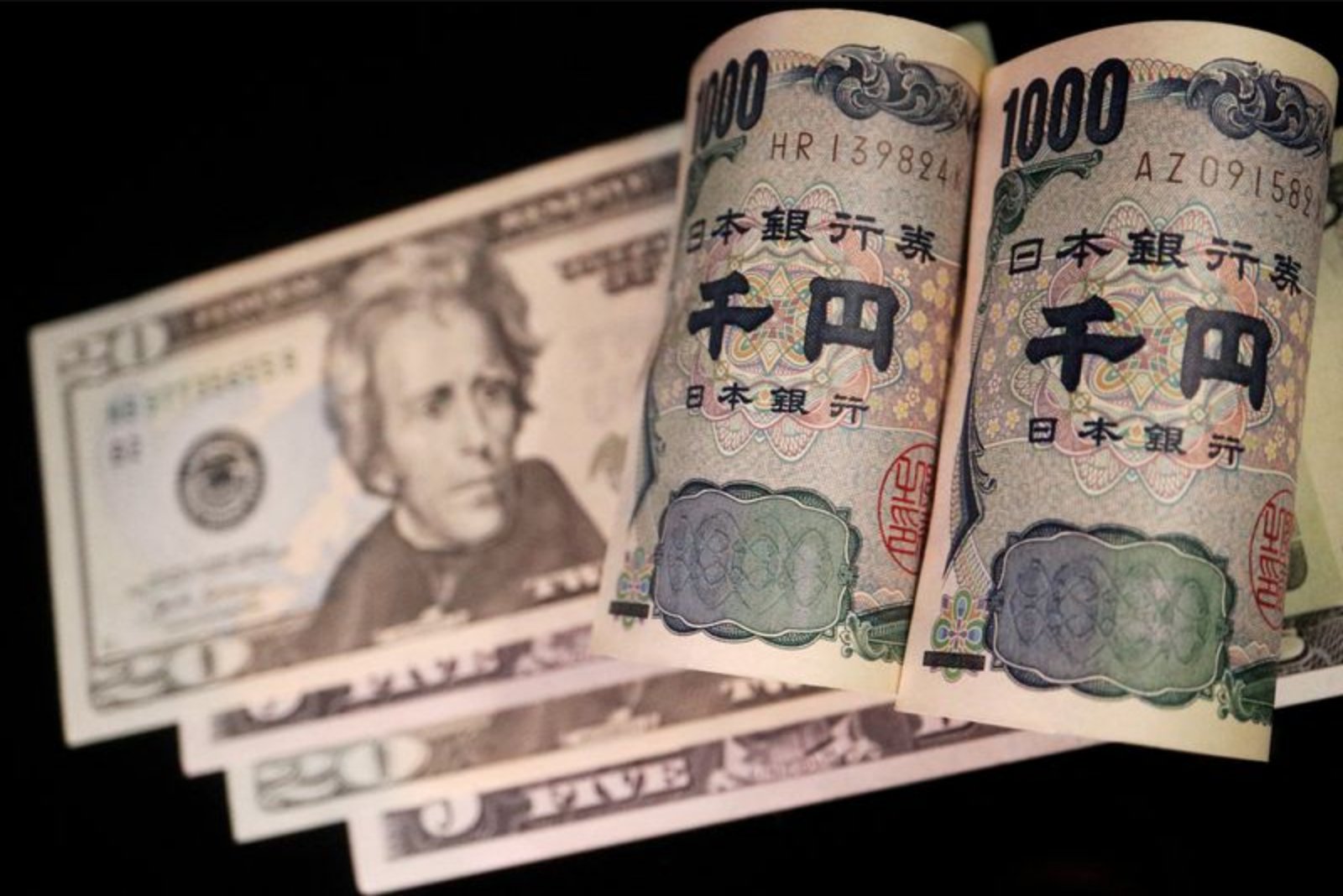
A retired central bank official with direct experience in Tokyo's past currency operations said Japanese authorities likely intervened over the Golden Week holidays to check sharp depreciation in the yen and would move back into markets if the currency resumed a slide beneath the 160-per-dollar level.
The official, Atsushi Takeuchi, who participated in Tokyo's yen-selling interventions from 2010 to 2012, told Reuters that while the Ministry of Finance (MOF) has publicly avoided committing to a specific "line-in-the-sand," market participants have fixated on the 160 mark as psychologically significant. According to him, this focus made action necessary to avoid the impression that Tokyo would tolerate further yen weakness.
"The 160 line has become a psychologically important level traders are focusing on. The MOF had to meet words with action and intervene to avoid giving the impression Tokyo would tolerate yen slides," Takeuchi said in an interview.
Takeuchi suggested the authorities' intervention was aimed at preventing a self-reinforcing selloff that could accelerate once the currency pierced the 160 threshold. He added that officials may also have been concerned by concurrent selling of Japanese government bonds - an early symptom of so-called "Japan selling." Such dynamics could raise additional market stress beyond currency moves alone.
"In the past, the yen was bought as a safe-haven currency in times of crises. That’s no longer the case," Takeuchi said. He also noted that Japan's fiscal stance influenced demand for its sovereign debt, saying: "If I were a bond trader, I also wouldn’t buy JGBs given Japan’s loose fiscal policy."
Sources told Reuters that authorities intervened on Thursday last week, with money market data pointing to about $35 billion sold to support the yen. Market activity since then included three abrupt intraday spikes in the yen during Golden Week through Wednesday, when the currency surged as high as 155.00. On Thursday, the yen traded around 156.30 per dollar.
Commenting on the rapid intraday moves, Takeuchi said: "The price action certainly looks like intervention," and he added that authorities were likely to keep stepping into markets to prevent abrupt yen falls. He also acknowledged the limits of intervention: Japanese authorities, he said, understand they "have no power to change the weak-yen tide around. Their goal is to stop yen falls in hope external factors would turn in their favour."
The MOF, which determines currency policy, has not publicly confirmed intervention. Under Japan's established institutional framework, the ministry authorizes intervention and the Bank of Japan acts as its agent to execute any transactions.
Beyond conventional yen-buying intervention, the government's top currency diplomat, Atsushi Mimura, has reportedly suggested the possibility of intervening in crude oil futures to dampen speculative swings that may be feeding yen volatility. Takeuchi dismissed such a move as highly improbable, arguing the logistics and operational risks would make oil-futures intervention impractical.
"Given the operational risks, I don’t think Japan will intervene in the oil futures market. But if you’re the top currency diplomat, you need to show you have many options on the table," he said.
Historically, Japan has focused on preventing rapid yen appreciation because a stronger currency can harm an export-reliant economy. Since 2022, however, authorities have shifted to countering excessive depreciation, which can accelerate inflation and reduce household purchasing power. The MOF retains jurisdiction over currency policy decisions, with the BOJ executing transactions as the ministry's agent.
Market context and implications
Market participants are watching the 160-per-dollar level closely because of its potential to alter momentum in speculative flows. Authorities appear prepared to act to avert disorderly moves rather than to engineer a sustained change in the yen's trend. At the same time, officials are wary of parallel developments in the JGB market, which could amplify stress if bond selling and currency weakness become mutually reinforcing.