
TAIPEI - A top Taiwanese intelligence official said on Thursday that Beijing might attempt some "manoeuvring" on the Taiwan question when U.S. President Donald Trump travels to Beijing next week, but added that the United States has repeatedly affirmed its policy on the island has not changed.
China regards democratically governed Taiwan as part of its territory and consistently labels the island as its most sensitive and important bilateral issue with Washington. Taiwan's government rejects Beijing's sovereignty claim.
Officials in Taipei are watching closely for any indication that President Trump - whose transactional approach to alliances has unsettled some partners - could ease or reframe long-standing U.S. policy on Taiwan in exchange for Chinese purchases of American aircraft, agricultural products, or for an easing of economic pressure.
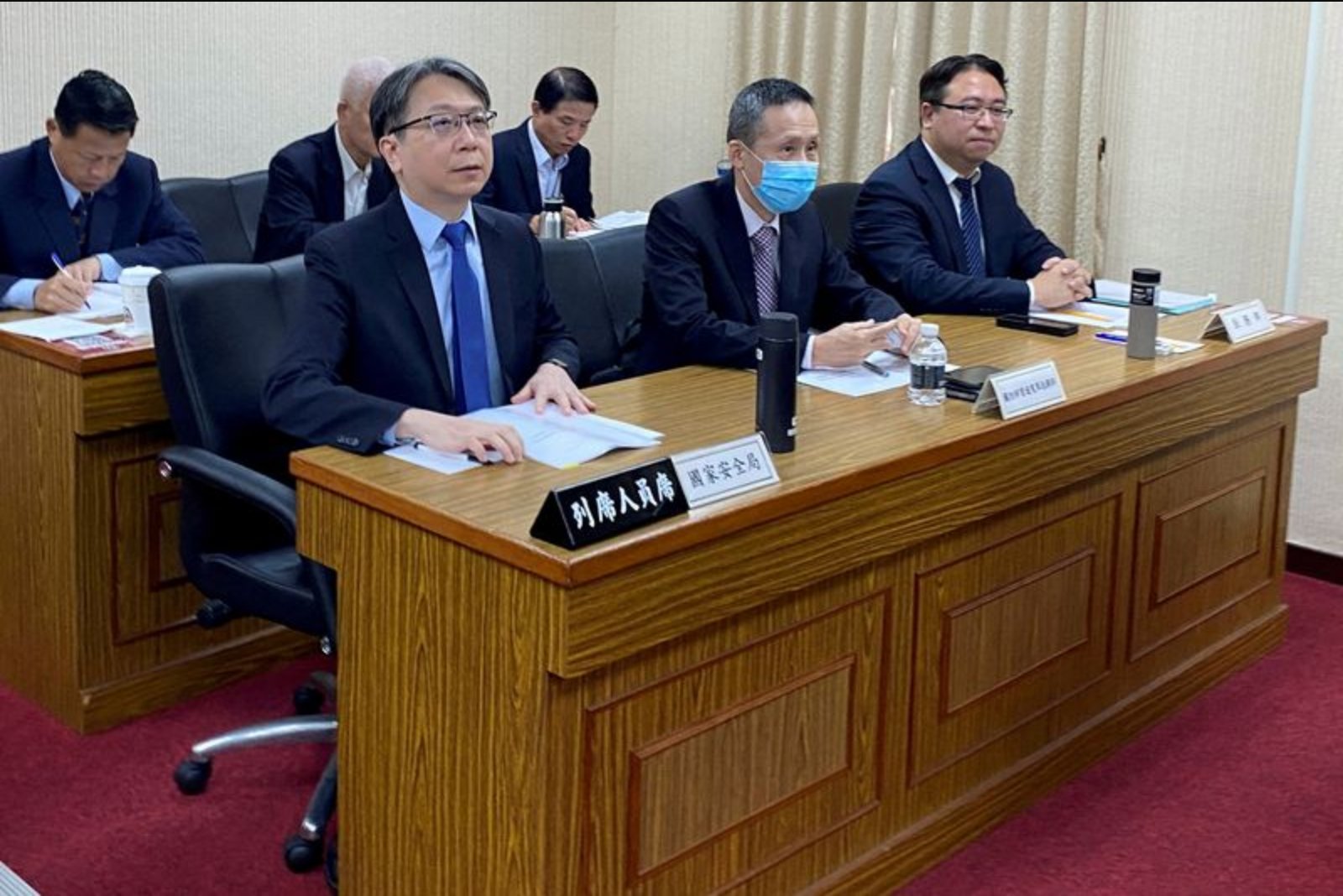
Speaking to journalists at the parliament in Taipei, National Security Bureau Director-General Tsai Ming-yen described the immediate goal of the Trump-Xi summit as likely to be the management of bilateral issues rather than sweeping resolutions.
"As for the Taiwan issue, I believe the Chinese communists may attempt some manoeuvring during the talks," Tsai said. "However, on this point, the United States has continuously reaffirmed through both public and private channels that its Taiwan policy has not changed."
U.S. Secretary of State Marco Rubio commented this week that Taiwan is likely to be raised during discussions between the two leaders, and that both sides recognize it is not in their interest to see any "destabilising events" related to the island.
Tsai noted that many of the disputes between Beijing and Washington are fraught and not readily susceptible to short-term, fundamental solutions. "Our assessment of the overall U.S.-China situation is that it will likely present what might be described as a fragile stability," he added.
The United States remains Taiwan's most important international backer and, despite the absence of formal diplomatic ties, is legally obligated to provide Taiwan with the means to defend itself.
Context for markets and industry observers
Officials in Taipei and market participants will be particularly attentive to any signs that commercial deals - notably purchases of U.S. aircraft and agricultural commodities - figure into the bilateral agenda, given the potential implications for aerospace supply chains, agricultural exporters, and defence-related procurement.
At the same time, the description of the U.S.-China balance as offering "fragile stability" suggests continued volatility for sectors sensitive to geopolitical risk.