
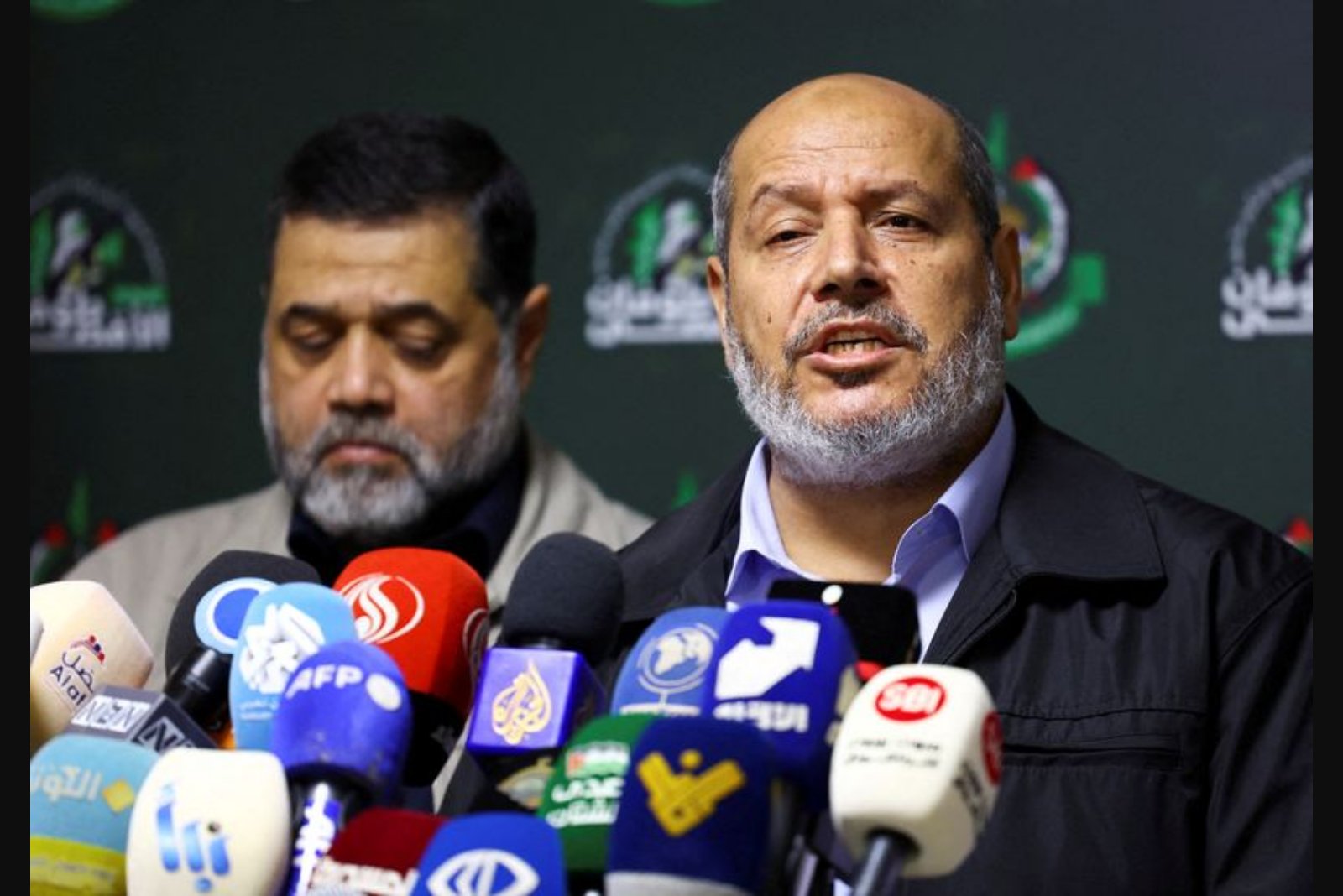
An Israeli air strike on Wednesday night critically wounded Azzam Al-Hayya, the son of Khalil Al-Hayya - Hamas’ chief negotiator in U.S.-mediated talks - and he died of his injuries on Thursday, a senior Hamas official said.
Basim Naim, a senior Hamas official, provided the account of Azzam Al-Hayya’s death. The strike took place as leaders of Hamas and other Palestinian factions were convening in Cairo with regional mediators and the Board of Peace’s lead envoy to discuss advancing the Gaza plan into its second phase.
The Israeli military did not respond to a request for comment on the reported strike.
Background on the Al-Hayya family and prior attacks
According to the information released by Hamas officials, this death marks the fourth of Khalil Al-Hayya’s sons to be killed in Israeli strikes. Khalil Al-Hayya, who has seven children and has survived multiple attempts on his life, lost a son in an Israeli strike in Doha last year that targeted Hamas leadership; two other sons were killed in Gaza strikes in 2008 and 2014.
After the Wednesday night attack but before the death was announced, Khalil Al-Hayya spoke to Al Jazeera and accused Israel of attempting to disrupt the mediators’ efforts to implement the U.S. President Donald Trump-led Gaza plan under the oversight of the so-called Board of Peace. He said, "These Zionist attacks and violations clearly indicate that the occupation does not want to abide by a ceasefire or by the first phase."
Negotiations in Cairo and the hurdles ahead
The meetings in Cairo this week included Hamas leaders, representatives of other Palestinian factions, regional mediators and Nickolay Mladenov, the Board of Peace’s lead envoy, officials said. The purpose of the discussions was to press ahead with the second phase of the Gaza plan, an agreement reached in October under which Israeli forces would withdraw from Gaza and reconstruction would begin as Hamas laid down its weapons.
Disarmament by Hamas remains a central sticking point in the negotiations to implement the plan and to solidify the October ceasefire that halted two years of full-scale war. A Hamas official told Reuters on Wednesday that the group informed Mladenov it would not enter into serious talks on the second phase until Israel fulfilled obligations from the first phase of the Gaza agreement, including a complete halt to attacks.
Casualties and the security rationale
Local medics report that at least 830 Palestinians have been killed since the ceasefire took effect. Israel has said militants have killed four of its soldiers over the same period. Israel maintains that its strikes are intended to prevent attempts by Hamas and other Palestinian militant groups to carry out attacks against Israeli forces.
The death of Azzam Al-Hayya during a period of delicate diplomacy underscores the fragility of the current ceasefire arrangements and the sensitivity of efforts to move from an initial agreement into a sustained, enforceable second phase.