
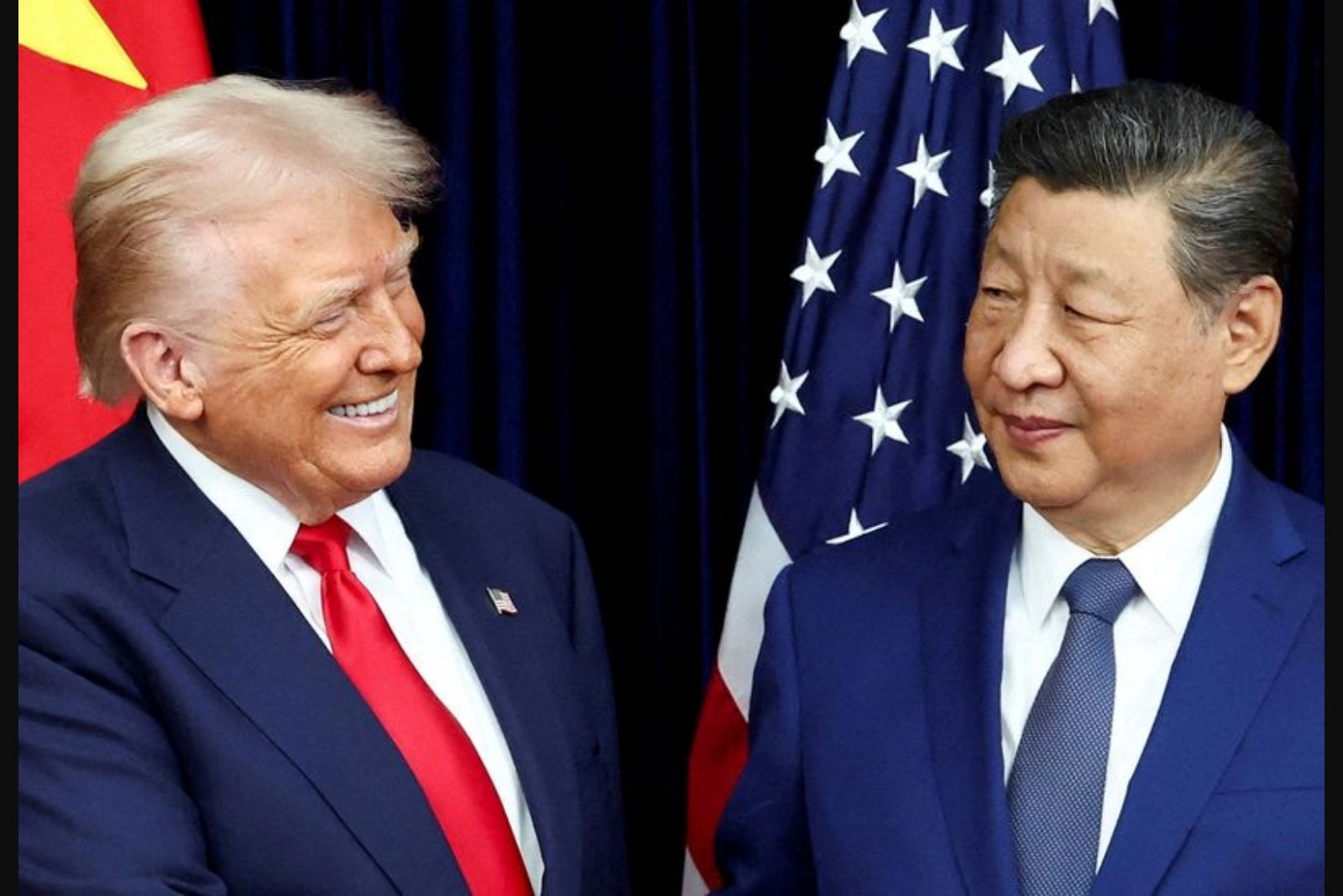
U.S. President Donald Trump will travel to Beijing for meetings with Chinese President Xi Jinping on May 14 and May 15, the first visit by an American president to the Chinese capital in almost ten years. The two-day encounter comes amid a complex mix of trade, technology, geopolitical and security issues that have strained bilateral ties. Company executives and analysts do not expect sweeping breakthroughs, though negotiators are pursuing a number of discrete items that could produce incremental progress.
Trade items aimed at quick wins
With U.S. political considerations in play ahead of the November midterm elections, President Trump is expected to press Beijing for trade concessions that could be presented as tangible gains for U.S. producers. Both sides are reportedly working on establishing a Board of Trade mechanism to identify products that can be expanded in bilateral commerce without undermining national security or disrupting critical supply chains.
Proposals under discussion include potential Chinese purchases of U.S. poultry and beef, as well as purchases of crops other than soybeans. One specific commitment being floated would see China buying 25 million metric tons of U.S. soybeans in each of the next three years. U.S. negotiators are also seeking Chinese purchases of Boeing aircraft and of U.S. coal, oil and natural gas.
On the Boeing front, industry sources say talks have been long-running and could involve a sizeable order: a package that might include 500 737 MAX jets together with multiple wide-body aircraft. That proposed sale has been on hold for several years, in part because of U.S. threats to restrict access to critical spare engine parts for China.
Technology trade-offs: semiconductors and critical minerals
High on the agenda is the U.S. export control regime for advanced semiconductors and related manufacturing equipment. Beijing has been pressing Washington to relax restrictions on sales of advanced chips and chip-making gear. At the same time, U.S. officials are seeking more reliable shipments of rare earths and other critical minerals from China to American firms.
Chinese limits on rare earth exports have created disruptions in U.S. automotive and aerospace manufacturing, according to the summary of issues to be discussed. The negotiation thus pits U.S. concerns about protecting advanced technology and supply chain resilience against Chinese concerns over access to key inputs for high-tech manufacturing.
Economic pressure tools and legal countermeasures
Both governments have been strengthening tools that can be used as leverage during these talks. Washington opened investigations in March into alleged excess industrial capacity in China and into the use of forced labor. In April, the U.S. Treasury Department imposed sanctions on a Chinese refinery for buying Iranian oil and warned it could target Chinese banks facilitating such purchases with secondary sanctions.
Beijing has responded with a legal and regulatory posture of its own. In April, Premier Li Qiang signed two regulations that give Chinese authorities broad powers to investigate foreign firms, governments and individuals who are seen as attempting to shift supply chains away from China. These rules could also be deployed to retaliate against Western sanctions applied to Chinese firms overseas.
The Iran war and energy security
U.S. Treasury Secretary Scott Bessent has said the two leaders will discuss the war in Iran. The United States is urging China to participate in international efforts to ensure the Strait of Hormuz remains open to global shipping. Analysts note that the conflict has posed a threat to China’s energy supplies and has the potential to complicate Beijing’s relations with Gulf states.
China has been active in diplomatic channels related to Iran. According to officials involved in the lead-up to the summit, Beijing quietly encouraged Iran to engage in talks with the United States in Pakistan last month. Iranian Foreign Minister Abbas Araqchi visited Beijing this week and briefed his Chinese counterpart Wang Yi on those discussions. Despite behind-the-scenes involvement, analysts expect Beijing to avoid appearing to be acting at the direction of the United States.
Taiwan remains a central and sensitive point
Chinese officials have made clear the Taiwan question is a core concern. Wang Yi, speaking with U.S. Secretary of State Marco Rubio, described Taiwan as "the biggest point of risk" for China-U.S. relations and urged the United States to "keep its promises and make the right choices in order to open up new space for China-U.S. cooperation."
China regards Taiwan as part of its territory and has not renounced the use of force to effect reunification. Taiwan, governed democratically, rejects that claim and maintains that its future should be determined solely by its people. Preparations for the summit indicate Beijing has privately asked the Trump administration to alter its diplomatic phrasing on Taiwan independence, seeking language similar to a request Xi Jinping made to the previous U.S. president in 2024. At that earlier meeting, Xi asked the United States to adopt the phrasing "we oppose Taiwan independence" rather than the current U.S. formulation that it "does not support" independence.
Officials involved in planning the visit say they declined to disclose details of Beijing’s request, but they indicated the change in wording sought would be subtle. Any modification in U.S. language could influence Beijing’s perception of Washington’s resolve toward the island and could prompt new questions about the strength and contours of U.S. security commitments in Asia.
Outlook for the summit
Observers and business leaders expect the meeting to yield modest, narrowly defined agreements rather than sweeping settlements. Potential outcomes include extensions of existing trade truces and specific commercial pledges that could benefit U.S. agriculture, aerospace and energy exporters. Harder, systemic disagreements over semiconductor export controls, controls on rare earths, legal retaliatory powers and Taiwan’s status are likely to remain unresolved or to be deferred for future negotiation.
For markets and affected industries, the summit could produce near-term trading signals if targeted purchases or concessions are announced. Yet the deeper structural and geopolitical issues that frame U.S.-China relations are likely to continue to shape policy and commercial decisions after the visit.
Note: This article outlines the issues publicly reported as part of the agenda for the May 14-15 meetings in Beijing and reflects statements and positions attributed to the officials and entities named.