
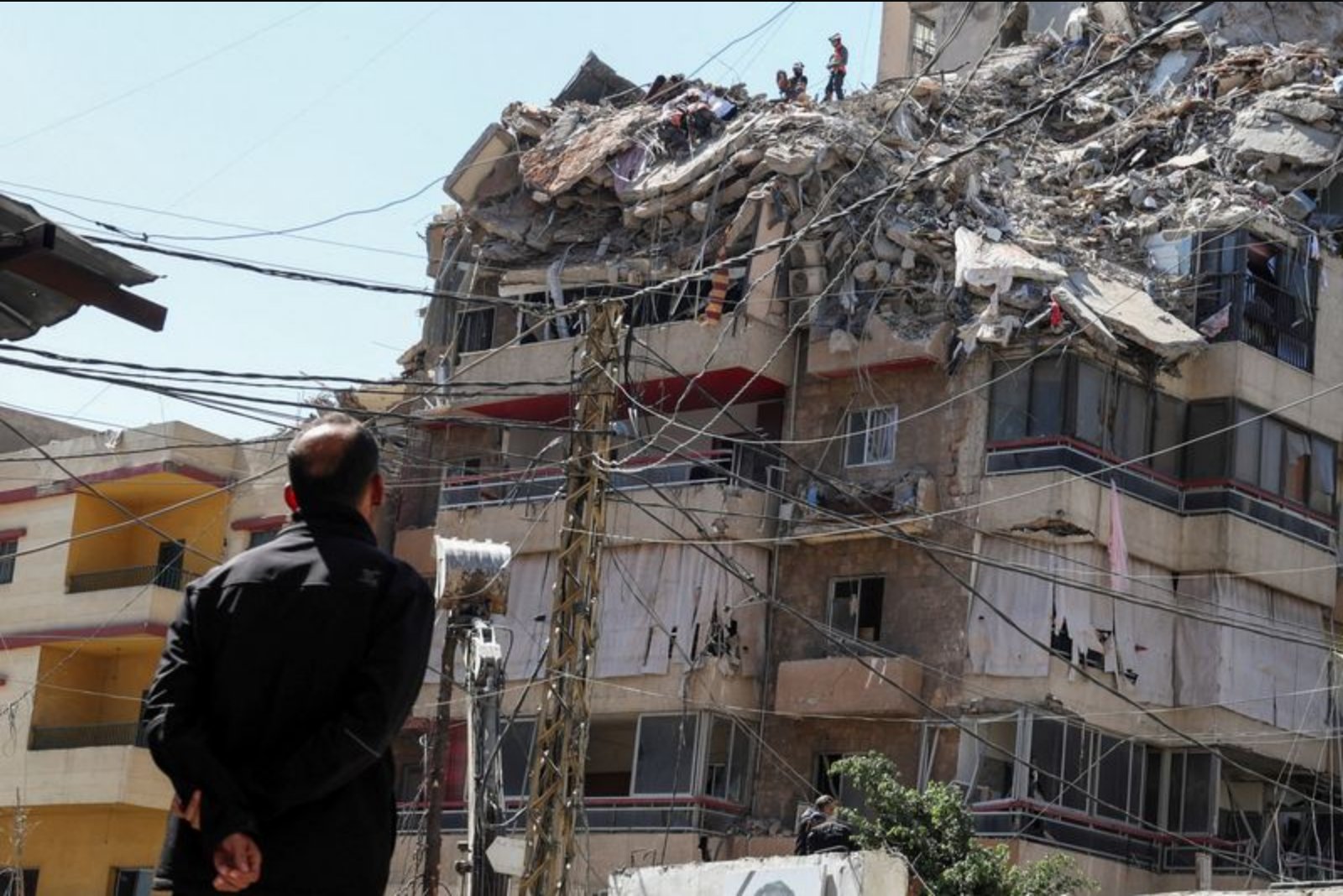
Israel said on Thursday it had killed a commander from Hezbollah’s elite Radwan force in an airstrike on Beirut carried out a day earlier, describing the operation as the first Israeli strike on the Lebanese capital since a ceasefire was agreed last month. The Israeli military identified the target as located in the southern suburbs of Beirut. There was no immediate confirmation of the commander’s death from Hezbollah.
Prime Minister Benjamin Netanyahu and Defence Minister Israel Katz jointly announced the operation on Wednesday, according to Israeli statements. The strike has put added strain on the ceasefire that had halted Israeli strikes on Beirut, even as Israeli forces have remained deployed in areas south of the Litani River and have continued to conduct attacks elsewhere in southern Lebanon.
Officials in Israel say Hezbollah has continued to respond to Israeli operations in the south by firing and by launching armed drones directed at Israeli soldiers. The ceasefire in Lebanon has formed part of a wider truce in the conflict involving Iran and its proxies, in which a halt to Israeli strikes in Lebanon has been a principal Iranian demand during discussions with Washington.
Earlier on Wednesday Israeli authorities called for residents to evacuate several villages north of the Litani River, an action that Israeli officials described as potentially expanding the declared zone of operations. Diplomatic contacts between Israel and Lebanon have persisted but have largely occurred at the ambassadorial level. Lebanese Prime Minister Nawaf Salam said on Wednesday that it would be premature to discuss any high-level meeting between Lebanon and Israel.
Salam, as reported by Lebanon’s National News Agency, said that reinforcing the ceasefire would need to be the foundation for any renewed negotiations between Lebanese and Israeli government envoys in Washington. Washington hosted two meetings last month between the Israeli and Lebanese ambassadors to the United States, a step that has drawn strong objections from Hezbollah.
Since Hezbollah opened fire on March 2 in what the movement framed as support for Iran, the Lebanese administration led by Prime Minister Salam and President Joseph Aoun has engaged in the highest-level contacts with Israel undertaken in decades. Those moves have underscored deep internal divisions between the Shi’ite group and its Lebanese opponents.
On April 23, a three-week extension of the Lebanon-Israel ceasefire was announced. At that time, U.S. President Donald Trump said he looked forward to hosting Prime Minister Netanyahu and President Aoun in the near future and said he saw "a great chance" that the countries could reach a peace deal this year.
On the ground, hostilities have continued in various forms. Israel has declared a self-defined security zone in southern Lebanon that reaches as deep as 10 km (6 miles), saying the measure is intended to protect northern Israel from Hezbollah fighters operating within civilian areas. Lebanon’s Health Ministry reported on Wednesday that an Israeli airstrike killed four people in the town of Zelaya in southern Lebanon, including two women and an elderly man.
The Israeli military said Hezbollah had launched explosive drones and rockets toward Israeli soldiers in southern Lebanon, injuring two Israeli soldiers. The military also reported that the Israeli air force intercepted a hostile aircraft before it crossed into Israeli territory, and it announced strikes against Hezbollah infrastructure in several locations across Lebanon.
Casualty figures cited by Lebanon’s Health Ministry indicate that more than 2,700 people have been killed in the war in Lebanon since March 2. The Israeli military has stated that Hezbollah has fired hundreds of rockets and launched drones at Israel since the same date. Israel has reported 17 soldiers killed in southern Lebanon and two civilians killed in northern Israel.