
Overview
A major federal immigration enforcement operation in Minneapolis redirected personnel and attention away from a range of non-immigration criminal investigations, producing a measurable slowdown in federal prosecutions and prompting some agents and prosecutors to shift focus or leave their posts, according to a review of federal court dockets and interviews with multiple current and former law enforcement officials.
What the records show
From January through the end of April, federal prosecutors in Minnesota filed charges in eight gun or drug cases, compared with 77 such cases in the same period a year earlier. Overall, the number of people charged with felonies in federal court during that window was 90, roughly half the number charged in the same period the prior year. Among those 90 were 39 individuals charged with a range of offenses tied to a protest of the immigration operation, including a high-profile count accusing a media figure of disrupting a church service. Another 17 of the felony filings were for criminal immigration offenses such as returning to the United States after deportation. The counts do not include deportation proceedings, which are civil immigration matters handled in separate immigration courts.
Local prosecutors taking on cases
Hennepin County Attorney Mary Moriarty told investigators that the local U.S. Attorney's Office has been so constrained by departures and the reassignment of staff to immigration work that some federal agents have begun bringing complex criminal investigations to her office for prosecution - a rare step for federal investigators. Moriarty said this practice reflects how dramatically priorities have shifted, adding that serious offenses like sex trafficking and drug trafficking should remain prosecutorial priorities for federal authorities.
Scale and tactics of the enforcement surge
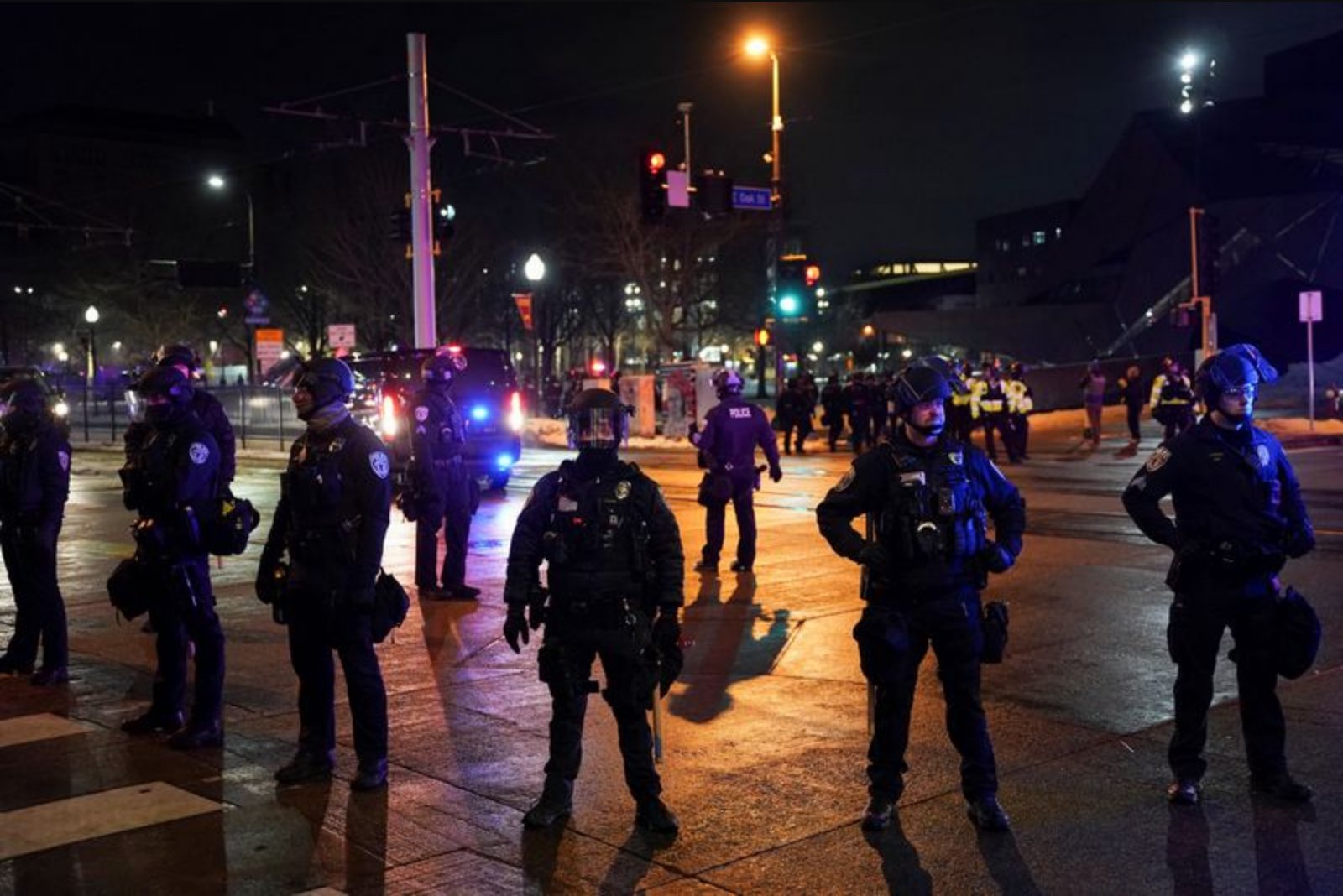
The enforcement action deployed about 3,000 federal agents to Minneapolis beginning in December. Agents conducted arrests in public settings, including traffic stops and school locations, to remove undocumented immigrants. The operation also included fatal shootings of two U.S. citizens who protested the enforcement actions; those deaths prompted national outcry and contributed to the administration withdrawing its presence from the city.
Officials interviewed described the operation as adopting a military-style policing posture. That reallocation of personnel and attention has coincided with a broader national pattern in which criminal immigration prosecutions rose to levels not seen in at least two decades while prosecutions for drug offenses reached record lows in the same period.
Responses from federal leadership
The U.S. Attorney in Minnesota did not respond to inquiries about the observed decline in non-immigration federal prosecutions. A Justice Department spokeswoman said that assisting partners with immigration enforcement has not impacted the department's ability to investigate and prosecute other crimes. A White House spokeswoman defended the operation as necessary to address alleged fraud and illegal immigration in Minnesota.
Federal capabilities and the gap left behind
Federal law enforcement handles a subset of criminal matters but plays a disproportionately large role in tackling complex and violent crime because federal prosecutors and agents often have the investigative bandwidth and cross-jurisdictional reach that state and local agencies lack. A former acting U.S. Attorney in Minnesota said the capacity to pursue certain dangerous criminals has been diminished as attorneys departed and the government focused on immigration enforcement, warning that the reduction in federal focus could allow violent offenders to remain at large.
Officials in Minnesota characterized the change as abrupt and potentially enduring. One participant in the enforcement surge suggested the displacement of federal investigators and prosecutors could have ripple effects that impair the ability to pursue violent felons for years.
Methodology of the docket review
To analyze the effect of the enforcement operation on federal prosecutions, a review examined criminal dockets in the federal district court for Minnesota using a commercial legal research service. The review focused on criminal matters filed on the district court docket, where the most serious cases are recorded, and excluded filings before magistrate judges that typically involve lower-level offenses. In some instances, machine-assisted categorization was used to classify charges; a random validation of those classifications returned a high level of accuracy.
Claims about fraud and related investigations
Administration officials defended the Minneapolis operation as necessary to deter crime, including a social-services fraud scandal traced to 2022 that had led to prosecutions of numerous Somali Americans. The docket review found only two new wire-fraud cases brought in the January-through-April period, and neither was directly tied to government benefits. Federal and state law enforcement recently executed searches in Minnesota of social-welfare organizations as part of an ongoing fraud investigation.
Personnel disruptions: agents and prosecutors
Even though Minneapolis is not among the nation's most violent cities, federal authorities there had prioritized tackling violent crime in recent years. After the surge began, some federal agents who previously staffed anti-drug task forces and gang investigations were reassigned to immigration enforcement or otherwise became less available to their prior responsibilities. County prosecutors reported significant operational disruptions as agents were moved to the enforcement effort.
Before the surge, some agents had been intermittently diverted to immigration-related work; during the enforcement wave, agents sometimes reported being unavailable on certain days while pursuing immigration cases. The reassignment of agents coincided with a wave of departures from the U.S. Attorney's Office in Minnesota. Several prosecutors resigned rather than follow an order to investigate the widow of one of the protesters who was fatally shot by an immigration enforcement agent; more attorneys left subsequently.
Two people familiar with the office's staffing said the departures reduced the office to about half of its usual complement of approximately 50 attorneys. Sources also said five of the six supervisors in the office's criminal section left their positions. The Justice Department has sent in rotating teams of military lawyers and prosecutors from other districts as temporary fill-ins, but short-handed prosecutors have struggled to initiate or sustain complex federal cases.
Examples of disrupted prosecutions
Federal prosecutors missed deadlines in at least one gun case, leading a judge to dismiss the matter on speedy trial grounds; the case involved a defendant accused of being a felon in possession of a firearm. In another instance, federal prosecutors asked a court for permission to drop a carjacking case in which two people were killed and a six-year-old child was injured, indicating local prosecutors would pursue the matter instead.
At the same time, federal authorities prioritized prosecuting dozens of protesters involved in demonstrations against the immigration operation. In addition to felony charges connected to a protest that occurred inside a church, prosecutors filed charges against about 40 other people for mostly low-level violations tied to confrontations with federal agents. Court records show that prosecutors later dropped roughly half of those additional cases.
One attorney familiar with the U.S. Attorney's Office described the office as operating under severe constraints and said its staff were largely focused on maintaining operations rather than expanding traditional criminal casework.
Implications and outlook
Law enforcement officials and prosecutors in Minnesota described the enforcement surge as having shifted the district's operational focus and stretched federal resources thin. The displacement of agents and the loss of experienced prosecutors have immediate consequences for the handling of complex, cross-border and violent crime cases that typically require federal capabilities.
Officials warned that the effects may not be temporary. The review of court dockets shows a clear decline in federal drug and gun prosecutions in the opening months of the year, matched by increased federal focus on criminal immigration prosecutions and a spike in arrests and charges tied to protests of the enforcement action. Those shifts in priorities and staffing raise questions about the balance between immigration enforcement and other federal criminal enforcement responsibilities.
Note on reporting: This analysis is based on a review of filings on the federal district court criminal docket and interviews with current and former law enforcement officials with direct knowledge of federal operations in Minnesota.