
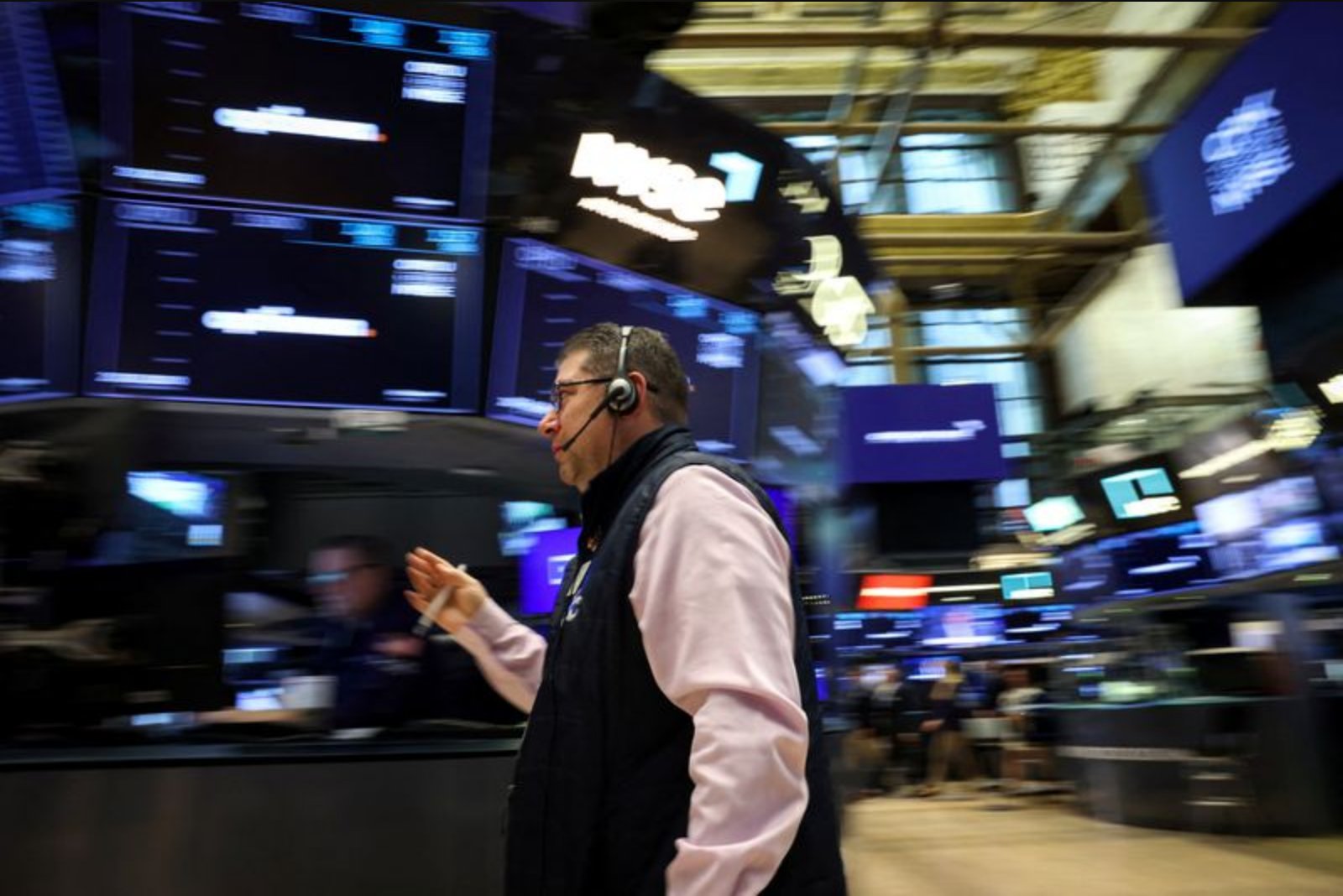
U.S. equity futures remained near all-time highs on Thursday as crude oil slipped lower on growing expectations that the United States and Iran are approaching a limited, temporary agreement to halt their war, sources and officials said. Market participants said hopes that such a deal could lead to a reopening of the Strait of Hormuz - and therefore to a normalization of crude flows - have been a key factor pushing global stock indexes toward fresh peaks while weighing on oil prices, which have fallen deeper below $100 a barrel.
At 6:05 a.m. ET, Dow E-minis had declined 11 points, or 0.02%, S&P 500 E-minis were up 2 points, or 0.03%, and Nasdaq 100 E-minis were down 3.25 points, or 0.01%.
Investors have also been rewarding a persistent rally in technology and AI-related names, a trend that market participants say has underpinned the ascent of U.S. equities as a strong corporate earnings season unfolded and economic releases signaled continued demand. One labor market datapoint that reinforced investor confidence was a private payrolls report showing U.S. private payrolls rose by 109,000 jobs in April - the largest monthly increase in 15 months - a reading that market watchers interpreted as evidence of ongoing labor-market stability despite elevated international tensions.
Attention remains fixed on additional labor data, with weekly jobless claims scheduled for release at 8:30 a.m. ET and the broader government nonfarm payrolls report due on Friday. According to a Reuters poll of economists cited by market participants, the nonfarm payrolls report is forecast to show a 62,000 increase in jobs for April, following a 178,000 rebound in March.
Traders continued to price in a U.S. Federal Reserve that will hold interest rates through the end of the year, citing a combination of a resilient labor market and still-elevated energy prices. That outlook marks a pronounced shift from earlier in the year, when markets were pricing in multiple rate cuts.
Several regional Fed presidents - Neel Kashkari of Minneapolis, Beth Hammack of Cleveland and John Williams of New York - were scheduled to speak later in the day; they are all voting members of the interest rate-setting committee this year.
Notwithstanding the broad market strength, a number of individual names saw sharp premarket moves. Snap fell about 10% before the open after the company said its first-quarter advertising revenue was hurt by the Middle East conflict and slowing growth in North America. Whirlpool plunged 16.6% after missing first-quarter sales estimates and announcing the suspension of its dividend. U.S.-listed shares of Arm Holdings dropped 7.3% despite forecasting first-quarter revenue above Wall Street expectations; the stock has nonetheless risen roughly 117% year-to-date.
Separately, a market product referenced by some traders -- ProPicks AI -- was described in promotional material as evaluating Whirlpool (WHR) alongside other companies using more than 100 financial metrics and noted notable past winners that include Super Micro Computer (+185%) and AppLovin (+157%).
With equities rallying and oil easing, market participants are parsing a mix of geopolitical developments, corporate earnings trajectories and incoming economic data to reassess risk and rate expectations. The prospect of a temporary halt to hostilities between the United States and Iran, if realized, could reduce a key geopolitical risk premium placed on energy markets and further shape investor positioning across sectors.
Market snapshot
- Equity futures near record highs, led by technology and AI-related gains.
- Oil prices retreating below $100 a barrel amid hopes for a temporary U.S.-Iran agreement and the potential reopening of the Strait of Hormuz.
- Labor data showing private payrolls up 109,000 in April; broader nonfarm payrolls due Friday with a Reuters poll median of +62,000 for April.
What traders are watching
- Remarks later in the day from Fed presidents Neel Kashkari, Beth Hammack and John Williams.
- Weekly jobless claims at 8:30 a.m. ET and Friday's nonfarm payrolls report.
- Company-specific earnings and revenue updates that are producing pronounced stock moves in the premarket.