
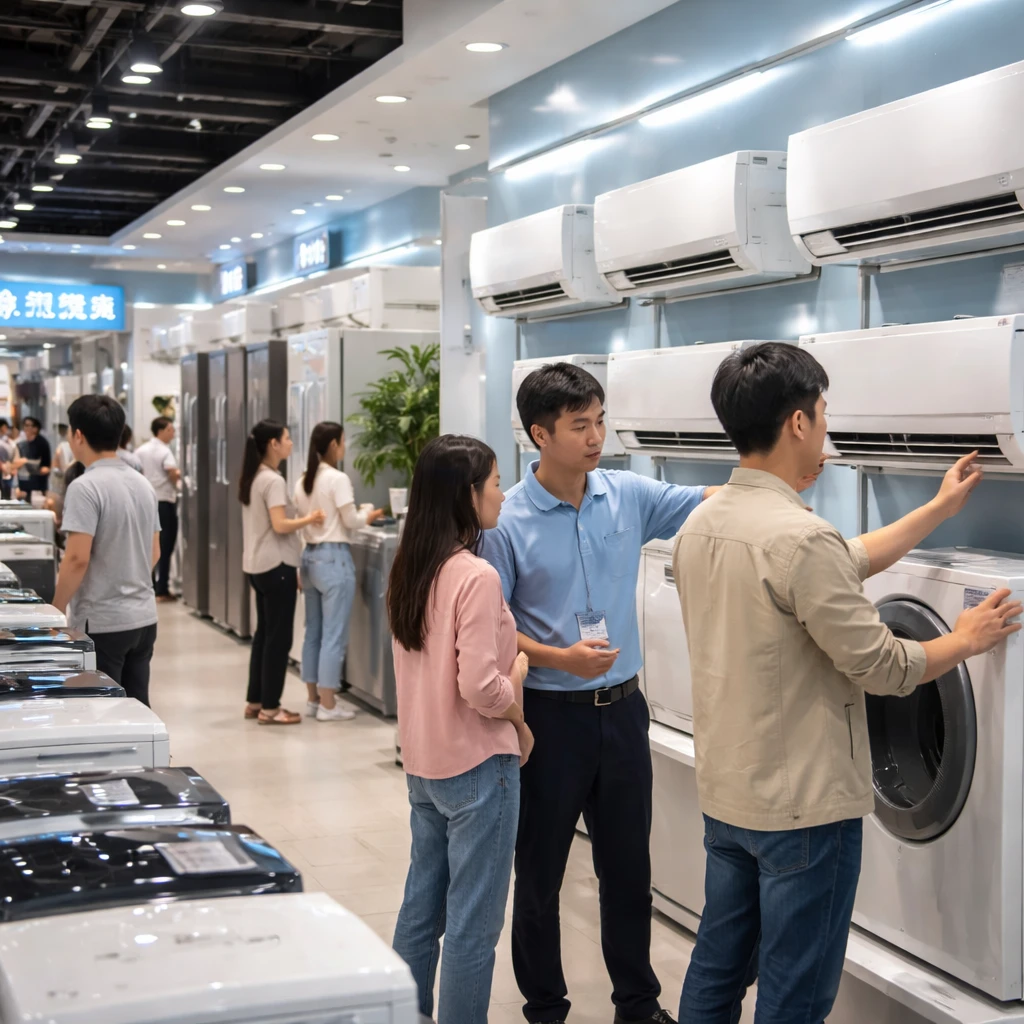
Jefferies reported that demand for China’s white goods market weakened in April and in the early days of May when compared with the first quarter of 2026, with the decline most pronounced in air conditioners.
According to the firm’s channel checks, retail sales for white goods during the May 1 to May 5 period fell by double-digit percentage points year-on-year. That early May interval, often referred to as the golden week campaign, typically functions as a lead-in to the summer peak season for cooling products.
Jefferies estimated that, on a like-for-like basis, retail prices have risen year-to-date by roughly 3% to 5%. However, the brokerage cautioned that these price increases may not be sufficient to offset mounting margin pressure for brands. The firm highlighted two drivers of that pressure: a deterioration in product mix and higher incentive payments to distributors.
Weak air conditioner demand in the early May window may foreshadow heightened price competition heading into the 618 promotion period, Jefferies said. Industry participants commonly use early May results to inform summer pricing strategies, particularly for air conditioners, meaning the early weakness could influence promotional behavior and pricing approaches later in the season.
On the subsidy front, Jefferies observed that consumer subsidies were broadly flat year-on-year. For the 2026 618 promotion specifically, JD.com (NASDAQ:JD) is directing concentrated subsidies toward Haier and Midea branded items, while subsidies provided directly by brands and by government channels remained unchanged from the prior year.
In sum, Jefferies’ checks point to softer consumption in April and the initial May golden week period, with air conditioners at the forefront of the slowdown. Retail price increases so far appear limited in their ability to fully counteract margin pressures arising from mix shifts and rising distributor incentives, and the early weakness raises the prospect of more aggressive price competition during the 618 promotion.