
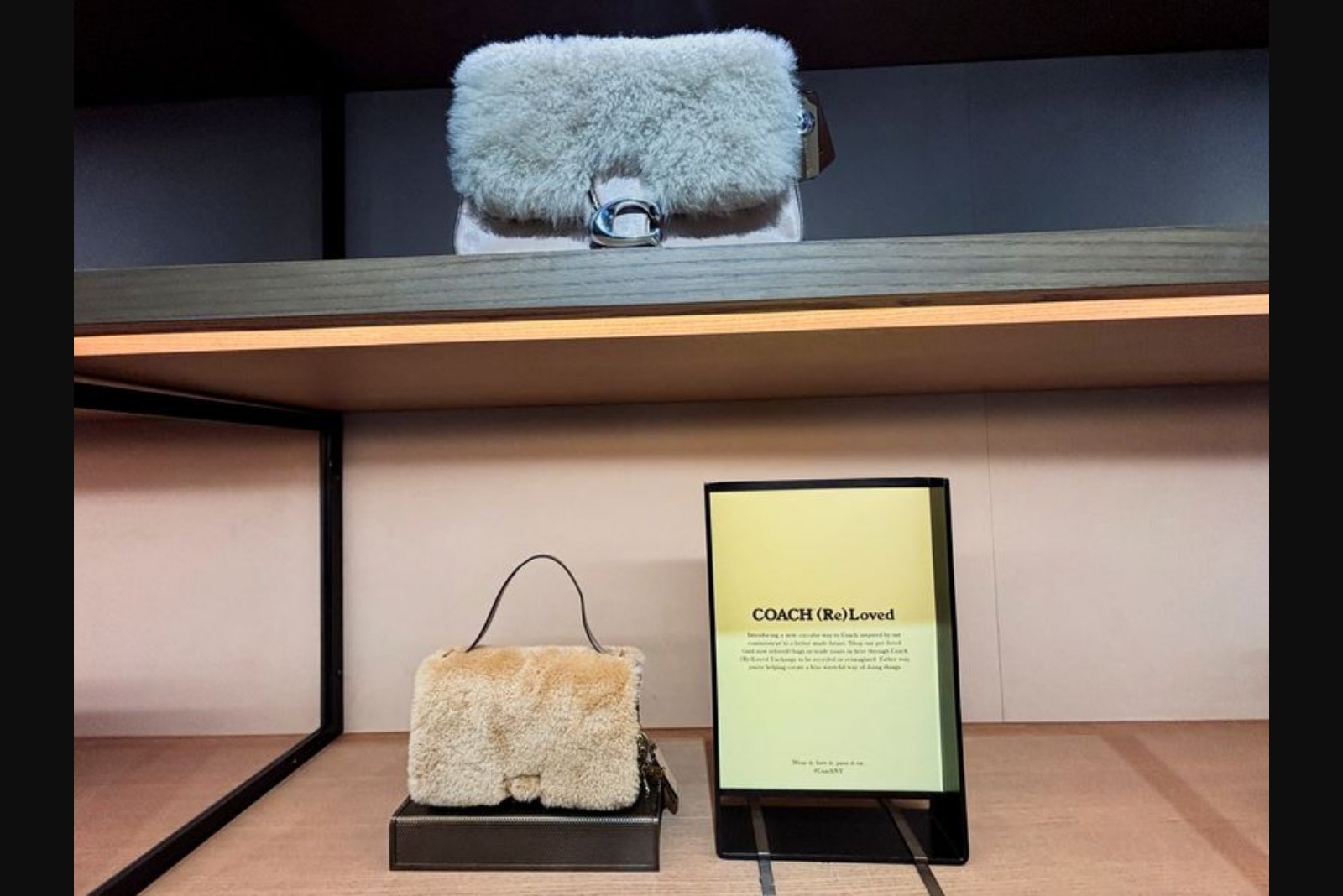
May 7 - Tapestry, the parent company of Coach, on Thursday raised its full-year guidance for the third time this year after posting quarterly results that topped Wall Street expectations. Management attributed the better-than-expected performance to sustained interest from younger shoppers in its Tabby handbags and other leather accessories, and to product investments such as bag and book charms that have resonated with affluent Gen Z customers.
The company now forecasts fiscal 2026 revenue of about $7.95 billion, up from a prior outlook of more than $7.75 billion and above analysts' aggregate projection of $7.82 billion, according to data compiled by LSEG. Tapestry also lifted its expected earnings per share to $6.95, narrowing ahead of its earlier range of $6.40 to $6.45 and exceeding the analysts' estimate of $6.52 per share.
Tapestry said that sales have climbed for six consecutive quarters, a streak management tied to its targeted investments in fashion features and the appeal of its core leather categories. The company recorded a quarterly revenue total of $1.92 billion, ahead of analysts' average estimate of $1.79 billion, while adjusted profit reached $1.66 per share versus estimates of $1.30.
Geographically, the results showed notable strength. On a reported basis, European revenue rose 31% from a year earlier, and North American sales increased by 20% - Tapestry's largest market. Those gains stood out amid uneven demand across the luxury sector, with some other global luxury houses reporting softer sales in regions including the Middle East and Europe.
Executives highlighted enduring consumer resilience and specific brand traction. CFO Scott Roe told Reuters, "The consumer continues to be resilient and respond to our brands and the products that we are bringing." He pointed to latent demand for Kate Spade and strong brand resonance, noting that this performance "gives us confidence and really the conviction to be investing for long-term growth." Roe added, "Turnaround takes some time, and in the short term, it is work in progress."
Tapestry's repriced guidance and quarterly beat reflect a business benefitting from product-led demand among younger shoppers and continued investment in differentiated fashion elements. The company signaled that it considers the present momentum sufficient to support additional investment aimed at long-term growth, while acknowledging ongoing work to complete brand turnarounds.
Summary
Tapestry raised its fiscal 2026 revenue and EPS guidance after a quarter that beat estimates, driven by strong demand for Tabby handbags and other leather goods among younger, affluent customers. The company posted headline revenue of $1.92 billion and adjusted EPS of $1.66, with double-digit growth in Europe and North America.
Key points
- Tapestry lifted fiscal 2026 revenue guidance to about $7.95 billion and raised EPS guidance to $6.95 per share.
- Quarterly revenue was $1.92 billion and adjusted EPS was $1.66, both above analysts' estimates.
- Regional strength included a 31% reported revenue increase in Europe and 20% growth in North America; sectors impacted include luxury retail and consumer discretionary markets.
Risks and uncertainties
- Geopolitical tensions have weighed on luxury demand in parts of the Middle East and Europe, introducing regional volatility for luxury retailers and travel-related consumer spending.
- Tapestry acknowledges that brand turnarounds take time, indicating execution risk as it continues to invest in brands such as Kate Spade.
- Continued reliance on younger, affluent consumers means shifts in that cohort's preferences could affect future sales in the luxury and fashion sectors.