
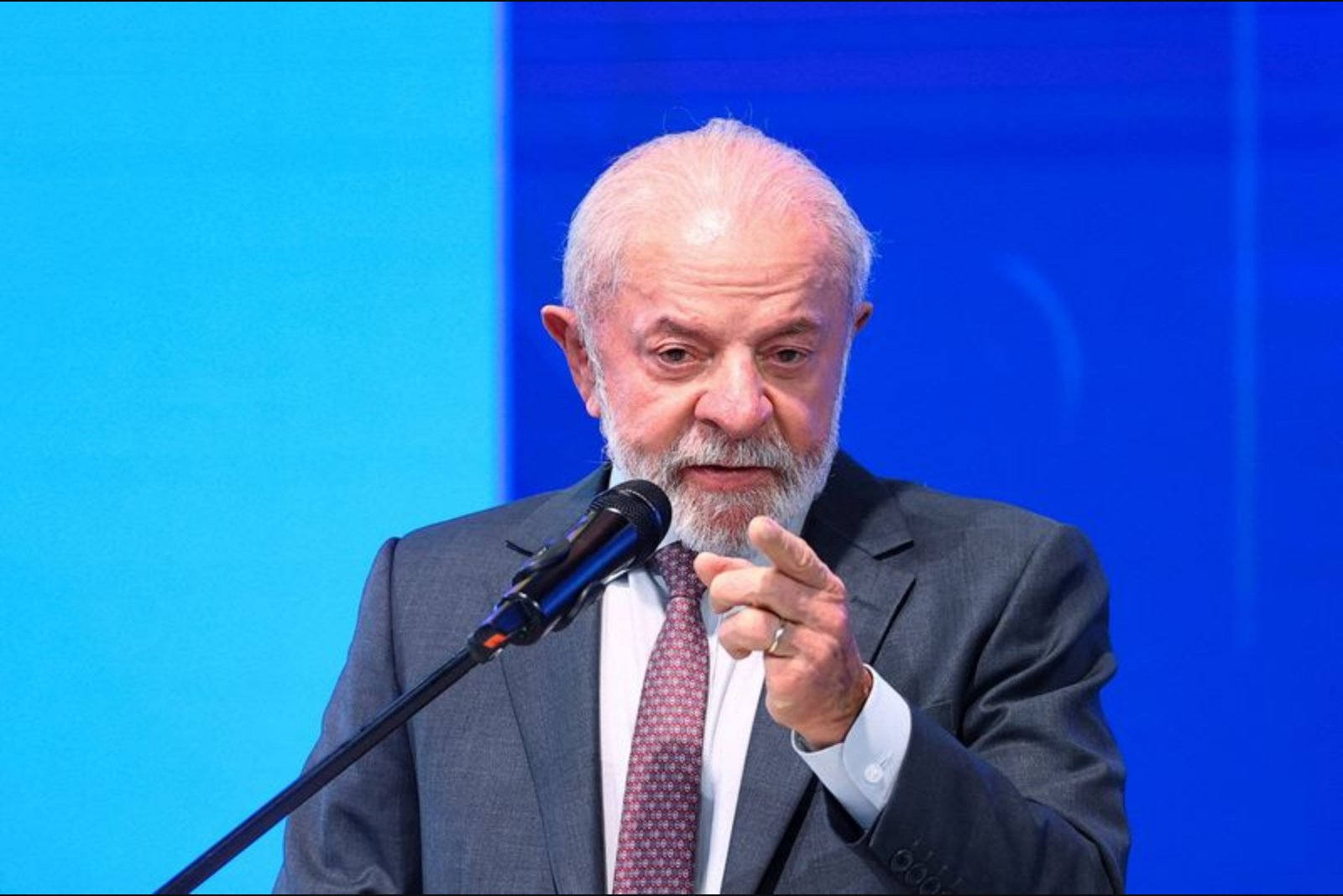
Brazilian President Luiz Inacio Lula da Silva is in Washington for a White House visit intended to rekindle the rapport U.S. President Donald Trump described last year as "excellent chemistry," to seek ways to prevent fresh trade sanctions, and to demonstrate Brazil's willingness to negotiate on two politically sensitive topics - critical minerals and organized crime - according to three people close to the Brazilian president.
One Brazilian official involved in arranging the meeting tempered expectations, saying: "We don't know if the visit will help. But it's more likely to help than doing nothing." The comments underline how the trip is being viewed by Brazil as a pragmatic effort to reduce the risk of further U.S. trade measures.
Tariff backdrop
Relations between the two countries have been strained by trade actions taken last year, when the U.S. administration imposed levies as high as 50% on some Brazilian products - among the steepest applied to U.S. imports. The tariffs followed accusations by the U.S. that Brazil had promoted a witch-hunt against far-right former president Jair Bolsonaro, who was later convicted for attempting to overthrow democracy. Washington later removed most of those duties, including on Brazilian beef and coffee, a step that U.S. officials said helped ease upward pressure on grocery prices.
In February, the U.S. Supreme Court struck down the global tariffs that had been imposed under a national emergencies law, eliminating many of the remaining levies. Nonetheless, Brazilian goods still carry an extra 10% tariff that is scheduled to expire in July. In recent weeks, however, Brazilian officials say they have seen indications their exports could face a new round of tariffs tied to a Section 301 investigation into alleged unfair trade practices.
Tensions extend beyond headline duties. Brazilian leaders point to disputes over digital trade after Brazil blocked renewal of a World Trade Organization e-commerce tariff moratorium backed by the United States. They also cite Brazil's own high tariffs on certain goods, including ethanol, as flashpoints. Separately, the Office of the U.S. Trade Representative has alleged that nearly half of Brazil's timber exports are sourced illegally - a claim the Lula administration disputes, saying it has driven deforestation rates to historically low levels.
Officials in Brasilia were alarmed following a meeting with U.S. Commerce Department representatives two weeks ago, according to people who attended. That encounter, they said, featured few substantive questions from U.S. officials, feeding a perception in Brazil that the investigation may be oriented toward building a case to justify tariffs, rather than resolving trade concerns. "What they are doing is building a case, even if unfounded, to justify the later adoption of tariffs," one Brazilian official said.
Critical minerals - limited expectations
Talks on critical minerals and rare earths are expected to feature during the visit, though people close to Lula do not anticipate the trip will deliver a formal, detailed deal. The thaw in relations began last September during the U.N. General Assembly when Trump used the word "chemistry," and U.S. interest in Brazil's mineral reserves has helped keep engagement alive, according to Monica de Bolle, a Brazilian economist and senior fellow at the Peterson Institute of International Economics.
U.S. officials are reported to be seeking some form of arrangement on critical minerals and rare earths to bolster supply chains for high-tech manufacturing. De Bolle said: "On the part of the U.S., they are looking for some kind of deal - whatever that happens to be - on critical minerals and rare earths with Brazil. The U.S. actually needs something from Lula."
Still, the Lula administration does not expect a comprehensive minerals agreement to emerge because negotiators struggled even to draft a basic memorandum of understanding. Key sticking points include Brazil's insistence that minerals be processed domestically and the U.S. demand for a price floor mechanism intended to prevent China from using market power to undercut Western producers. Present discussions remain vague, with no projections for investments, production or timelines.
The pace of private investment is already moving ahead in some cases, creating friction with regulators. USA Rare Earth's $2.8 billion acquisition of Serra Verde's rare earth mining operations is cited as a prominent example of U.S. investment progressing without a clear regulatory framework, a development that has raised concerns among Brazilian officials.
Despite the limited prospects for a binding deal, both presidents have political incentives to show they can cooperate. De Bolle observed that the threshold for what would count as success is relatively low for each leader: even a loose framework could be presented as an achievement for both sides. "The bar is actually kind of low for both of them," she said.
Organized crime and security cooperation
Security policy is another delicate element of the visit. The White House has explored designating Latin American criminal gangs as terrorist organizations, a move that Brazil's government is trying to prevent with respect to the local groups PCC and Comando Vermelho. Brazilian officials fear such a designation could open the door for U.S. military action in Brazil or broaden the scope for sanctions on financial institutions that might unwittingly transact with gang members.
Federal Police chief Andrei Rodrigues warned in March that such a designation could have "repercussions for the Brazilian economy, the productive sector, and the financial system." Rather than accept formal terrorist designations, Lula plans to propose stepped-up cooperation with the United States on combating organized crime, money laundering and gun trafficking.
Officials involved in drafting a proposal for enhanced security cooperation acknowledged it was submitted only recently and expressed doubts that anything would be signed during the visit. "I don't think we will be able to sign anything because we sent it very recently," said one official who worked on the document.
Outlook
The White House meeting represents a calculated diplomatic effort by Brazil to blunt the risk of further U.S. trade penalties while opening channels to discuss strategic minerals and coordinated law enforcement action. But with substantive disagreements remaining on tariffs, digital trade, timber sourcing and the terms of mineral partnerships, expectations in Brazil are modest. The visit may reduce immediate tensions simply by creating space for dialogue, yet the core disputes that prompted last year's tariffs and the ongoing Section 301 probe are still unresolved.