
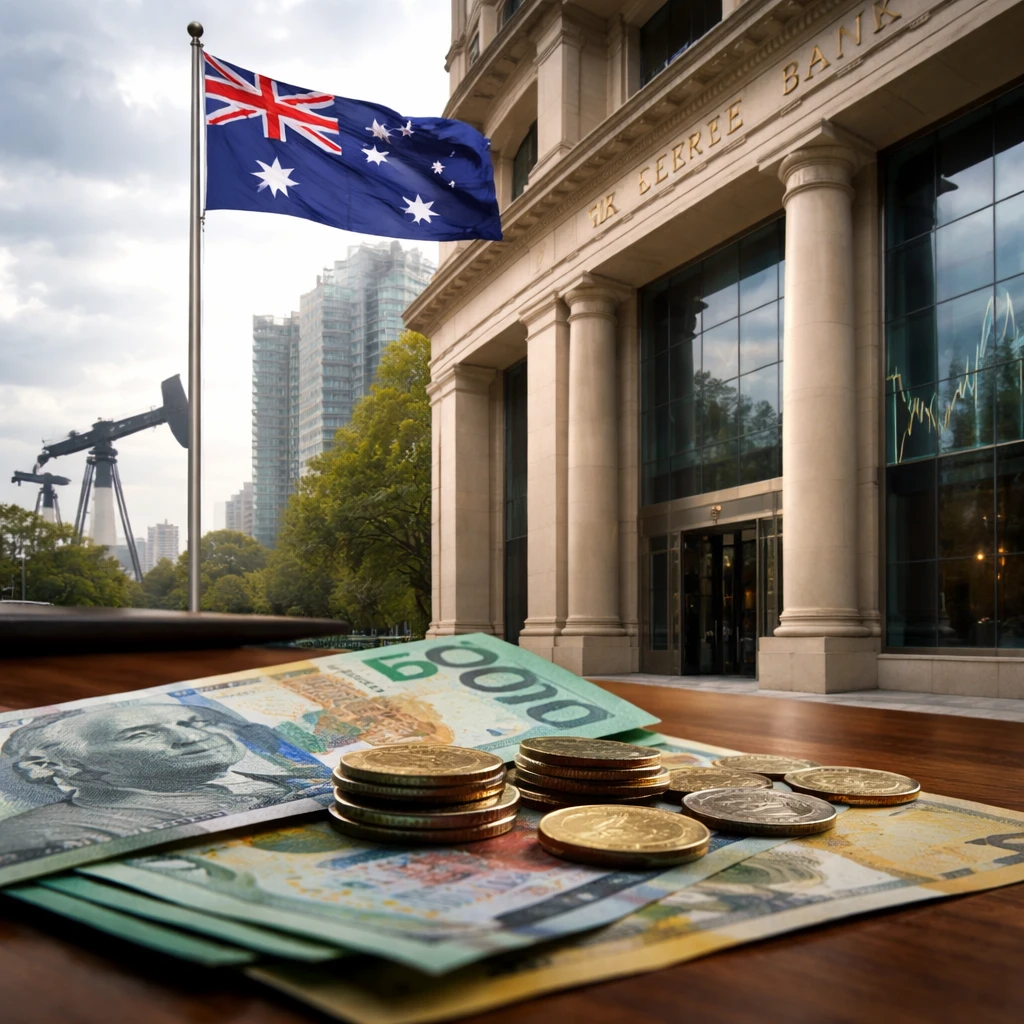
Markets are broadly positioned for the Reserve Bank of Australia (RBA) to raise the cash rate by 25 basis points to 4.35% at the conclusion of its meeting on May 5. This expected decision would be the third rate increase so far this year and would return the cash rate to levels last seen in late 2024, fully reversing a short-lived easing episode in 2025.
The central bank's hawkish posture has persisted since inflation began to reaccelerate late in 2025. Analysts cite a renewed energy-driven push on prices stemming from the conflict in the Middle East as a key contributor to the recent uptick in inflation readings.
Headline and core inflation measures have shown persistence above the RBA's stated annual target range of 2% to 3%. Recent data have underscored that core inflation remains well above that band, and some observers note that March consumer price index figures may not yet have fully captured the energy price shock originating from the Middle East conflict.
Expectations for the May decision and the path forward
While a 25 basis-point increase is widely expected at the May meeting, several analysts foresee a shift in the central bank's tone following the move. ANZ economists said they anticipate "a tilt in the language in the post meeting statement that will open the door to an extended pause. Assuming we see a rate rise… our view remains that the cash rate will then stay at 4.35%."
Similarly, OCBC analysts observed that "after another expected policy rate hike, rates are likely working towards containing inflation pressure. This allows the RBA to turn a bit more patient, although RBA rhetoric has been on the hawkish side."
RBA Governor Michele Bullock has not explicitly committed to further increases but has continued to stress a generally hawkish approach to preserve restrictive policy settings. Additional space to raise rates, if needed, is supported by ongoing signs of tightness in the Australian labor market.
Implications for the Australian dollar
The Australian dollar strengthened considerably in response to the RBA's tightening cycle and was trading near a four-year high against the U.S. dollar ahead of the May meeting. Higher domestic interest rates typically bolster the currency by attracting investment into Australian government bonds and bank deposits, and by reducing incentives for capital to flow offshore.
At the same time, a firmer Australian dollar can act as a drag on economic growth because it diminishes the returns on the nation's important commodity exports.
Equity market effects and sectoral winners and losers
Australian equity markets have shown sensitivity to the RBA's rate moves. The ASX 200 suffered declines in eight of the nine trading sessions leading up to the May meeting, reflecting investor caution as the central bank tightens policy. If the RBA maintains a hawkish tone following the meeting, equities could experience further pressure due to a softer growth outlook.
Sectors respond unevenly to higher interest rates: banks and insurers often benefit from a steeper or higher rate environment, while resource-heavy segments such as miners are more exposed to the negative effects of a stronger currency and weaker demand prospects.
Outlook and uncertainty
Analysts generally expect that once the expected May increase is delivered, the RBA may adopt a more neutral posture and wait to assess the full inflationary impact of the energy shock. That assessment will depend in part on how energy prices evolve and on whether core inflation trends begin to moderate toward the RBA's target range.
Given the combination of elevated core inflation, external energy price pressures, and a still-tight labor market, the RBA's decisions in the near term will hinge on incoming data and the central bank's read of persistent inflationary risks.