
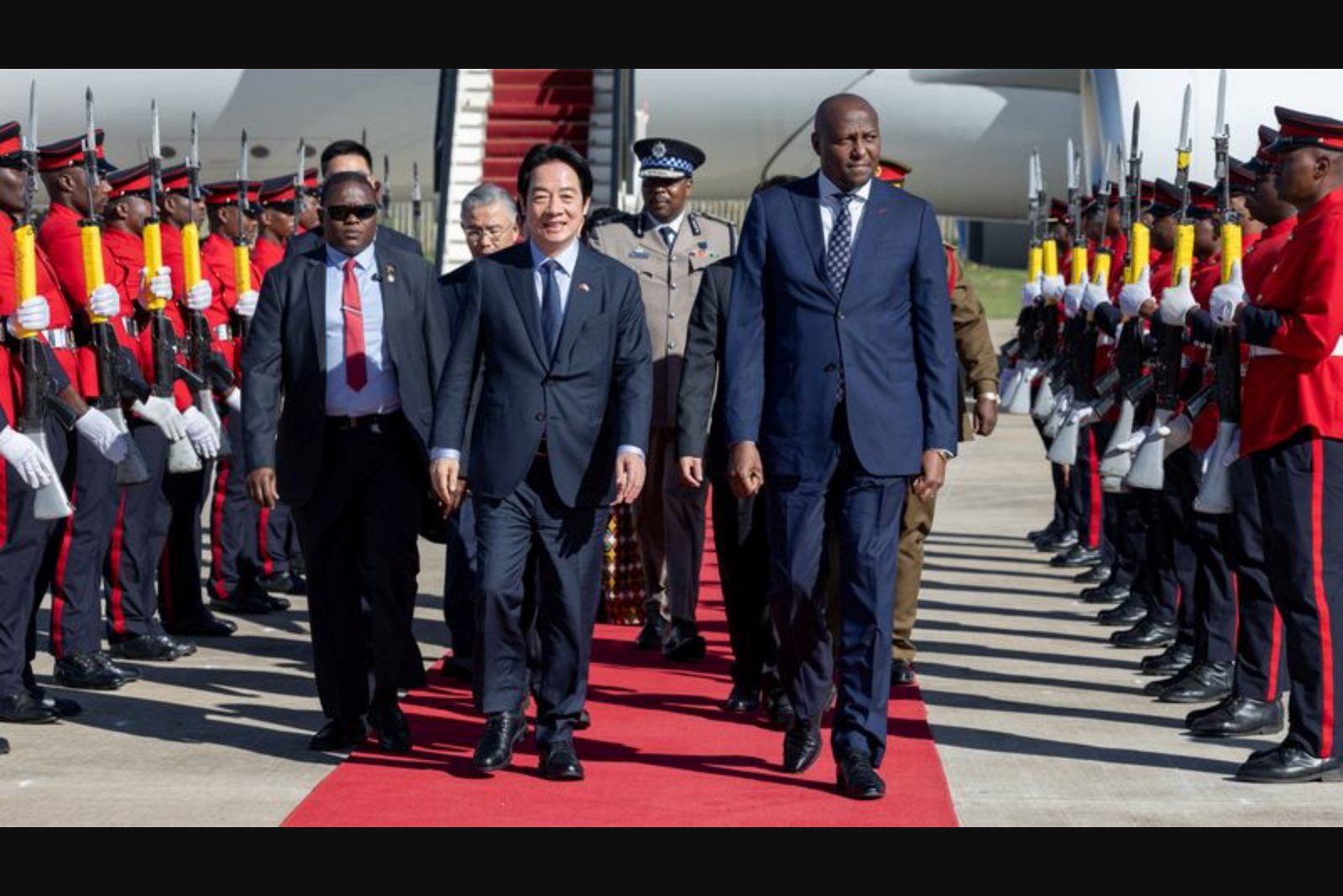
TAIPEI, May 2 - Taiwan President Lai Ching-te arrived in Eswatini on Saturday, two weeks after he was compelled to call off a previously planned trip to a diplomatic ally when Indian Ocean countries denied overflight permissions, a move Taiwan said was prompted by pressure from Beijing.
Eswatini, a small monarchy in southern Africa, is among just 12 states worldwide that maintain formal diplomatic relations with Taiwan. Most of those allied states are located in Latin America, the Caribbean and the Pacific, and sustaining ties with them remains a priority for Taiwan’s democratically governed island, which China regards as part of its territory.
Last month, Lai postponed a visit that was to mark the 40th anniversary of King Mswati III’s accession. Taiwan stated that the Seychelles, Mauritius and Madagascar unilaterally revoked flight permits for Lai’s aircraft to cross airspace under their control, and Taipei attributed those decisions to Chinese pressure.
Taiwanese officials described the cancellation as the first time a sitting Taiwan president had been forced to abandon an entire foreign trip because of denial of airspace access. Taipei said the event suggested a possible new tactic aimed at curbing the island’s international engagement.
In social media posts on Facebook and X, Lai said he had arrived in Eswatini on Saturday on a trip that had not been announced in advance by either government. In English on X he wrote: "Taiwan will never be deterred by external pressures. Our resolve & commitment are underpinned by the understanding that Taiwan will continue to engage with the world - no matter the challenges faced."
Neither Lai’s social media posts nor a statement from his office disclosed the means by which he traveled to Eswatini. He did, however, publish a photograph that appears to show him disembarking a jet that looked like an Eswatini government aircraft, the same plane that earlier this week carried Eswatini Deputy Prime Minister Thulisile Dladla to Taipei.
China’s Foreign Ministry issued a sharply worded statement accusing Lai of "secretly slipped aboard a foreign aircraft and sneaked out of Taiwan, lavishly squandering public funds". The statement added: "No matter how the Democratic Progressive Party authorities collude with external forces or in what form they ’buy the loyalty of others,’ it is all a futile effort that cannot change the fact that Taiwan is part of China."
The cancellation of Lai’s earlier itinerary prompted criticism of China from the United States and drew expressions of concern from the European Union, Britain, France and Germany. Lai has rejected Beijing’s claims of sovereignty over Taiwan, maintaining that the island has the right to engage with other countries and that only the people of Taiwan can determine their future.
Context and implications
- Eswatini remains one of a small group of countries with formal diplomatic relations with Taiwan, making visits by Taiwan’s leadership symbolically important.
- Denials of overflight permissions by Indian Ocean states led to the postponement of Lai’s earlier trip, which Taipei attributed to external pressure.
- China publicly criticized Lai’s unannounced arrival, framing it as improper use of funds and an attempt to buy diplomatic loyalty.