
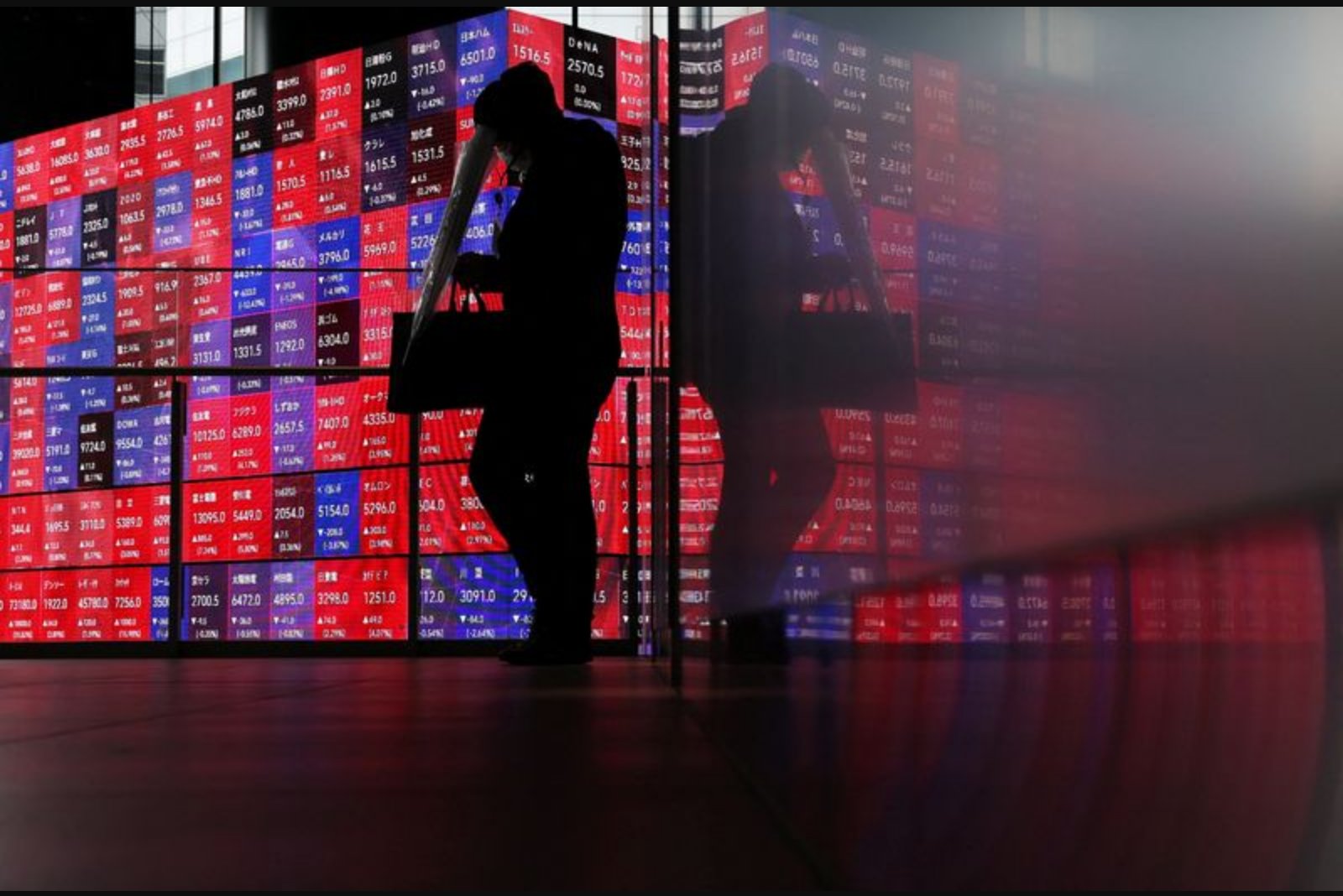
Asian share indices recorded modest gains on Monday as investors reacted to tentative signs of progress in resolving the Middle East conflict and prepared for a dense calendar of corporate earnings and economic releases. Oil prices were flat after an early drop, while currency and bond markets reflected persistent concerns about energy-driven inflation and central bank tightening.
U.S. President Donald Trump said the United States would begin an effort to free up ships stranded in the Strait of Hormuz on Monday morning, but did not provide operational details. A statement from U.S. Central Command outlined elements of support the military would provide - including guided-missile destroyers, more than 100 land and sea-based aircraft and 15,000 service members.
Separately, Iran said the United States had replied to its 14-point proposal through Pakistan and that it was reviewing the response. President Trump, however, cautioned that he believed the reply was unlikely to be acceptable.
Brent crude futures were steady at $108.30 per barrel after recovering from an initial fall of over 2%. U.S. crude futures were little changed at $102.01 per barrel. Dealers also reported that a bulk carrier had been attacked by multiple small craft while transiting Iran's Sirik on Sunday, and observers noted it was unclear how many vessels would attempt to transit the Strait of Hormuz even with U.S. Navy protection.
Market liquidity in parts of Asia was thin owing to a public holiday in Japan. Nikkei futures showed only a small uptick at 59,630 compared with a cash close of 59,513. Broader regional flows were mixed but generally positive: MSCI's broadest index of Asia-Pacific shares outside Japan rose 0.6%, and South Korean markets, returning from a holiday, jumped 2.6%.
European futures were mixed ahead of the trading day - EUROSTOXX 50 and DAX futures each added 0.1%, while FTSE futures slipped 0.4%. U.S. equity futures for the S&P 500 and Nasdaq were largely unchanged as markets awaited the start of a busy earnings week.
More than 100 corporate reports are due this week. Companies on the schedule include Advanced Micro Devices, Super Micro Computer Inc, Palantir, Walt Disney and McDonald's. Analysts at Goldman Sachs noted that the S&P 500 earnings-per-share growth rate was running at 25%. Excluding one-off gains, that pace was still a brisk 16%, they said.
"Despite elevated energy prices and geopolitical uncertainty, corporate guidance and analyst estimate revisions have remained strong so far this quarter," Goldman Sachs analysts wrote. "However, the reward for EPS beats has been unusually small."
Investor concern about the scale of artificial intelligence capital expenditure has also been in focus. AI-related capex for 2026 was cited at $751 billion - $80 billion above estimates set at the start of the earnings season and 83% higher than AI spending in 2025, according to the figures referenced by market participants.
Higher energy prices have contributed to rising bond yields, complicating equity valuations and prompting several major central banks to adopt a more hawkish stance. Market pricing showed diminished expectations for Federal Reserve easing by year-end - just 2 basis points of easing were implied, down from 11 basis points a week earlier. Expectations for the European Central Bank had risen to 76 basis points of hikes, and the Bank of England to 63 basis points.
Australia's central bank is scheduled to meet on Tuesday and is widely seen as likely to lift its cash rate for a third consecutive meeting as it confronts persistent inflationary pressures.
Economic data this week could alter the outlook for Fed policy. Friday's April payrolls report is a key release. Median forecasts put payroll gains at 60,000 following March's outsized 178,000 increase; however, forecasters highlighted seasonal adjustment complications that make the result uncertain. Citi analysts, cited in market commentary, expected a 15,000 fall in payrolls and a rise in the unemployment rate to 4.3%.
In currency markets the dollar was a touch softer as investors awaited further developments in the Middle East and clarity on whether the Strait of Hormuz could be reopened to commercial traffic. The dollar traded down 0.1% against the yen at 156.94, still feeling the effects of last week's Japanese intervention, which some analysts estimated could have been in the region of $35 billion.
The euro was essentially flat at $1.1723, while the pound held at $1.3575 ahead of local elections in the United Kingdom which market watchers say could produce heavy losses for the ruling Labour Party. In precious metals, gold eased about 0.2% to $4,603 an ounce and remained well within recent trading ranges.
Summary - Asian equities and oil markets traded cautiously as military and diplomatic moves around the Strait of Hormuz unfolded, corporate earnings and major economic data loomed, and central bank policy expectations adjusted to higher energy-driven inflation risks.
Key points:
- Geopolitical developments - U.S. plans to assist ships in the Strait of Hormuz and Iran's acknowledgement of a U.S. response to its 14-point proposal kept markets alert; shipping risk remains a near-term factor for energy and transport sectors.
- Corporate earnings focus - A heavy week of results, including technology and consumer names, intersects with stronger-than-expected S&P 500 EPS growth, influencing equity sentiment in cyclical and tech sectors.
- Monetary policy and inflation - Elevated energy prices lifted yields and hardened expectations for central bank tightening, affecting fixed income and interest-rate-sensitive sectors like real estate and utilities.
Risks and uncertainties:
- Geopolitical risk - Continued attacks on shipping or a failure to safely reopen the Strait of Hormuz could sustain oil price volatility, with direct implications for energy and transportation industries.
- Policy uncertainty - Shifts in market-implied central bank moves, particularly for the Fed, ECB and BoE, could pressure bond markets and equity valuations across interest-rate-sensitive sectors.
- Macroeconomic data volatility - The upcoming payrolls report and other releases could materially alter the Fed policy outlook, creating short-term market swings that affect risk assets and currency pairs.