
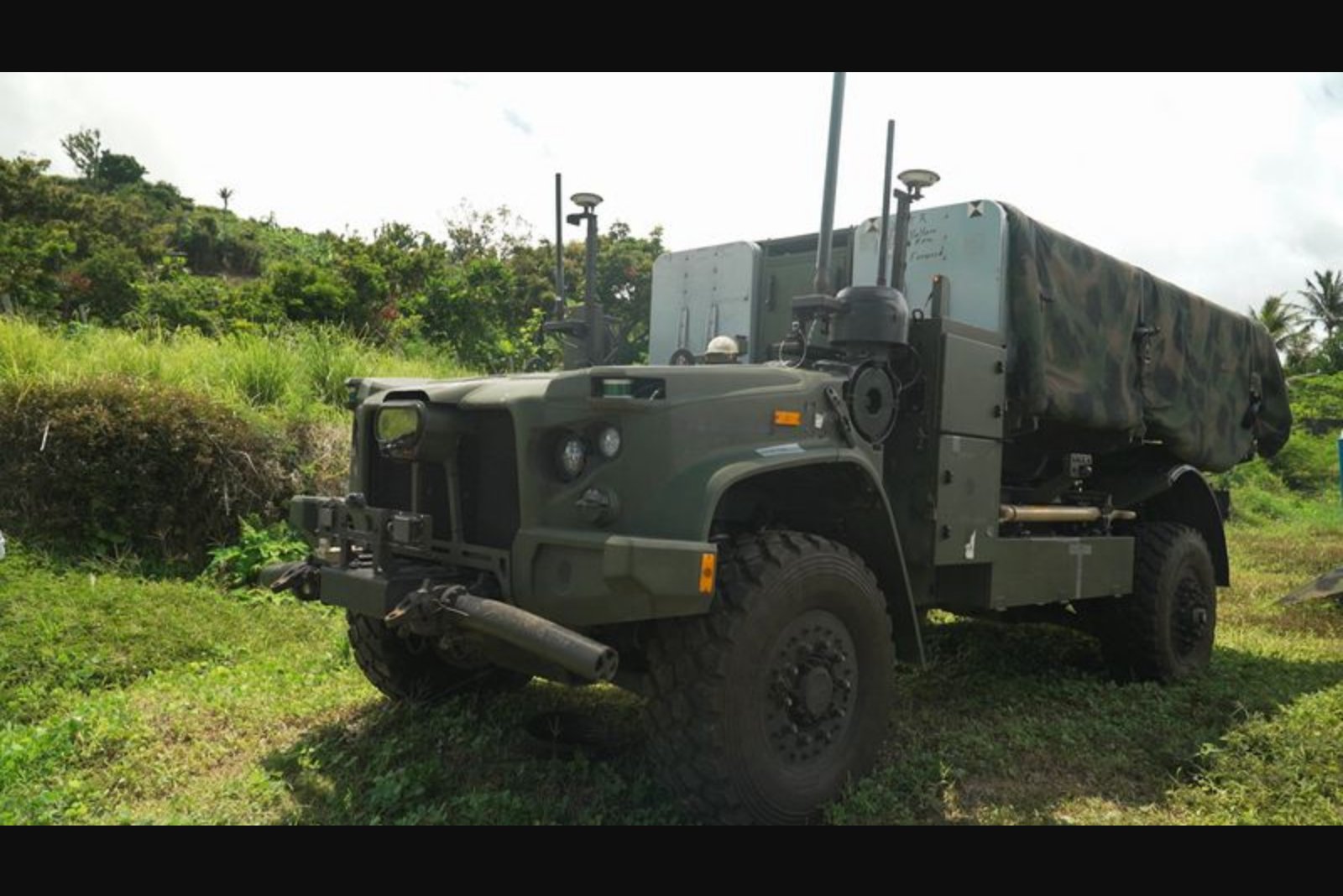
On May 2, Philippine and U.S. military forces demonstrated the deployment of the NMESIS coastal anti-ship missile system in Batanes province, the Philippines' northernmost territory located roughly 100 miles south of Taiwan along the Luzon Strait. The deployment took place during the annual Balikatan exercises, which rehearse combined operations between the two countries amid rising tensions in the wider Asia-Pacific region.
The NMESIS - a highly mobile land-based coastal anti-ship missile system with an operational range of about 185 km (115 miles) - was transported to Batanes aboard a U.S. C-130 transport aircraft. It was set up in the capital, Basco, which is home to one of the island province's two small runways. The system was brought to the province for deployment rehearsal and to provide simulation support during the drills, and officials said it would be removed once the exercises conclude.
U.S. Staff Sergeant Darren Gibbs described the training environment in Batanes as distinct from routine training locations. "Training out here in Batanes allows us a different environment than what we’re normally allowed to operate in," he said. "So it gives us unique opportunities to actually utilize the system and train within our capabilities, and it offers experiences we don’t normally get offered in our day-to-day training."
Gibbs explained the NMESIS is engineered for remote operation. "The purpose of this system is for it to be fully autonomous, for us not to require a driver or passenger inside the vehicle itself," he said. "We will tell it where to go and then we program what it needs to do."
Philippine exercise director Francisco Lorenzo said the deployment to Batanes is intended to test operational feasibility in remote locations. He noted the NMESIS was also positioned in the island province during last year’s war games. "It is part of training so as to test the feasibility or rehearse their deployment there when need arises," Lorenzo said. One stated objective of Balikatan is to practice "defence of our territory with our allies," he added.
Officials emphasized that the NMESIS on Batanes would not be used in live-fire exercises. Its presence was limited to rehearsals and simulated operations for the duration of the drills, after which the system will be withdrawn.
The United States previously deployed its Typhon missile system to the Philippines in 2024 for joint exercises. Such deployments have drawn routine criticism from Beijing, which has said U.S. weapons placements in the Philippines increase regional tension.
Security analyst Chester Cabalza, founder and president of the Manila-based think tank International Development and Security Cooperation, commented on the strategic implications of NMESIS deployments in the northern Philippines. "The NMESIS can spark a powder keg for Beijing and asymmetric deterrence for Manila and Taipei in the Bashi Channel along the Luzon Strait," he said. Cabalza added the system is airliftable and can be deployed to any Philippine coastline within hours, and that its emplacement in Batanes is likely to be perceived by Beijing as part of a U.S.-led encirclement.
The Balikatan exercises this year include more than 17,000 troops, roughly 10,000 of whom are from the U.S. The drills also involved maritime strike exercises in Itbayat, a municipality in Batanes approximately 155 km from Taiwan and the northernmost point of the Philippines.
The deployment and the broader drills occur against a backdrop of increased activity by China in nearby waters. Chinese forces have stepped up operations in the South China Sea and the Taiwan Strait, including raising their naval presence around Taiwan and transiting an aircraft carrier through the Taiwan Strait. Satellite imagery reviewed by officials indicates China put up a barrier at the mouth of the Scarborough Shoal earlier in the month.
Philippine President Ferdinand Marcos Jr has warned that a conflict over Taiwan would compel evacuation of Filipinos working and living on the self-governed island and that such a scenario would "drag the Philippines kicking and screaming into the conflict." Philippine Defense Secretary Gilberto Teodoro said in an April 28 interview that Manila maintains a contingency plan to evacuate Filipinos in Taiwan if hostilities erupt, though he provided no further details.
Operationally, the NMESIS deployment to Basco and the associated drills sought to validate deployment logistics in remote settings, exercise command-and-control of remotely operated coastal systems, and rehearse allied coordination for territorial defence. The presence of a highly mobile, airlift-capable coastal missile system underscores the emphasis in these exercises on rapid emplacement and the simulation of a layered coastal defence posture.
For the residents of Batanes - a province of about 20,000 people - the drills and the temporary presence of advanced systems such as NMESIS represent an unusual concentration of military hardware and personnel in a normally quiet area. Military officials have stated the systems are there solely for training and will be removed after the exercises.
As Balikatan concludes, the Philippines and the United States will withdraw the deployed systems from Batanes, while the broader region remains attentive to changes in military activity and the operational footprints of partner forces in coastal areas along vital maritime corridors.