
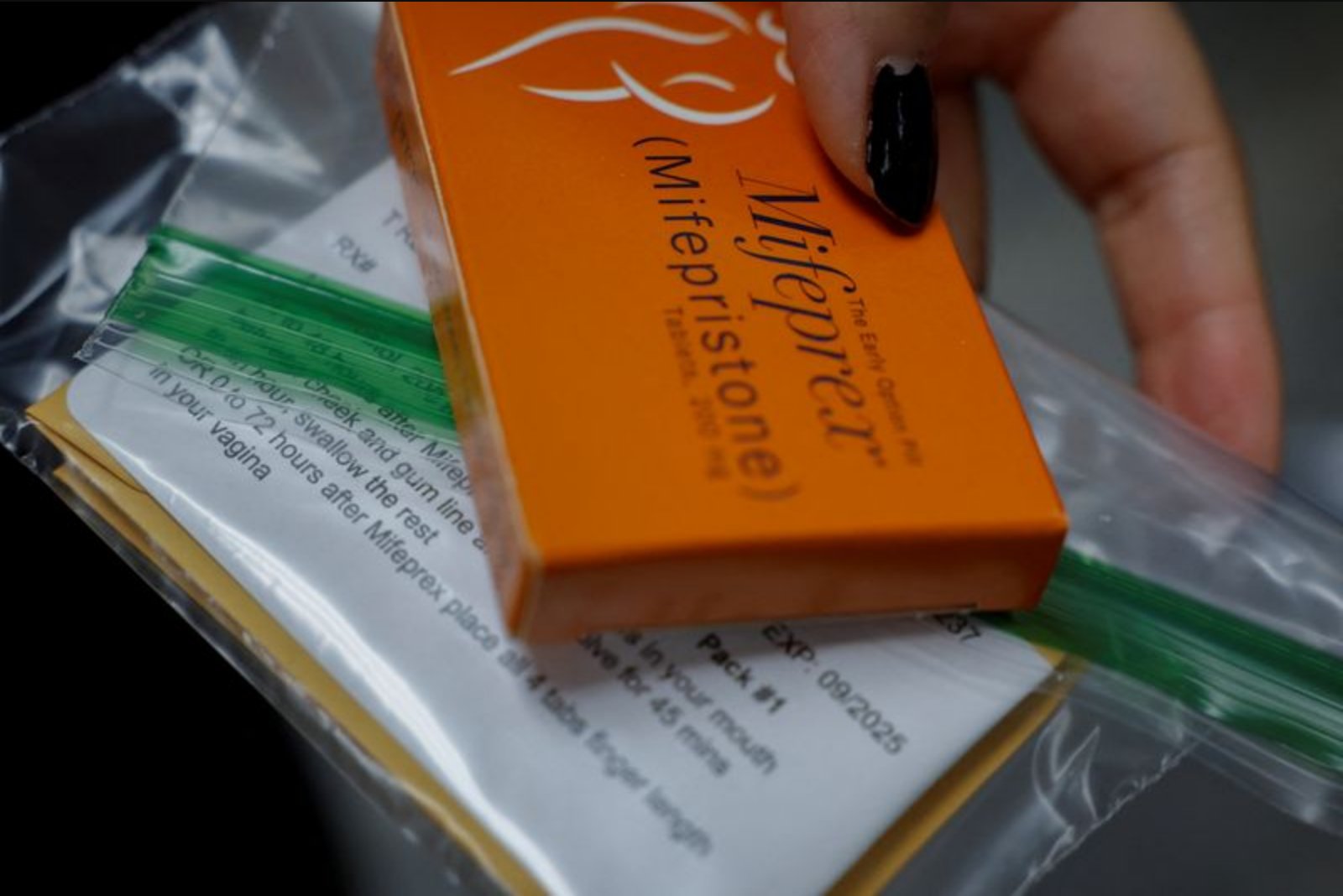
Two manufacturers of the abortion medication mifepristone have asked the U.S. Supreme Court to restore the ability to ship the drug by mail while their legal challenges continue. The applications were filed on Saturday by Danco Laboratories and GenBioPro, one day after an appeals court temporarily halted deliveries that had been permitted under a federal regulation.
The appeals court pause - while temporary - has effectively restricted nationwide access to mifepristone, with particular effects in states that have enacted abortion bans or severe limits. The blockage stems from litigation challenging the U.S. Food and Drug Administration's regulatory decisions related to the drug, including changes that made it easier to obtain following its initial approval in 2000.
In a statement responding to the appeals court action, Danco said Friday’s temporary pause "injects immediate confusion and upheaval into highly time-sensitive medical decisions - and it forces Danco, FDA, certified Mifeprex providers, patients, and pharmacies all to guess at what is allowed and what is not." The company sells the branded version of mifepristone, marketed as Mifeprex.
GenBioPro issued its own statement emphasizing its position on access: it "firmly believes all people have a right to access safe, affordable, evidence-based health care." The company generates most of its revenue from a generic form of mifepristone. Evita Solutions also manufactures a generic version.
Mifepristone is used as part of a two-drug regimen together with misoprostol to terminate pregnancies within the first 10 weeks. The medication is involved in roughly two-thirds of abortions performed in the United States.
In 2023, the FDA removed a requirement that the drug be administered in-person, stating the medication was safe and effective and permitting mail-order distribution and prescribing via telehealth under certain conditions. That regulatory change is central to the current litigation.
On Friday, a conservative three-judge panel of the New Orleans-based 5th U.S. Circuit Court of Appeals unanimously found that the Republican-led state of Louisiana was likely to succeed in its challenge to the regulation. Louisiana had sued the FDA, contending the agency overlooked risks of serious adverse events such as sepsis and hemorrhaging.
Louisiana and other Republican-led states that have banned abortion have made restricting access to mifepristone - including by limiting telehealth appointments with out-of-state providers - a legal and policy priority.
The federal government has faced additional scrutiny. The article's source material indicates the Trump administration said it is reviewing mifepristone's safety, but that media reports have stated the review was delayed until after the November midterm elections. Republican members of Congress have also pursued investigations into the drug.
Earlier in April, a U.S. district judge had placed Louisiana’s lawsuit on hold while the federal review was underway. GenBioPro said it is "concerned that anti-abortion special interests are attempting to undermine the US Food and Drug Administration’s regulatory authority." Both GenBioPro and Danco intervened in the Louisiana litigation to defend the FDA regulation that allowed mail-order distribution.
The appeals court decision represents the first ruling in this series of cases to materially narrow access to mifepristone since the broader wave of litigation began over the drug’s approval and subsequent regulatory changes. That litigation has unfolded in the wake of the Supreme Court's 2022 decision that overturned Roe v. Wade, after which nearly half of U.S. states enacted bans or severe restrictions on abortion. Those state moves have driven increased use of medication abortion and prompted multiple legal disputes over access to the pills.
Other legal actions related to the mail-order rule have proceeded separately. The Supreme Court in 2024 addressed a different challenge to the mail-order rule brought by medical groups and doctors, concluding those plaintiffs lacked legal standing to pursue their claim. That case was subsequently taken over by the states of Missouri, Kansas and Idaho and remains pending.
The current applications to the Supreme Court seek to pause the appeals court ruling that interrupted mail deliveries while litigation proceeds, a step that would maintain the status quo under the FDA rule allowing mail-order access. Both companies have argued that continued access is necessary to avoid immediate disruption to patients, providers and pharmacies navigating time-sensitive reproductive health care.
Key takeaways:
- Two manufacturers - Danco Laboratories and GenBioPro - petitioned the U.S. Supreme Court to restore mail-order shipments of mifepristone after a 5th Circuit ruling temporarily blocked deliveries.
- The appeals court's pause notably limits access nationwide, particularly in states that have banned or tightly restricted abortion, and marks the first significant curtailment of access in this set of legal challenges.
- The dispute centers on a 2023 FDA decision to lift an in-person dispensing requirement for mifepristone; both companies intervened to defend that regulation.
Risks and uncertainties:
- Legal uncertainty - Ongoing and separate lawsuits, including challenges at the appeals and Supreme Court levels, could further alter the availability of mail-order mifepristone and telehealth-based prescriptions, affecting providers, pharmacies and patients.
- Regulatory review - A federal safety review of mifepristone that has been publicly discussed by officials and reported to be delayed introduces timing and procedural uncertainty and could influence judicial decisions and enforcement.
- State-level restrictions - Actions by Republican-led states that have banned or restricted abortion, and that prioritize limiting access to mifepristone, may continue to create a fragmented access landscape across the U.S., with market and service delivery implications for healthcare providers and drug manufacturers.
The appeals court action and the drugmakers' appeal to the Supreme Court ensure that mail-order access to mifepristone remains at the center of a contested legal and regulatory debate. How the high court responds will determine whether the distribution pathway that expanded access under the FDA's 2023 rule remains available while the legal challenges play out.