
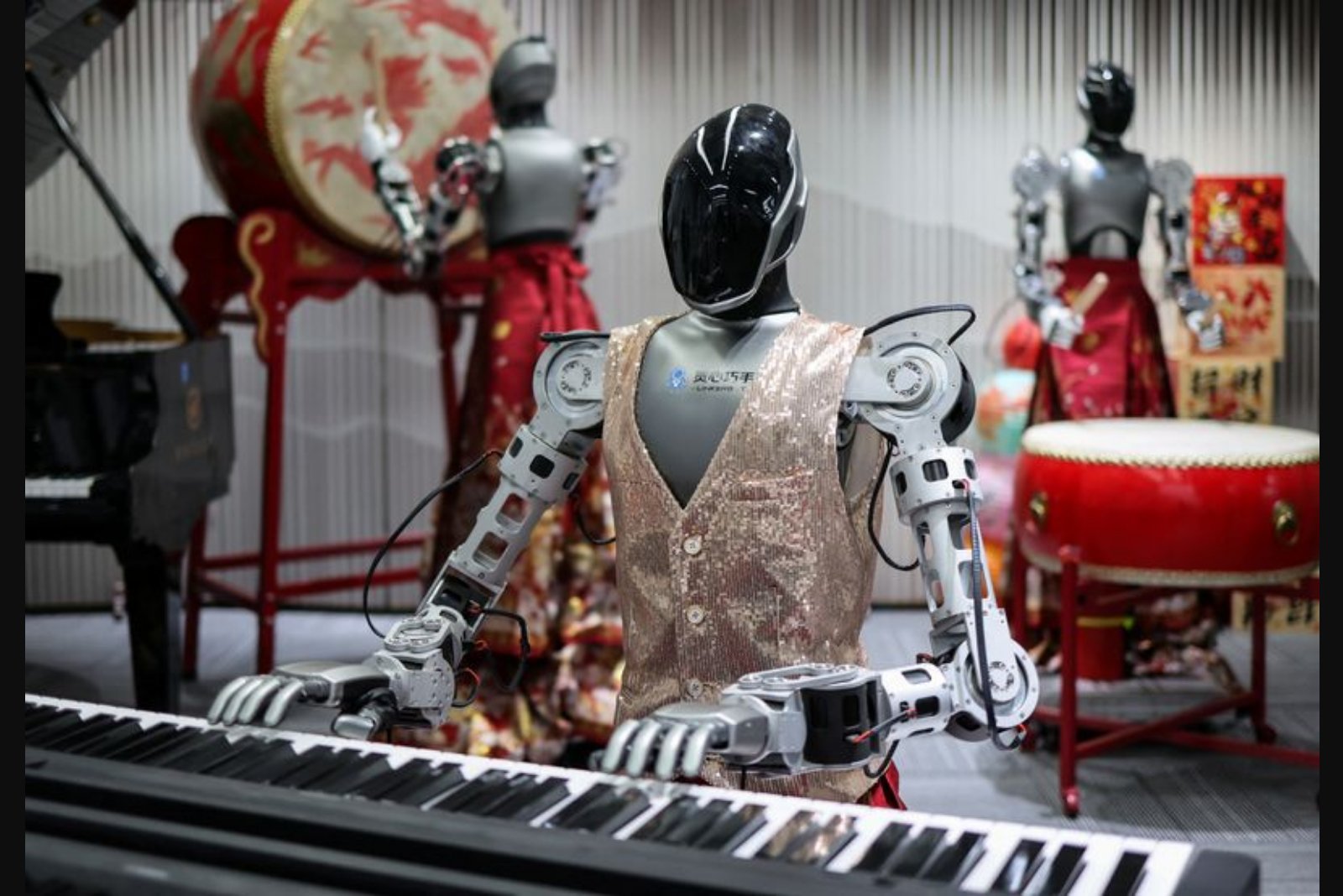
Linkerbot, a two-year-old robotics firm based in Beijing that specialises in highly dexterous hands for humanoid robots, announced it will seek a $6 billion valuation in its forthcoming financing round - double the $3 billion valuation attached to its just-completed "series B+" funding. The company did not specify a timetable for the next round, nor did it disclose whether the $6 billion target would be sought through private investors or an initial public offering.
The latest funding round, which Linkerbot described as a "series B+" and closed last week, included participation from a mix of early backers and state-linked investors. Early supporters cited by the company include Ant Group and the Sequoia spin-off HongShan Group. In the most recent round, the company said the state-backed Zhongguancun Science Park Fund, Bank of China Asset Management and Fosun Capital were among the participants, according to a company statement issued on Thursday.
Linkerbot claims it holds more than 80% of the global market for high-degree-of-freedom (DoF) robotic hands, positioning the firm as the dominant supplier in a specialised segment of the humanoid robotics market. The company plans to scale production "soon," raising monthly output to 10,000 units from nearly 5,000 at present, CEO Alex Zhou said in an interview.
Market context and investor appetite
Investor interest in Chinese humanoid robotics has accelerated this year after headline-grabbing demonstrations by other market players. The sector came under fresh attention following highly visible product showcases, including televised performances and a Beijing humanoid robot half-marathon. These events coincided with Unitree's filing for a Shanghai initial public offering in March, where Unitree sought a valuation of up to $7 billion.
Linkerbot differentiates itself from competitors that emphasise household chores and general-purpose manipulation. While some rivals concentrate on training hands for domestic tasks, Linkerbot focuses on higher-value human craftsmanship, aiming to replicate complex manual skills that command greater economic value.
Technology and capabilities
The company describes its product strategy as encompassing both hardware and a software-driven skills library. Zhou said Linkerbot's objective is not merely to build hands but to embed a broad catalogue of dexterous skills into its hardware. That capability is organised within the firm's LinkerSkillNet platform, which Linkerbot describes as a multimodal data collection system that translates human skills into standardised, reusable capabilities for robotic hands. The platform reportedly includes more than 500 discrete skills.
Linkerbot's hands are designed for demanding tasks. The firm says its O6 light-weight model weighs 370 grams yet can carry a 50 kg load - a combination of miniaturisation and strength the company highlights as a competitive advantage in industrial applications where compact form factor and power are both required. The hands are able to perform activities such as rapidly turning screws, grasping deformable soft objects, threading needles and other operations requiring high precision.
To support these performance attributes, the company produces critical components in-house, including joint modules, motors and reducers. Linkerbot also uses specialised polymers the firm characterises as self-lubricating and corrosion-resistant. Beyond commercial deployment, Linkerbot reports usage of its hands by research institutes and leading universities, and it said it is developing production lines in which robotic hands will help manufacture other hands.
Customers and deployment model
Linkerbot said it supplies hands to some of China's leading humanoid robot manufacturers and to unidentified foreign industrial companies, with customer identities withheld under non-disclosure agreements. The company emphasises a pragmatic deployment strategy for factories: many customers mount Linkerbot hands onto existing robotic arms instead of purchasing full humanoid robots. Zhou argued that for a large share of factory tasks, two arms equipped with dexterous hands are sufficient, making the hands easier to deploy than entire humanoid units.
A key industrywide barrier to broader adoption of full humanoid robots is cost. Analysts have noted leading industrial humanoid models can cost between $100,000 and $150,000 per unit. Linkerbot contends its hands are comparatively easier to deploy and present an intermediate step toward more ambitious humanoid applications.
Outside perspective and ambition
Industry observers highlight the complexity of the manipulator as a central technical frontier for humanoid systems. Georg Stieler, head of robotics and automation at a technology consultancy that bears his name, noted that the manipulator - the hand - is often the most demanding engineering challenge on humanoid projects. Stieler referenced public comments by Elon Musk that indicated the hand was consuming a disproportionate share of development effort at another major robotics program, observations that underline the difficulty of replicating human-level manual dexterity.
Zhou, who has described early inspirations drawn from a childhood fascination with a fictional gadget-bearing cartoon cat, framed Linkerbot's ambitions in terms of practical, high-value tasks. He envisaged robots able to play musical instruments, provide massages or even assist in dental tasks - examples Zhou said represent value-add activities that exceed basic labour tasks. The company asserts it is progressing toward those goals through a combination of hardware design, materials, manufacturing capacity and its growing dataset of dexterous skills.
Outlook
Linkerbot's stated production ramp and valuation target signal an aggressive growth agenda at the intersection of hardware manufacturing and skill-driven software. The firm combines in-house component production, specialised materials and a dataset-driven approach to dexterous manipulation as it seeks deeper penetration into industrial, research and academic markets. How and when the company pursues its next financing event, and whether it will seek the $6 billion valuation via private placement or public listing, remain open questions according to the company.
As the sector evolves, Linkerbot's strategy of supplying hands as modular upgrades to existing robotic arms - rather than requiring purchase of whole humanoid platforms - could influence adoption pathways within factories and research institutions.