
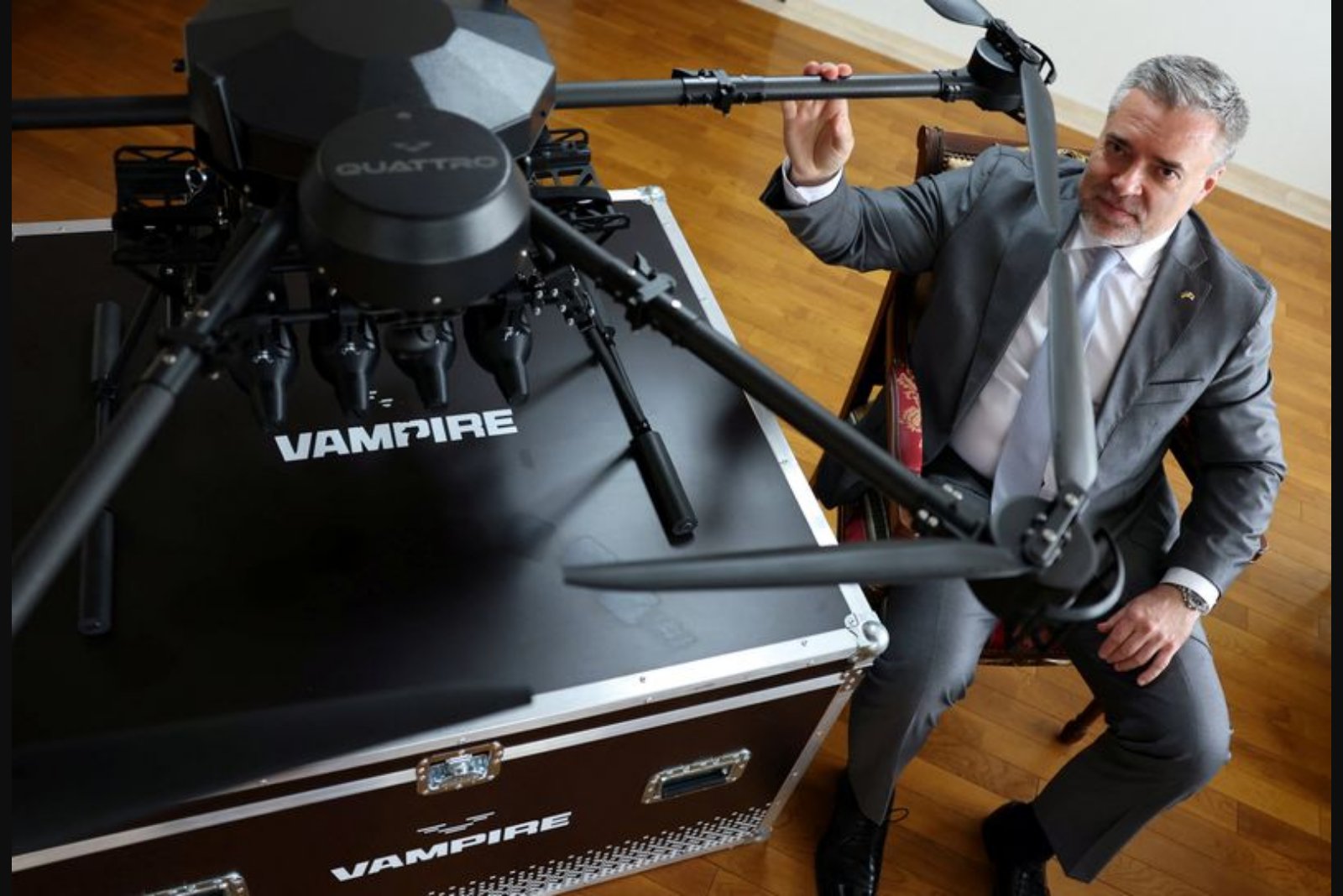
Japan's decision to loosen longstanding restrictions on the export of weapons has created an opportunity for discussions that could, in time, lead to Tokyo supplying military equipment to Ukraine, Kyiv's ambassador to Japan told Reuters. The ambassador described the policy shift as a substantial opening for dialogue rather than an immediate commitment to transfer arms.
"This allows us to talk," Yurii Lutovinov said in an interview at Ukraine's embassy. "Theoretically, it's a very big step forward." The change, announced last week by Prime Minister Sanae Takaichi, is the latest indication of Japan moving away from a strict postwar pacifist posture and has attracted attention as conflicts in Ukraine and the Middle East put pressure on Western arms production.
While the overhaul retains prohibitions on direct exports to active conflict zones, it creates carve-outs for transfers that Tokyo judges to serve its security interests. Kyiv hopes those exceptions could be applied to support its defence needs.
Security link between Europe and the Indo-Pacific
Japanese officials have increasingly framed Ukraine's security as linked to Japan's own, given concerns over China's growing military capability. With Japanese territory coming within 110 km (70 miles) of Taiwan, Tokyo has signalled concern that any attempt by Beijing to take the island could draw it into a regional contest. Noting the connection between theatres, Ukraine's envoy argued that the fate of his country and Japan's security are intertwined.
"If Ukraine falls, it's going to be a big domino effect," Ambassador Lutovinov said. "That's why the Indo-Pacific and the European continent are inseparable from the point of view of our security."
Japan's previous leadership approved the country's largest military buildup since World War Two, a program that the current prime minister has accelerated since taking office in October. Despite that, Takaichi has not publicly indicated she would back direct arms transfers to Ukraine.
Tokyo's public line and legal constraints
When President Volodymyr Zelenskiy spoke with Prime Minister Takaichi in November, her office released a readout saying she told him "Japan stands with Ukraine" and supports its "efforts toward achieving a just and lasting peace" as soon as possible. Nonetheless, an email from the Japanese Foreign Ministry said that "Japan does not currently intend to transfer arms."
Any country seeking Japanese military hardware would need to sign a defence and equipment technology transfer agreement with Tokyo. Japan already maintains such accords with 18 countries, including Germany, Australia, the Philippines and Vietnam, a framework Kyiv would need to follow.
Ambassador Lutovinov acknowledged the sensitivity of defence exports in Japan and said Ukraine was proceeding cautiously.
Short-term priorities - an air-defence system and diversified supply chains
More immediate than direct arms transfers, Lutovinov suggested that Tokyo could finance Kyiv's efforts to build an indigenous air-defence system designed to lessen Ukraine's dependence on U.S.-made Patriot missiles, which are "in increasingly short supply." "We have all necessary industrial capacities for production. But we need investment. We need funds," he said.
Discussions are also underway about Japan joining NATO's Prioritised Ukraine Requirements List, or PURL, a mechanism that funds purchases of U.S.-made equipment for Kyiv. The programme has supplied more than $4 billion of equipment and munitions, with Australia and New Zealand last year becoming the first non-NATO participants.
"Every country can participate in this mechanism respecting its own legal framework. It can be non-lethal weapons as well," Lutovinov said, noting that Japan could contribute in ways that align with its domestic laws.
Industrial cooperation and drones
Japanese firms could play a role in diversifying the electronics and micro-components Ukraine needs for the thousands of drones it deploys on the front lines, Lutovinov said. Chinese-made components have historically dominated Ukraine's drones, according to a 2025 report by the Snake Island Institute, and Kyiv is seeking alternative suppliers.
At the embassy, a Vampire bomber drone built by Skyfall, a prominent Ukrainian maker of low-cost drones, was on display. Skyfall says it has scaled production sufficiently to consider exports, and Kyiv is positioning itself not only as a buyer but also as a partner capable of supplying technology.
"We are not the country that would like to just ask. We are the country that is going to provide as well," Lutovinov said. "The technology of Japan and experience of Ukraine, if we can put them together, it would be a high-class product."
Upcoming Japanese defence planning
Takaichi's administration intends to publish a defence strategy and a military procurement plan this year that analysts expect will call for a significant increase in the kinds of air, sea and land drones that Kyiv has used in its defence. That planning provides the policy context in which potential cooperation or procurement discussions with Ukraine would occur.
For now, the policy shift should be viewed as enabling dialogue rather than confirming any immediate transfers. Tokyo's legal and political constraints, along with its current public statement that it does not intend to transfer arms, mean that any move toward supplying Ukraine would require formal agreements and careful navigation of domestic sensitivities.