
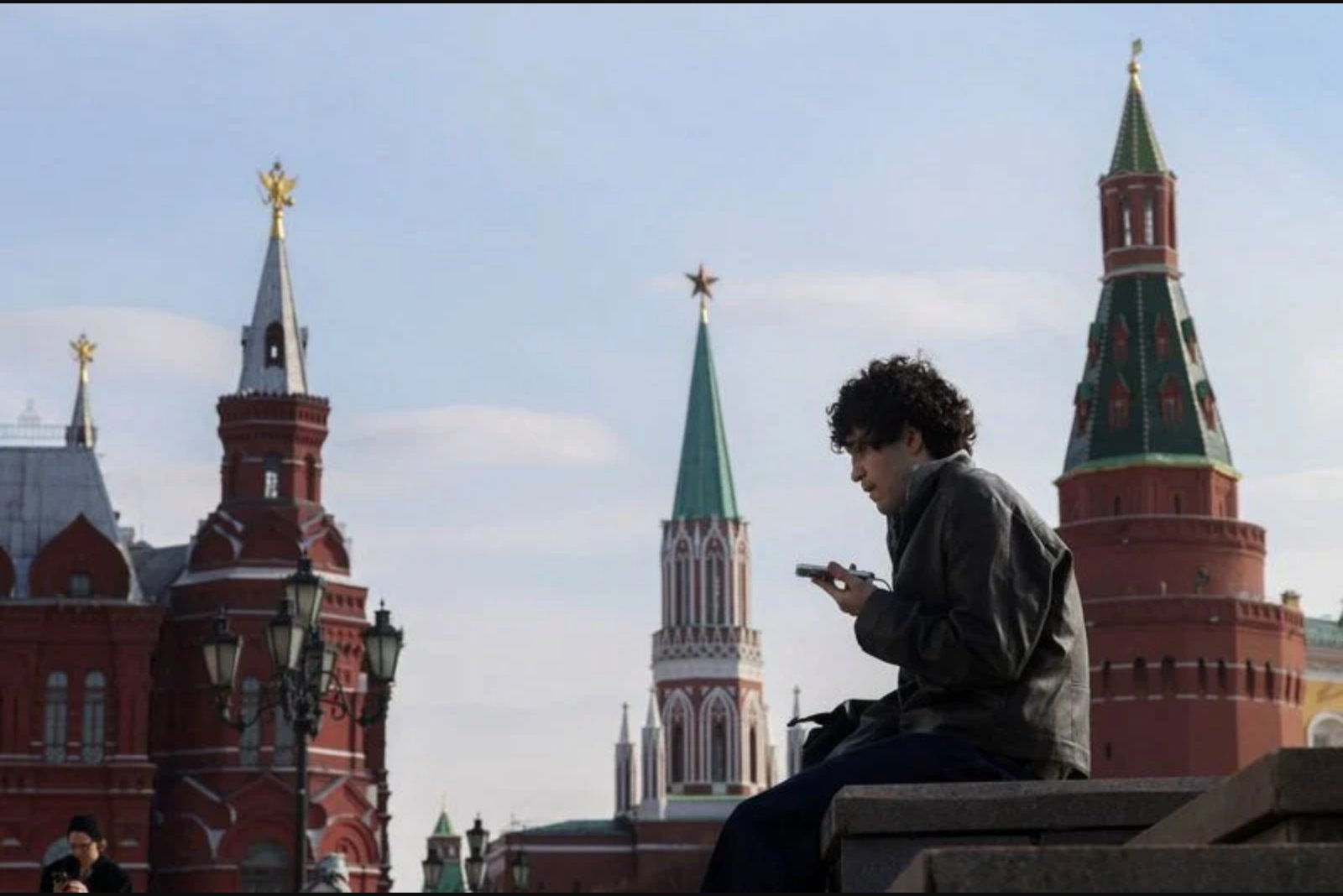
In a modest cafe known for its free Wi-Fi and dependable coffee, one Moscow-area interior designer described a digital routine many Russians have come to accept: she enables a virtual private network (VPN) to message friends abroad on WhatsApp - a U.S.-based service that is blocked inside Russia - then disables the VPN to buy a ticket from the Russian Railways website, which refuses access to users masking their location. After that, she reaches for a second handset to check client messages on MAX, the state-associated messaging app.
The pattern - switching VPNs on and off, keeping separate devices for state-promoted services and juggling multiple messengers - has spread as the Kremlin has tightened its grip on the internet this year. Users say the restrictions, aimed at shoring up what officials describe as "digital sovereignty," have at times affected online banking, transport and e-commerce services and have provoked irritation among a cross-section of society ahead of a September parliamentary election, according to statements from Kremlin-friendly opposition groups, widely followed bloggers and business figures.
Even social media influencers who typically avoid political topics have criticized the disruptions. That public unease, when combined with higher prices, tax increases and war weariness, is widely seen as a factor in the fall of President Vladimir Putin's approval ratings, which state pollster VTsIOM reported as dropping from 75.1% in February to 65.6% in April - the lowest since the launch of the full-scale conflict in Ukraine in 2022. The pollster now lists approval at nearly 67%.
Government officials have actively encouraged Russians to adopt domestic alternatives to popular foreign apps and platforms. But many users remain distrustful of the state-backed replacements. Critics of the Kremlin and some Western technology companies have warned that MAX could be used to track users, a charge that VK - the technology conglomerate that owns MAX - denies. For some people, treating the app as a separate, quarantined presence on a second phone feels safer.
"Of course this is all a huge pain in the backside, but what else can we do?" said Irina, 41, the interior designer, who asked to be identified by a single name because of the sensitivity of the subject. "You get used to it and spend your days turning VPNs on and off, toggling between different messengers and switching between different virtual countries or phones to use the apps and websites you need."
VPN services redirect a user's internet traffic through servers located outside Russia, allowing access to content otherwise blocked domestically. Download figures point to a dramatic surge. In March alone, the five most popular VPN services on the Google Play store were downloaded 9.2 million times - 14 times the total for the same month a year earlier - according to the Russian daily Kommersant, which cited data from Digital Budget, a Moscow consultancy that tracks online behavior.
Sarkis Darbinyan, a Russia-focused internet freedom activist based in Lisbon, said the rate of uptake was unprecedented. Moscow has designated Darbinyan a "foreign agent," a label the government applies to people it considers to be engaging in activities hostile to Russian interests.
Official spokespeople have defended the internet measures. Kremlin press secretary Dmitry Peskov has repeatedly said controls are necessary while Russia confronts what officials portray as an existential struggle with the West over Ukraine. At the same time, President Putin instructed the government in April to take a lighter approach, telling lawmakers it was "counterproductive" to "focus solely on bans and restrictions." Government representatives did not respond to requests for comment for this article.
Before the Ukraine war, Russians had grown accustomed to a degree of online freedom. Security services have long worked to silence domestic critics, but authorities rarely interfered with the public's ability to use foreign applications or access Western media content prior to the conflict. Since last year, however, the FSB - the security service that succeeded the Soviet-era KGB - has ordered telecom operators to suspend mobile internet access for days at a time in various regions, citing concerns that Ukrainian attack drones could use mobile signals to navigate.
At the same time, regulators have been blocking or throttling connections to an expanding list of apps and websites that Roskomnadzor, the state communications regulator, says host illegal or extremist material. WhatsApp and Telegram have publicly said that Russian authorities are pressuring people to migrate to state-approved but less secure apps.
The disruptions intensified in March with a nearly three-week internet outage in Moscow. The blackout caused displeasure among senior bureaucrats who rely on online services and Telegram to organize support for the ruling United Russia party, according to two people with Kremlin ties and some analysts. "The issue is not whether the regime will be able to secure the outcome it wants (it will), but whether the electoral process will be a smooth one," Tatiana Stanovaya, a senior fellow at the Carnegie Russia Eurasia Center, wrote in April.
Even loyal government appointees have adapted the same tactics as ordinary users: downloading VPNs, carrying multiple phones to isolate state-backed applications and, in some reported cases, physically disabling microphones and cameras on devices used for MAX in case the FSB gains access. "Even if you’re not up to any mischief, nobody wants the FSB reading your messages," one source said.
Russia's special presidential envoy, Kirill Dmitriev, does not hide his use of such tools. He posts frequently on X - a platform that cannot be accessed inside Russia without a VPN. While using a VPN is not illegal, Roskomnadzor has moved to block access to hundreds of VPN services, prompting a recurring game of cat and mouse as users continually seek new ways to reach content they want.
In April, a cluster of government agencies, banks and major online retailers, following Roskomnadzor's guidance, began to block access to their sites for visitors who have a VPN enabled. Digital Budget reported that the action was associated with a 10% drop in internet traffic for Wildberries, Russia's largest online retailer. The consultancy noted that many consumers simply do not disable their VPNs to use those sites and, as a result, abandon purchases when product pages fail to load.
Polling data suggest VPN awareness and usage have climbed. The Levada Center, an independent pollster listed by the government as a foreign agent, found the share of Russians who acknowledge using a VPN rose from 23% in 2022 to 36% this year. Younger, tech-fluent adults often buy VPN subscriptions for older family members or construct bespoke VPN solutions to help relatives maintain access. Still, many people gravitate toward apps and websites that operate without the need for such tools.
MAX - the messaging platform launched last year and promoted by state-friendly actors - reported over 85 million daily users in May, according to its owner. Reporting by this outlet included on-the-street interviews near Moscow's Bolshoi Theatre in which six office workers and passers-by outlined a range of reactions: roughly half voiced annoyance with the shifting digital environment; the remainder said they had adjusted and did not use VPNs.
"Most Russians simply do not see the need to go to any extra trouble - what is readily available is quite sufficient for them," Denis Volkov, director of the Levada Center, wrote in April.
The practical impact of outages and restrictions can be tangible. When navigation applications stopped functioning across parts of Moscow in March, delivery drivers for Flowwow, an online flower and gift marketplace, connected to vendors' Wi-Fi networks to download directions to customer addresses, said Yuri Semichastnov, the company's logistics head. Sales of printed maps in the capital more than doubled during the shutdown, Wildberries' data showed.
As public frustration has mounted, the Kremlin has moderated its tone in recent weeks, stressing that mobile internet shutdowns are temporary. A proposal to levy additional charges on customers who use more than 15 gigabytes of foreign data in a month was reportedly postponed in May; media outlets covering the plan said the measure, which was intended in part to curb VPN usage, would likely be revisited after the election.
President Putin has also asked the government and the FSB to cooperate to ensure that essential services - including healthcare platforms and online payment systems - continue to function despite the broader controls.
For Irina and many others, however, relief feels distant. "In Russia, we have a saying: Nothing is more permanent than the temporary," she said, reflecting a weary acceptance of the stopgap measures people employ to keep many parts of their online lives operational.
Separately, the article referenced a commercial valuation tool for Meta Platforms Inc. that advertises a "Fair Value" calculator based on a combination of 17 industry valuation models. That promotional material presents the calculator as a way to assess whether META is undervalued and suggests it covers thousands of other stocks. The note appears as marketing content and does not form part of the reporting on internet controls in Russia.