
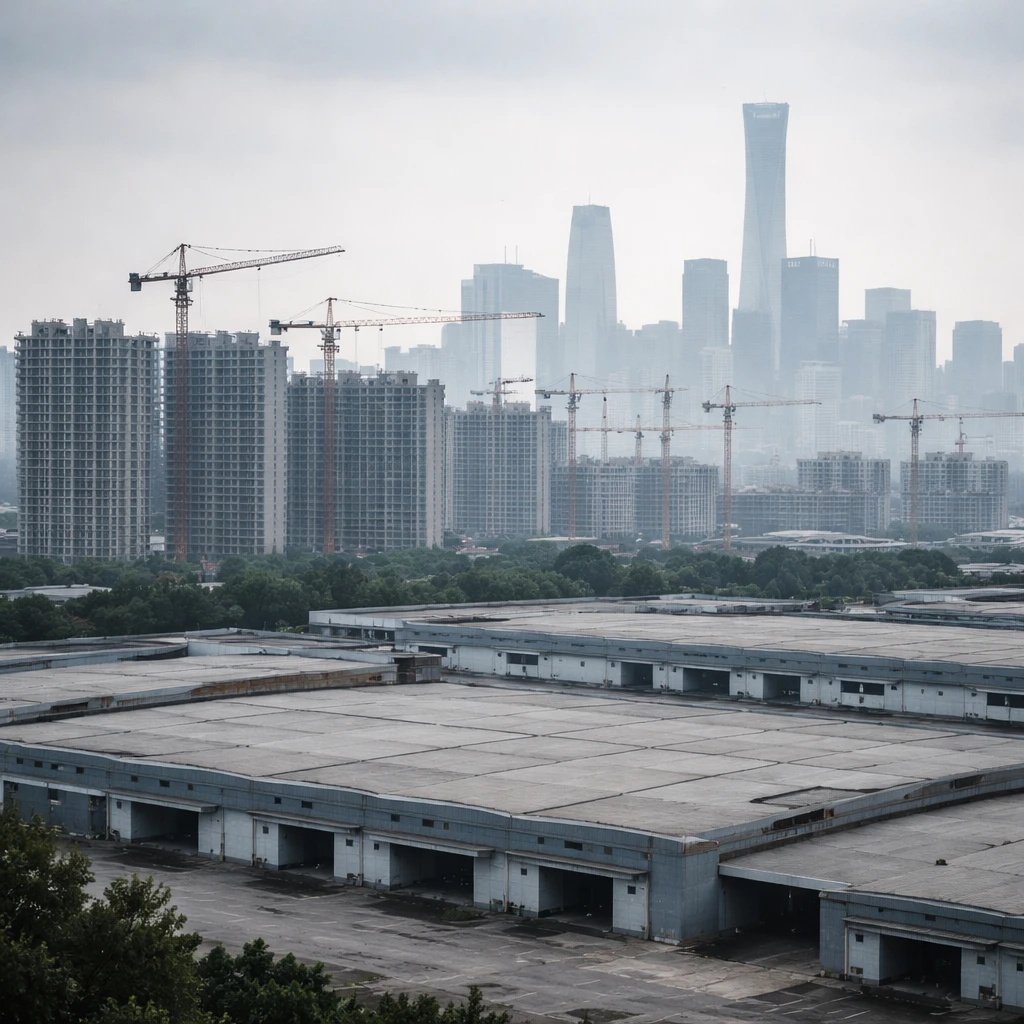
On July 30 in Beijing, senior leaders committed to accelerate fiscal spending and to deploy "incremental policies" aimed at bolstering growth in the second half of the year following a disappointing second-quarter performance. Gross domestic product rose 4.3% in the quarter, marking the slowest quarterly pace in more than three years and falling short of the lower end of the government's full-year growth target range of 4.5% to 5.0%.
The ruling Communist Party's top decision-making body, the Politburo, acknowledged the "difficulties and challenges facing the economy," according to the official Xinhua news agency. The statement said leaders would intensify efforts to lift domestic demand but did not enumerate specific measures that would be used to achieve that objective.
At the same time, the leadership signalled restraint in the scope of stimulus it is willing to deploy. Officials remain wary of expanding broad-based support that could aggravate underlying deflationary pressure driven by industrial overcapacity. The Politburo also emphasised constraints on indebted local governments, urging them to keep spending within manageable limits rather than allowing fiscal positions to deteriorate.
One explicit policy aim highlighted by the meeting was to "continue to comprehensively rectify 'involution' competition." The term is used to characterise destructive price competition among manufacturers that undercuts margins as firms fight for market share.
Some economists cited in the Politburo's discussions believe that moving forward with national infrastructure projects that are already budgeted can help stabilise activity in the near term without necessarily widening the fiscal deficit. Reflecting that approach, the meeting summary stated that China must "accelerate the pace of fiscal expenditure."
The net message from the leadership was a pledge of targeted and measured action: faster spending where feasible, efforts to shore up domestic demand, and a continued emphasis on preventing stimulus from undermining longer-run balance by worsening overcapacity or local government indebtedness. The measures to be employed and their timing were not specified in the official account.
Summary
Leaders committed to speed up fiscal outlays and adopt "incremental policies" to support growth after a 4.3% Q2 expansion, acknowledged economic challenges, and signalled restraint on large-scale stimulus because of overcapacity-driven deflationary pressures and local government debt limits.
Key points
- Q2 GDP rose 4.3%, the weakest quarterly growth in more than three years and below the 4.5% to 5.0% full-year target range.
- The Politburo pledged to accelerate fiscal expenditure and pursue "incremental policies" while urging measures to boost domestic demand without detailing specific steps.
- Leadership stressed limiting broad stimulus due to industrial overcapacity and pressures on indebted local governments, and vowed to address destructive price competition among manufacturers.
Risks and uncertainties
- Policy hesitation could delay support and prolong the growth slowdown - relevant for infrastructure and investment cycles.
- Industrial overcapacity is exerting deflationary pressure, which could weigh on manufacturers' profitability and margins.
- Constraints on indebted local governments may restrict near-term fiscal flexibility and limit the pace of public spending.