
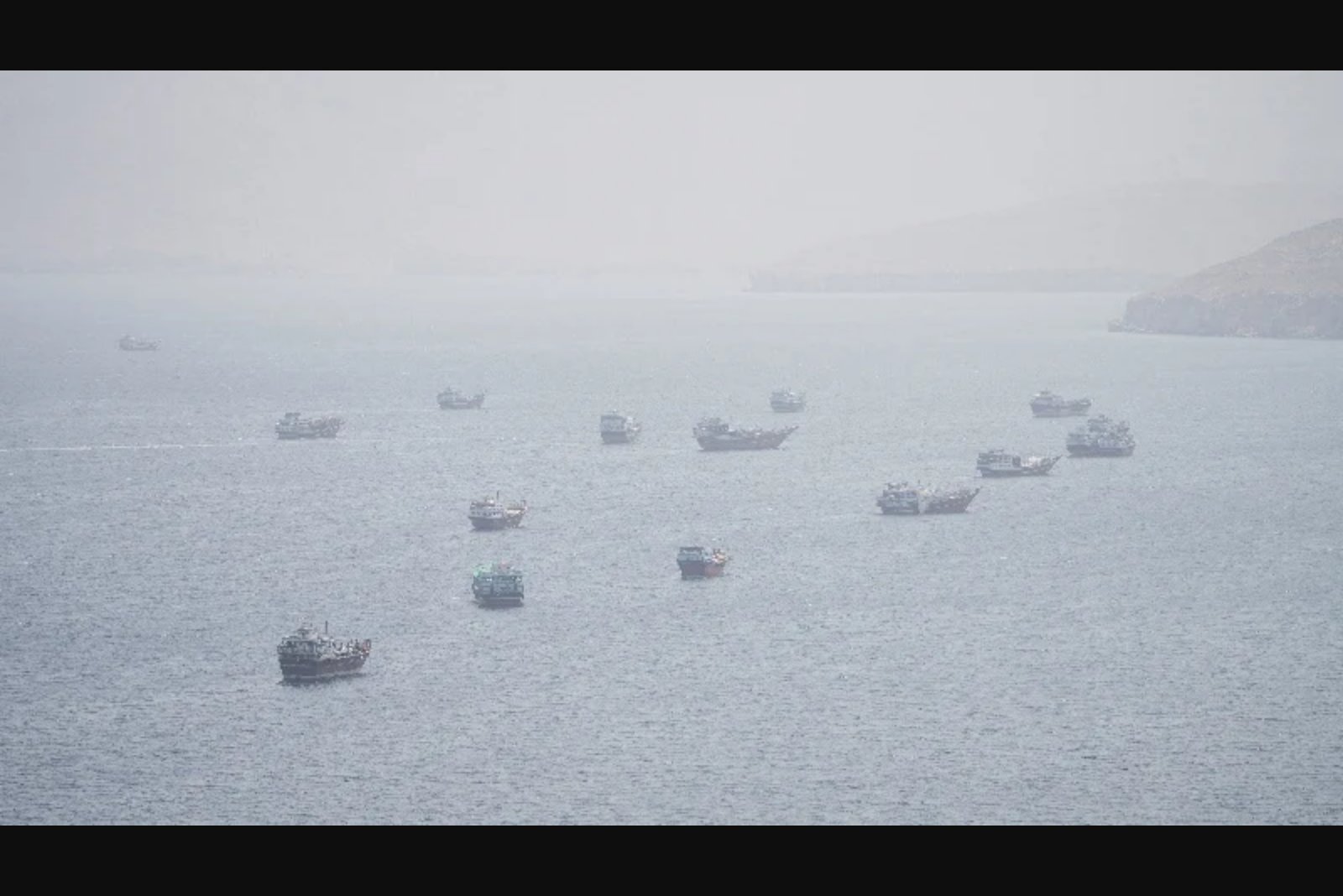
New report raises alarm in key shipping lane
Maritime tracking agencies received a fresh report of an attack on a ship in the Strait of Hormuz on Sunday, according to a British navy-affiliated maritime reporting body. The agency said a projectile had struck a vessel as it transited the strait, but provided no further details on the extent of the damage or the condition of those aboard as of early Sunday.
This development follows Saudi Arabia's decision to temporarily shut its East-West pipeline as a precaution after a separate drone strike. The pipeline closure and the reported strike in the Strait of Hormuz together have amplified concerns about Iran-related risks to energy supply lines.
Pipeline: an alternate artery now under strain
Saudi Arabia's 1,200-kilometre East-West pipeline, which runs across the Arabian Peninsula, has been carrying the bulk of the kingdom's oil exports while the Strait of Hormuz has been largely disrupted by the conflict. Over the past six months the pipeline has been moving an estimated 4 million to 5 million barrels per day, equivalent to roughly 4% to 5% of global oil supply.
Satellite images captured a plume of black smoke rising from a section of the pipeline south of Medina after the attack, and Saudi authorities said the incident had caused some injuries and damage that were being assessed. The Saudi Foreign Ministry did not detail the impact on exports in its initial statement. There was no immediate claim of responsibility for the strikes on the pipeline.
Market reaction and energy costs
Market measures of oil prices have already been volatile, with Brent crude having recently surged back above $100 a barrel. Retail energy costs have also reflected the squeeze, with the reported price of diesel at U.S. retail stations exceeding $6 a gallon, a level noted in the context of escalating regional attacks on tankers and shipping lanes.
Analysts and market participants are watching whether ongoing attacks across the widening Middle East conflict will push prices even higher, as new disruptions compound existing strains on supply routes and spare capacity.
Regional incidents: Houthi actions and Perim island
Saudi Civil Defence reported that a projectile launched by Houthi forces had injured two people in Jazan region and damaged multiple buildings, including a mosque. The conflict has seen both Washington and Tehran-linked forces fire on commercial vessels, and the Iran-aligned Houthi movement has been advancing along the Red Sea, which risks extending shipping disruptions beyond the Gulf.
Four Yemeni government sources said the Houthis had seized the strategically located island of Perim in the Bab el-Mandeb strait, the narrow gateway at the mouth of the Red Sea. Control of Perim could affect traffic through that route and add pressure to an already fraught network of maritime chokepoints for global trade and energy shipments.
Diplomatic and military requests
Saudi Arabia’s de facto ruler, Crown Prince Mohammed bin Salman, contacted U.S. leadership by phone to request military assistance against the Houthis, according to three sources. Those sources said Washington responded that it would not intervene directly at this time but would provide intelligence support. The U.S. president confirmed a call with the crown prince and said the Houthis had also reached out to the U.S. administration asking that Washington avoid becoming directly involved in the conflict.
These exchanges underscore the dilemma facing Washington about whether to provide more overt military support to protect shipping and allied territory, a decision that carries the risk of widening the confrontation.
Attribution and political signals
U.S. political leaders have assigned probable blame for some of the attacks to Iran. One prominent U.S. figure, who was visiting Ireland for a private event, publicly said Iran was likely responsible for some recent strikes. Tehran, however, has framed diplomatic engagement as conditional. Ebrahim Azizi, head of the Iranian parliament’s national security committee, posted that dialogue and negotiation are futile unless the U.S. accepts all of Iran’s conditions.
Iran's Foreign Ministry also confirmed attendance at a meeting in Oman convened by Gulf Arab states to discuss the future of the Strait of Hormuz. A senior Iranian official, speaking on condition of anonymity, cautioned that the meeting was unlikely to produce a signed agreement and suggested it would instead be a forum to discuss the issues without an expectation of a breakthrough.
Separately, a source quoted by an Iranian news outlet said that an agreement on routes through the strait between Iran and Oman would be presented at the meeting, to be attended by Iraq as well. That source added that the strait would not be reopened unless seven conditions allegedly conveyed by Iran to the U.S. were met, but did not provide details on those conditions.
Iran has signaled it seeks formal recognition of its control over the Strait of Hormuz, including the ability to collect fees from transiting vessels - a proposal Washington rejects. Oman, which controls the opposite bank of the strait, said it was negotiating with the agreement of other regional states.
What remains uncertain
The immediate consequences of the projectile report in the Strait of Hormuz are unclear. The extent of damage to the struck vessel and the welfare of its crew remained unknown in early reports. The longer-term implications for export flows, insurance costs for shippers, and fuel prices will depend on whether additional strikes follow and whether major routes such as the East-West pipeline and the Bab el-Mandeb strait face sustained disruption.
For now, the sequence of incidents - pipeline strikes, attacks on ships, the seizure of Perim, and diplomatic stalemates - has heightened anxieties among market participants and government officials about the fragility of critical energy corridors linking the Middle East to global markets.
Note: All details in this report are based on official statements and public reports provided by maritime authorities, national governments, and named individuals, as cited in those reports. Several accounts have been attributed to unnamed sources or government spokespeople in initial statements, and some events were reported by regional news outlets.