
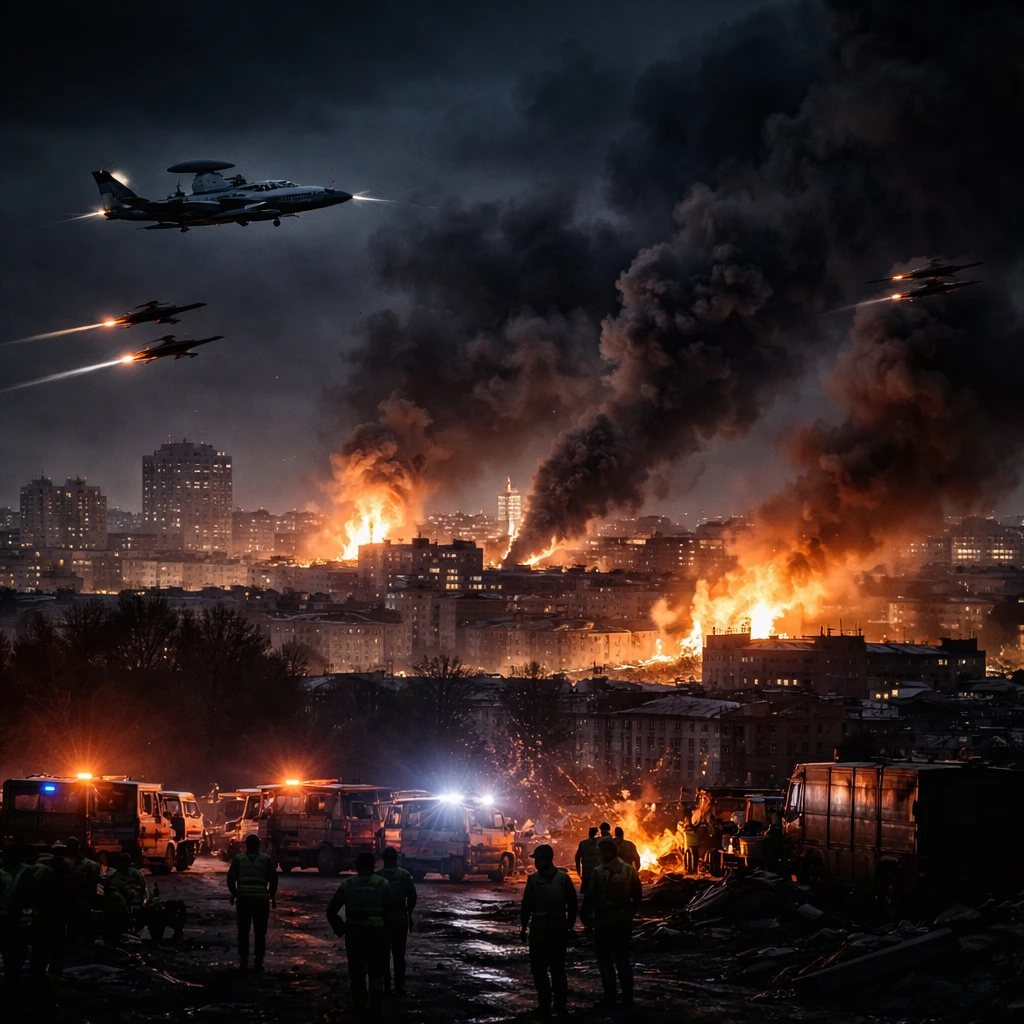
Russian ballistic missile strikes on the Ukrainian capital of Kyiv in the early hours of Thursday resulted in at least one confirmed fatality, officials reported. Multiple explosions were heard within the city, and local authorities said several non-residential locations caught fire.
Mayor Vitali Klitschko noted the fires in a message on Telegram as air raid alerts spread across most regions of Ukraine. The alerts accompanied broader warnings from Ukrainian leadership that a significant Russian offensive was expected.
Ukrainian President Volodymyr Zelenskiy, returning from a trip to the United States, said a large-scale attack was likely and emphasized that the safety of civilians hinged on the willingness of partner nations to supply air-defence missiles. He wrote on Telegram that "It is important that our partners fully understand what is happening and that the protection of people’s lives depends directly on their willingness, or lack of willingness, to provide air defence missiles." During his U.S. visit, Zelenskiy said President Donald Trump agreed to provide Ukraine with licenses for Patriot missiles.
Across the border in Poland, authorities took defensive measures to secure national airspace amid the strikes. Poland's Armed Forces said on X that fighter jets and an early warning aircraft had been launched. The statement added that ground-based air-defence systems and radar reconnaissance assets had been brought to a state of readiness. The military described these steps as preventive in nature.
The incidents highlighted immediate civil-protection and military-readiness responses on both sides of Ukraine's frontier. The mix of urban explosions, targeted fires at non-residential sites, and nationwide air raid alerts underlined the widespread nature of Thursday's strikes.
Officials did not provide additional casualty figures beyond the single reported death. The scope of the damage to infrastructure and the full pattern of strikes across the country remained subject to further confirmation by authorities.
Poland's actions reflect a protective posture by a neighboring NATO and European Union member state sharing a border with Ukraine. The deployment of fighter aircraft, early warning platforms and the activation of ground-based air-defence and radar systems were presented as measures taken to prevent spillover and to ensure national airspace security.
As events continued to unfold, Ukrainian leaders called on international partners to increase the provision of air-defence capabilities, framing such assistance as a direct factor in protecting civilian lives during sustained missile attacks.