
Market move
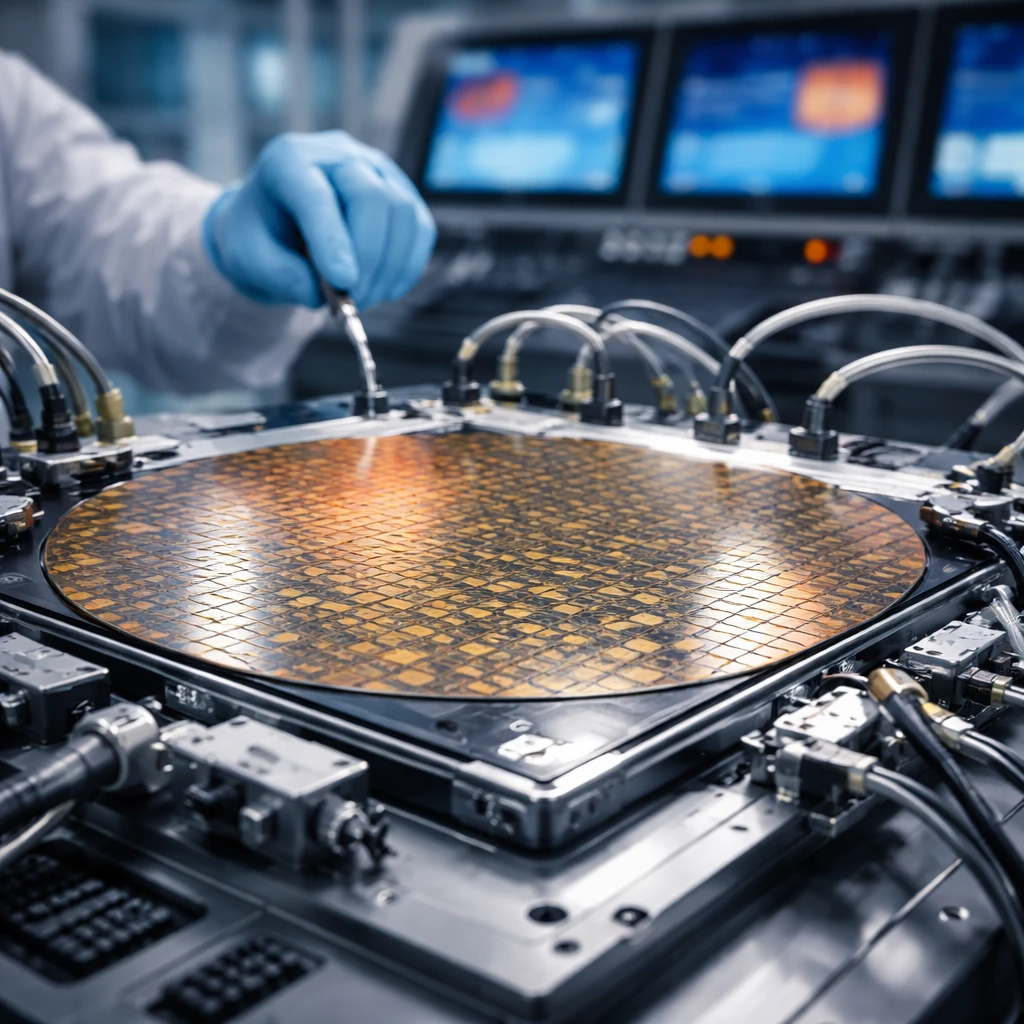
Shares of Cerebras Systems (NYSE: CBRS) moved lower on Wednesday, slipping roughly 4% after Culper Research revealed a short position and published a critical analysis of the AI chipmaker’s wafer-scale engines. The short seller’s report calls into question both the durability of Cerebras’s flagship hardware and the nature of materials and software practices used in shipped products.
Core allegations
Culper’s central claim is that Cerebras’s very large chips have a limited operational life when deployed - an expected functional lifespan of only 1.5 to 2.5 years in the field, according to the report. Culper argues that such a short usable life would undermine the company’s commercial proposition for wafer-scale integration.
The short seller also disputes comments attributed to Cerebras CEO Andrew Feldman about the creation of a new connector material intended to address thermal expansion challenges. Culper asserts that, contrary to the CEO’s depiction of a proprietary breakthrough, the company actually uses PariPoser, a material developed in the 1980s and marketed by Paricon Technologies. Culper says Paricon confirmed that PariPoser appears in Cerebras products delivered to customers.
Alleged operational workaround
Another technical claim in Culper’s report focuses on operational software behavior. The short seller contends that Cerebras intentionally programs wafers to conduct continuous, non-functional "dummy operations" so the hardware never cools down. Culper points to remarks reportedly made at a June 2026 Café Compute event in Berlin, where a Cerebras solutions architect is said to have acknowledged that these dummy operations are necessary to keep the hardware functional, because allowing the chips to cool could cause failure.
Supporting this, Culper reported that a decompilation of Cerebras’s client-side software uncovered a field labeled "dummy tokens." The report notes that this field differs from ordinary padding tokens and that Culper did not find an equivalent in competitor software from Nvidia, Google, or Intel, per its analysis.
Engineering trade-offs and company positioning
Culper framed the alleged practice as an engineering trade-off: by preventing wafers from cooling, the company may be solving one set of design constraints while accelerating degradation in the field. Cerebras has previously promoted its wafer-scale integration approach as a long-sought solution to challenges of building, powering, and cooling a processor the size of a silicon wafer. The short seller’s report questions whether the claimed advantages withstand scrutiny if the hardware must be kept continuously warm to remain functional.
Company response
As of the publication of Culper’s report and the ensuing market reaction, Cerebras Systems has not issued a public response to the allegations outlined by the short seller.
Implications
The report from Culper Research has had an immediate market effect on Cerebras shares and raised technical and commercial questions about wafer-scale AI hardware. Market participants and customers may weigh the report’s technical assertions against Cerebras’s public claims as further information or comment emerges.