
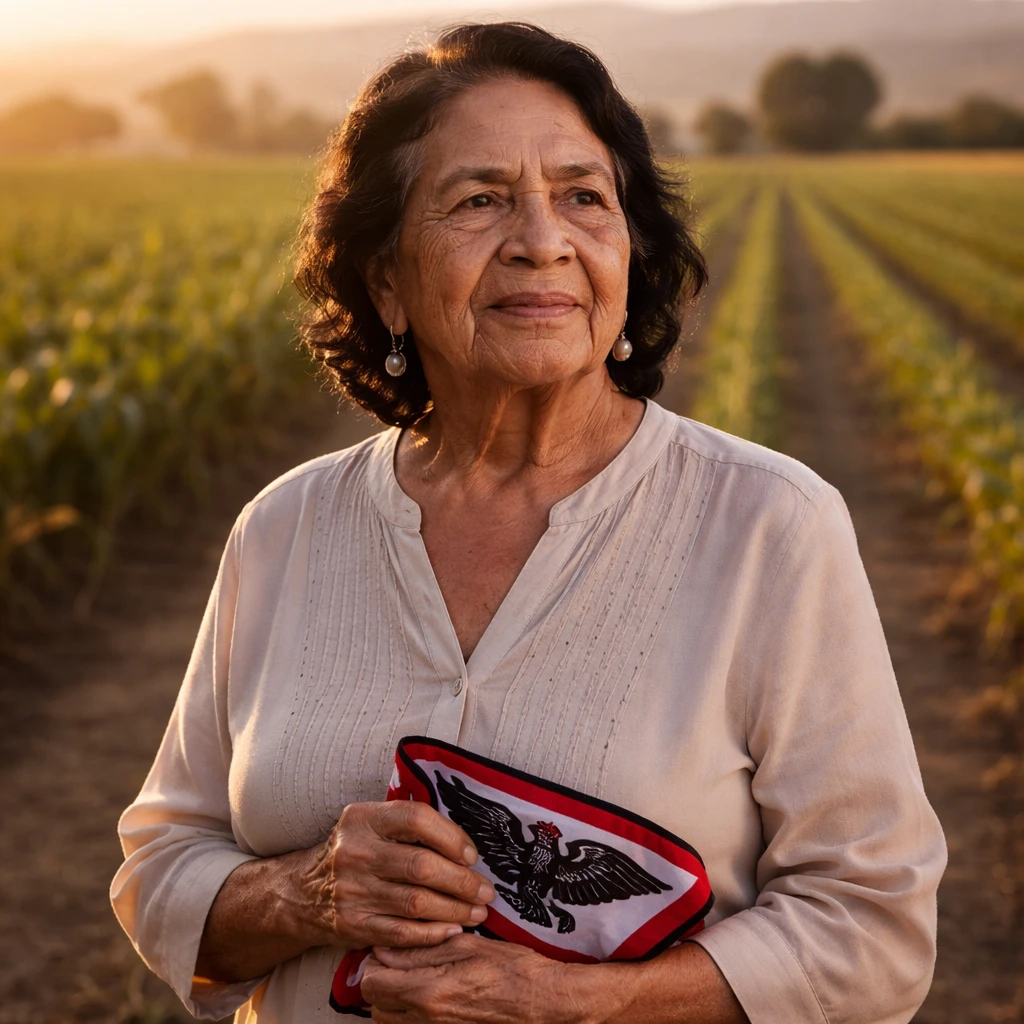
Dolores Huerta, who co-founded the United Farm Workers (UFW) alongside Cesar Chavez and spent decades pressing growers and lawmakers to improve conditions for agricultural laborers, has died at the age of 96, her family said in a statement. Her work as a negotiator, organizer and lobbyist made her one of the most consequential women in American labor history.
Role in the UFW and major achievements
During the UFW’s most active years in the 1960s and 1970s in California’s Central Valley, Huerta served as the union’s chief negotiator and a principal organizer of strikes and boycotts. Contracts the UFW secured under her stewardship provided farmworkers with job security, healthcare and retirement plans. They also established a credit union for workers and secured a range of workplace protections and amenities - guaranteed rest periods, toilets in the fields, access to clean drinking water and protections from pesticides.
Huerta is credited with coining the UFW’s slogan "Si, se puede," loosely translated as "Yes, we can," a phrase that gained broader recognition when it was later used by Barack Obama during his 2008 presidential campaign.
Public presence and later activism
Even into her 90s Huerta remained a public presence. She spoke regularly at colleges, criticized the immigration policies of President Donald Trump, and during election seasons she traveled to endorse candidates and to register voters. Her public activism extended well beyond the UFW’s mid-century peak: in 2002 she established the Dolores Huerta Foundation for community activism, with her daughter Camila Chavez serving as its executive director. Huerta continued to press for changes to immigration laws, voter registration drives, women’s rights and support for President Obama’s healthcare reform.
Relationship with Cesar Chavez and subsequent allegations
UFW co-founder Cesar Chavez, who died in 1993, was widely recognized as the organization’s public face. Chavez, a seventh-grade dropout and former grape picker, drew on non-violent philosophies attributed to Gandhi and Martin Luther King and nodded to Emiliano Zapata, a leader of Mexico’s peasant revolution. While Chavez often took the spotlight through public hunger strikes and high-profile advocacy, Huerta focused on the negotiating and organizing work behind the scenes.
However, the record also includes grave accusations about Chavez’s conduct. In 2026, Huerta was among several women who came forward with accounts that they had been sexually assaulted by Chavez, in some instances when they were minors. Huerta said he had pressured her into having sex on one occasion and raped her on another. She said both encounters resulted in pregnancies and that she arranged for the babies to be raised by others.
Activism away from the spotlight
While Chavez often filled the public role, Huerta often worked out of the limelight, handling negotiations with growers and lobbying legislators and other parties on behalf of the UFW. Her activism came with personal risk. She was arrested more than 20 times and endured death threats and a range of harassment. In 1988 she was beaten by San Francisco police during a protest against the policies of George H.W. Bush during his presidential campaign, suffering broken ribs and a damaged spleen.
Reflecting on her relationship with Chavez in a 2012 interview with PBS, before the later assault allegations had surfaced publicly, Huerta said she was content for him to take the spotlight so she could focus on the work. She recalled a conversation in which he asked, 'One of us is going to have to be the spokesperson. Are you all right if I’m the spokesperson?' and she replied, 'Of course, I said yes.'
Early life and path to organizing
Huerta was born in Dawson, New Mexico, to a Mexican immigrant family and spent much of her youth in Stockton, California, after her parents divorced. Her father worked as a miner and laborer and was active in unions before serving as a state lawmaker. Her mother raised three children and bought and ran a hotel for low-income residents in Stockton, an experience Huerta later cited as formative in developing her commitment to activism.
Huerta briefly pursued a career in teaching during her second marriage but left because she could not reconcile seeing children arrive at school hungry or lacking shoes with the role of classroom teacher. She said, 'I thought I could do more by organizing farmworkers than by trying to teach their hungry children.' She began registering voters in Stockton and founded the Agricultural Workers Association prior to meeting Chavez. In 1962 she joined Chavez in launching the National Farm Workers Association.
Strikes, boycotts and political support
Beginning in 1965, Huerta and Chavez led a series of strikes and boycotts that continued for five years against various California grape growers and later expanded to include lettuce growers. During that period the organization evolved into the United Farm Workers and attracted support from influential figures such as Martin Luther King Jr. and New York Senator Robert F. Kennedy. The consumer boycott—eschewing grapes unless they carried a union label—became a notable political statement within the United States.
The dispute with growers and industry interests was not without intense opposition. The UFW faced not only growers’ resistance but also political pushback from California Governor Ronald Reagan, who publicly denounced the UFW and staged a symbolic gesture by eating grapes on television.
Legal and legislative milestones
Contracts gradually followed as growers one by one signed agreements with the UFW. In 1975 Huerta’s organizing and advocacy also helped advance the passage of the California Agricultural Labor Relations Act, described as the first law in the United States to grant farmworkers collective bargaining rights.
Huerta herself said she sometimes benefited from being a woman at the negotiating table, explaining to PBS that growers were unsure how to react and often embarrassed when confronted with the circumstances in which workers labored. 'They really didn’t know how to respond because they couldn’t do the usual forceful type of thing,' she said. 'And when you would bring up to them and show them the conditions that the workers were working under, and they were kind of embarrassed, actually.'
Honors, media and family life
In recognition of her public service, in 2012 President Obama awarded Huerta the Presidential Medal of Freedom, the nation's highest civilian honor. Her life story was the subject of the documentary film 'Dolores,' which was screened at the Sundance Film Festival in 2017.
Huerta's personal life included long-standing family connections to the Chavez family. She said she remained close to the two children she had with Cesar Chavez. She also had two children from her first marriage, five from her second marriage, and four children from a long-term relationship with Richard Chavez, Cesar Chavez’s brother and another important UFW figure, who died in 2011.
Legacy
Dolores Huerta's decades of organizing, negotiating and public advocacy secured concrete workplace protections and helped change the legal framework for agricultural labor in California. Her continued engagement in voter registration, immigration reform advocacy and community organizing through the Dolores Huerta Foundation extended her influence well beyond the era when the UFW was at the height of its power. Her death at 96 marks the passing of a central actor in the modern history of labor organizing in the United States.