
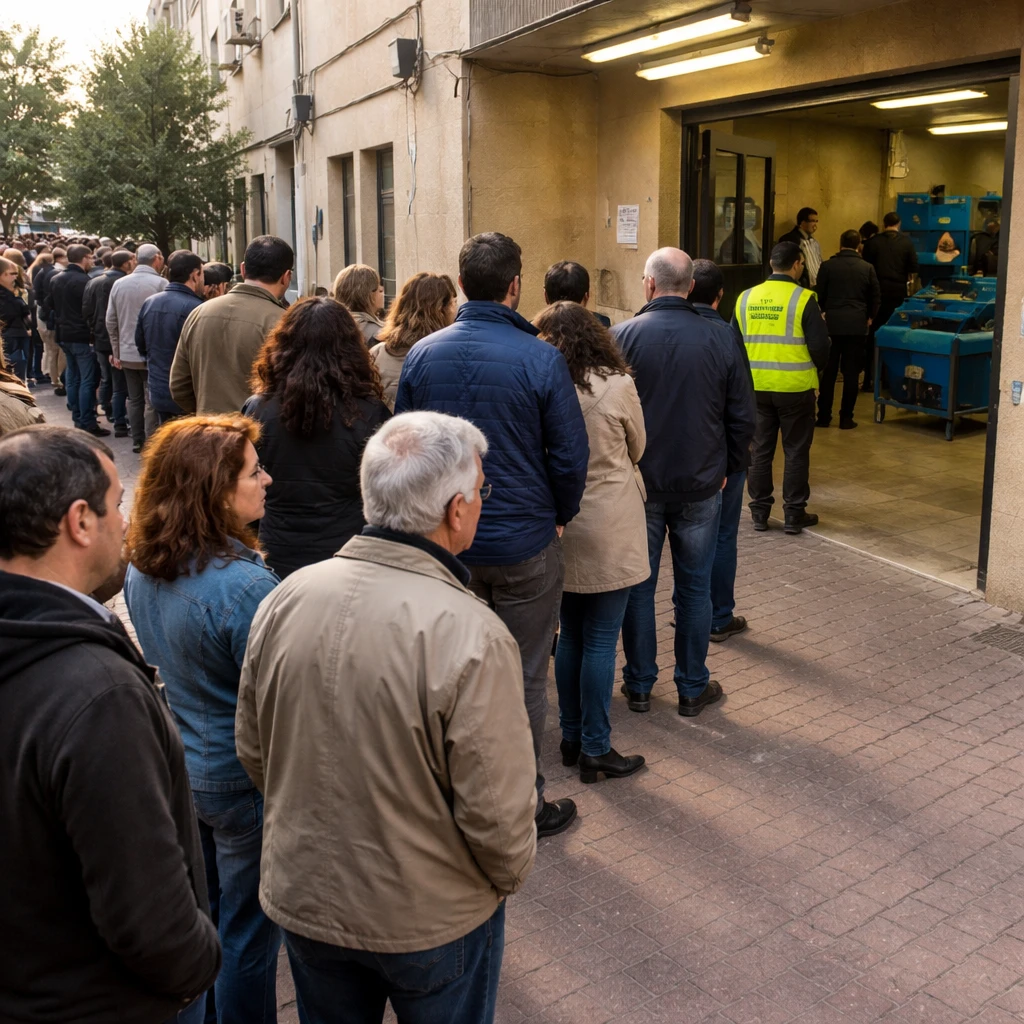
Israelis turned out in record numbers for a wartime election that many domestic commentators cast as pivotal. The vote, held amid an ongoing war that began with the October 7 assault by Hamas, produced unexpectedly clear support from Jewish voters for Benjamin Netanyahu, Israel’s longest-serving prime minister, and a bloc of right-wing, hardline and ultra-Orthodox parties.
With close to 86% of ballots counted on Wednesday, Israeli media projected that Netanyahu’s parliamentary bloc would win 53 seats in the 120-seat Knesset, outpacing the opposition coalition aligned with Gadi Eisenkot, which was forecast at 48 seats. While Netanyahu’s camp fell short of an outright majority, the projected result appears to leave his opponents without a realistic path to dislodge him unless they secure an unlikely broad coalition that would include Arab parties — an outcome many Jewish leaders reject.
Netanyahu’s apparent victory, coming during a conflict that began when Hamas fighters killed 1,200 people and seized 251 hostages on October 7, 2023, will likely leave him in place at least in a caretaker role during any coalition negotiations or until a new ballot is required. The war that followed has devastated Gaza - flattening much of the territory and resulting in more than 74,000 Palestinian deaths, according to health authorities there - and has driven a marked shift in global public opinion against Israel, the article says, including criticism from its closest ally, the United States.
Domestic campaign and security themes
Netanyahu, who has faced intense criticism over security lapses that preceded the Hamas assault, ran on his record as a seasoned political survivor and a commander on national security. He argued that his strikes on the leadership of Hamas, Lebanon’s Hezbollah and Iranian targets had made Israel safer, and he urged supporters to form "a strong, right-wing national government" at his party headquarters in Jerusalem.
Gadi Eisenkot, a former military chief who emphasised his security credentials during the campaign, advanced the argument that forceful responses to attacks — a tactic aligned with the methods he used during past conflicts — were necessary. Yet for many inside and outside Israel, the two main contenders offered little difference in their approach to the conflict.
Reactions across the region
Across the Middle East, the election results elicited a mixture of resignation, indifference and concern rather than celebration. In Gaza, where the war has created widespread displacement, Majed Jundia said he saw no practical difference between Netanyahu and Eisenkot. "They want to eradicate the Palestinian people so they do what they want," he said, describing both leaders as intent on eliminating Palestinians.
In Egypt, Outhman Selim, a 62-year-old lawyer, expressed disappointment that Netanyahu’s defeat did not materialise, saying his hopes for a shift away from the far right were dashed. In Lebanon, 81-year-old Kamel Haddad, who has lived through decades of conflict, voiced indifference toward who wins in Israel: "As for who wins? I couldn’t care less. Let them tear each other apart, what difference does it make to me?" He added that if rivalries within Israel occupied its leaders, Lebanon might enjoy a respite.
Jordanian Tarek al-Kaissy encapsulated the stark personal calculus many in the region described when reflecting on the contest between the two Israeli figures: "If one wins, he wants to strike you; if the other wins, he wants to kill you. That’s it, nothing else."
Military posture and wider security concerns
Netanyahu highlighted Israel’s recent military operations and suggested the possibility of renewed joint action against Iran alongside the United States, a position he raised while underscoring his alliance with the U.S. presidency. The election campaign itself, and the responses it prompted across the region, pointed toward heightened uncertainty about whether hostilities might intensify or expand.
In Tehran, public displays featuring images of slain figures tied to the conflict underscored the tense atmosphere. A banner showing the late Supreme Leader Ayatollah Ali Khamenei and another featuring the late Hezbollah leader Hassan Nasrallah, whose death was attributed to operations ordered by Netanyahu, were visible in the city. Fifty-year-old Abdollah Karimi said he perceived a genuine possibility of attack.
Political mechanics and next steps
Even though Netanyahu lost the outright majority of seats in the Knesset, the projected seat distribution leaves him with a clear advantage. His opponents lack an evident route to build a governing majority without securing support from Arab parties, a step that many within the Jewish political mainstream are unwilling to take. In the near term, that dynamic means Netanyahu will likely remain in power as a caretaker while negotiations or preparations for another election proceed.
The election exposed deep regional scepticism about the prospects for policy change in Israel, particularly regarding military strategy toward Palestinian territories and neighbouring states. For many across the Middle East, the result did little to alter expectations of Israel’s trajectory amid a war that has reshaped regional sentiment and raised questions about future security and diplomatic alignments.